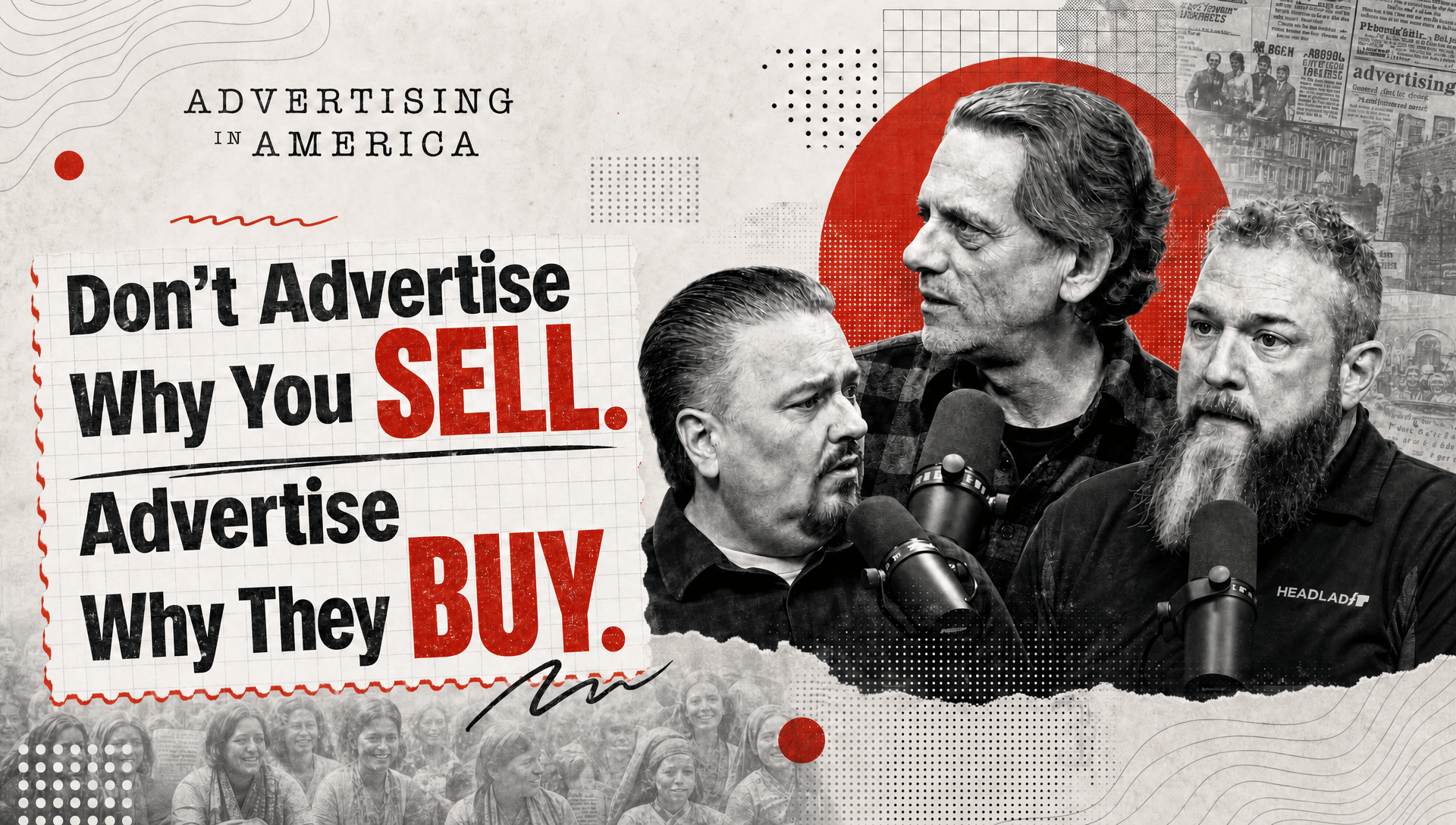
Don't Advertise Why You Sell. Advertise Why They Buy.
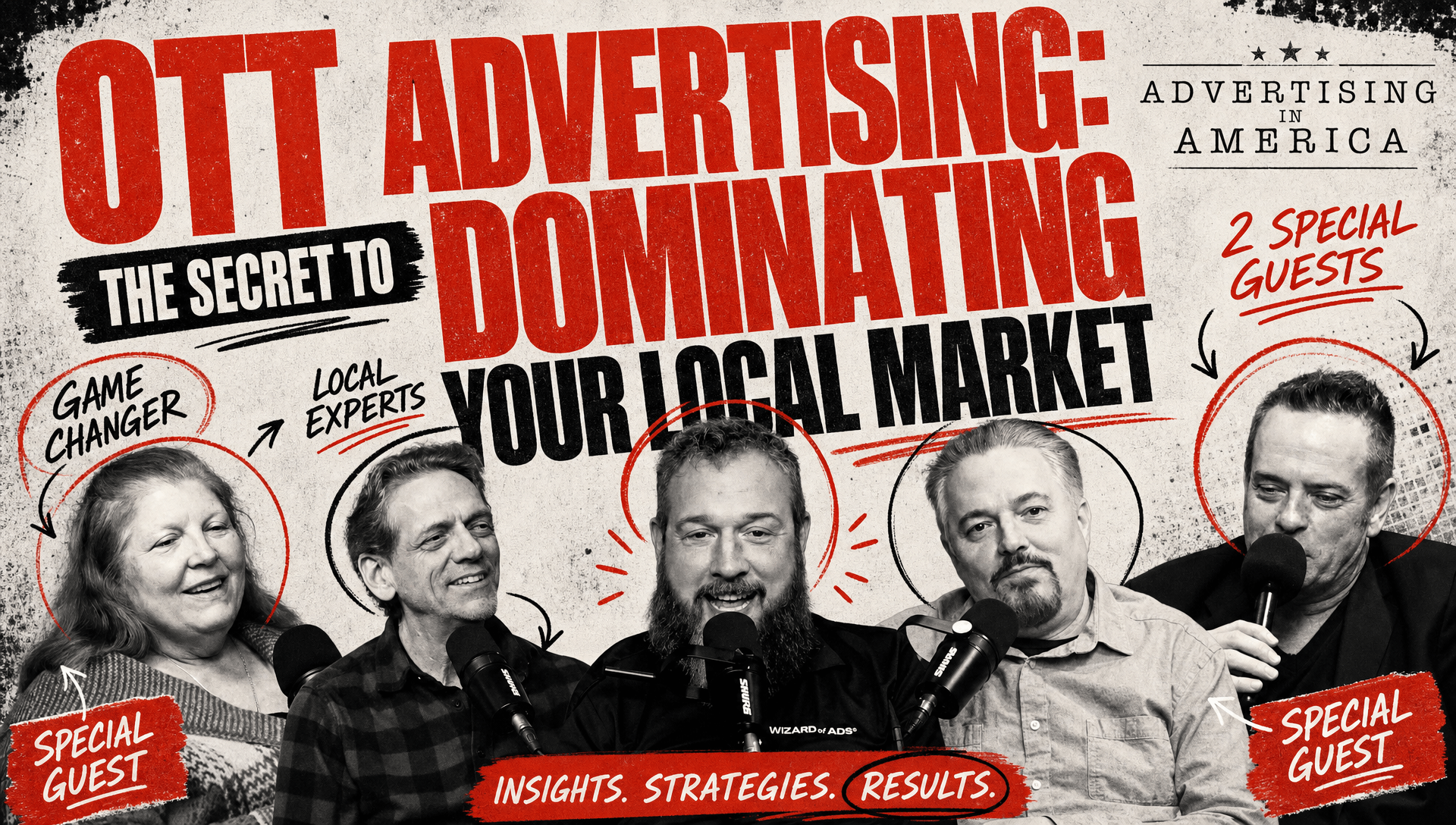
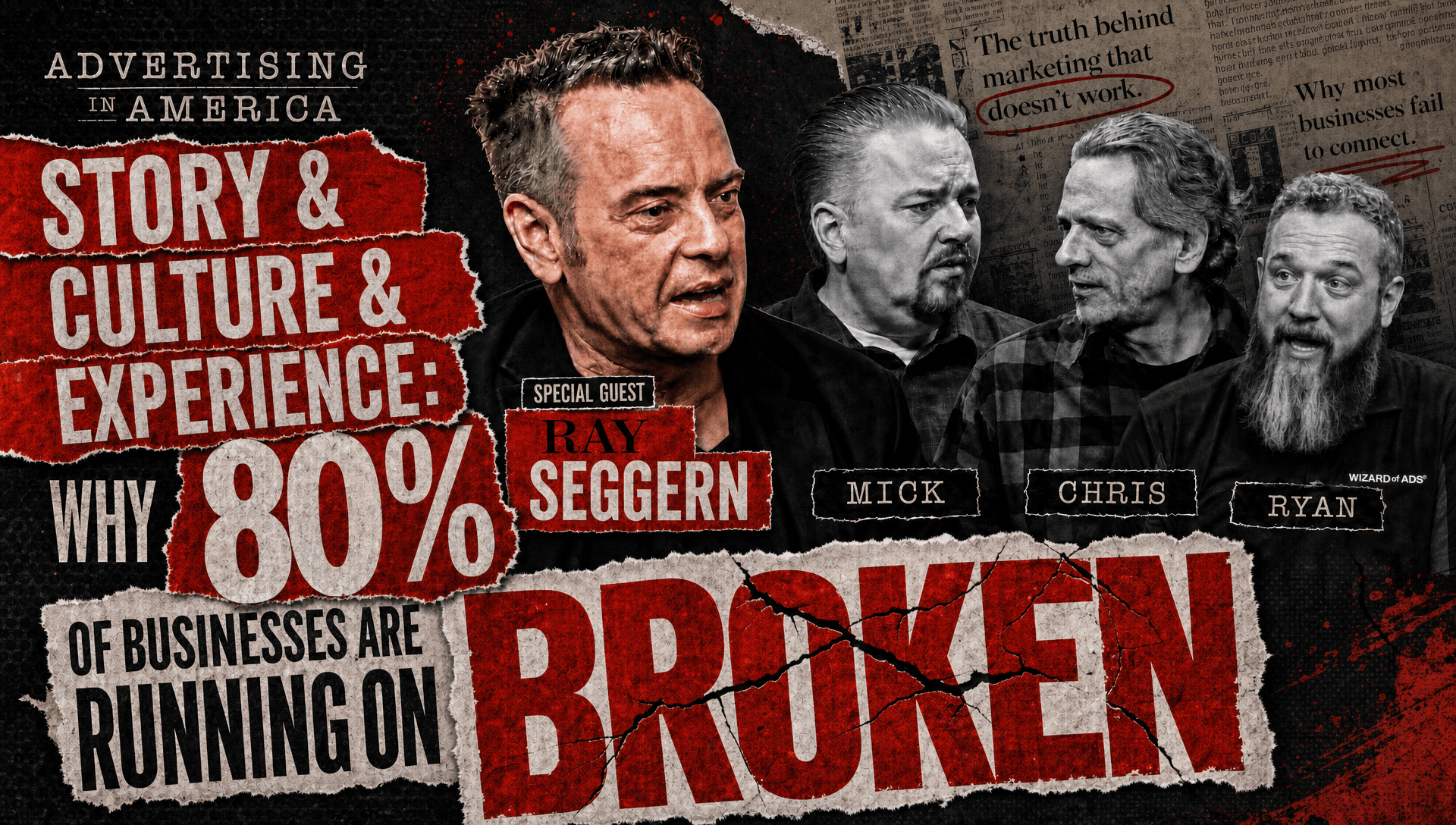
Most businesses advertise why they sell. The best brands advertise why their customers buy, and those are almost never the same thing. Episode 33 of Advertising in America breaks down how to find the gap and build advertising that actually moves the needle.
Advertising in America
July 16, 2026
Most businesses know why they sell what they sell...
They love the craft. They believe in the product. They built the business around it. And then they build their advertising around it too, which is exactly where the money starts disappearing.
Because why you sell is never why they buy.
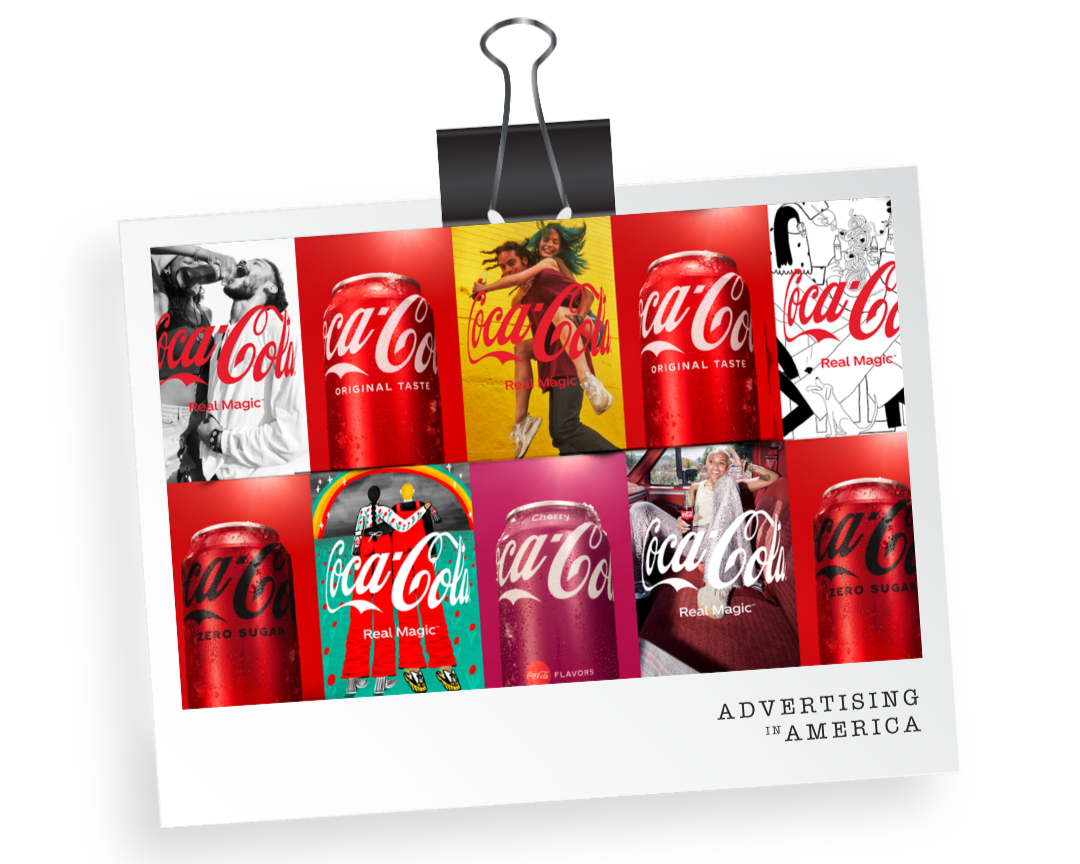
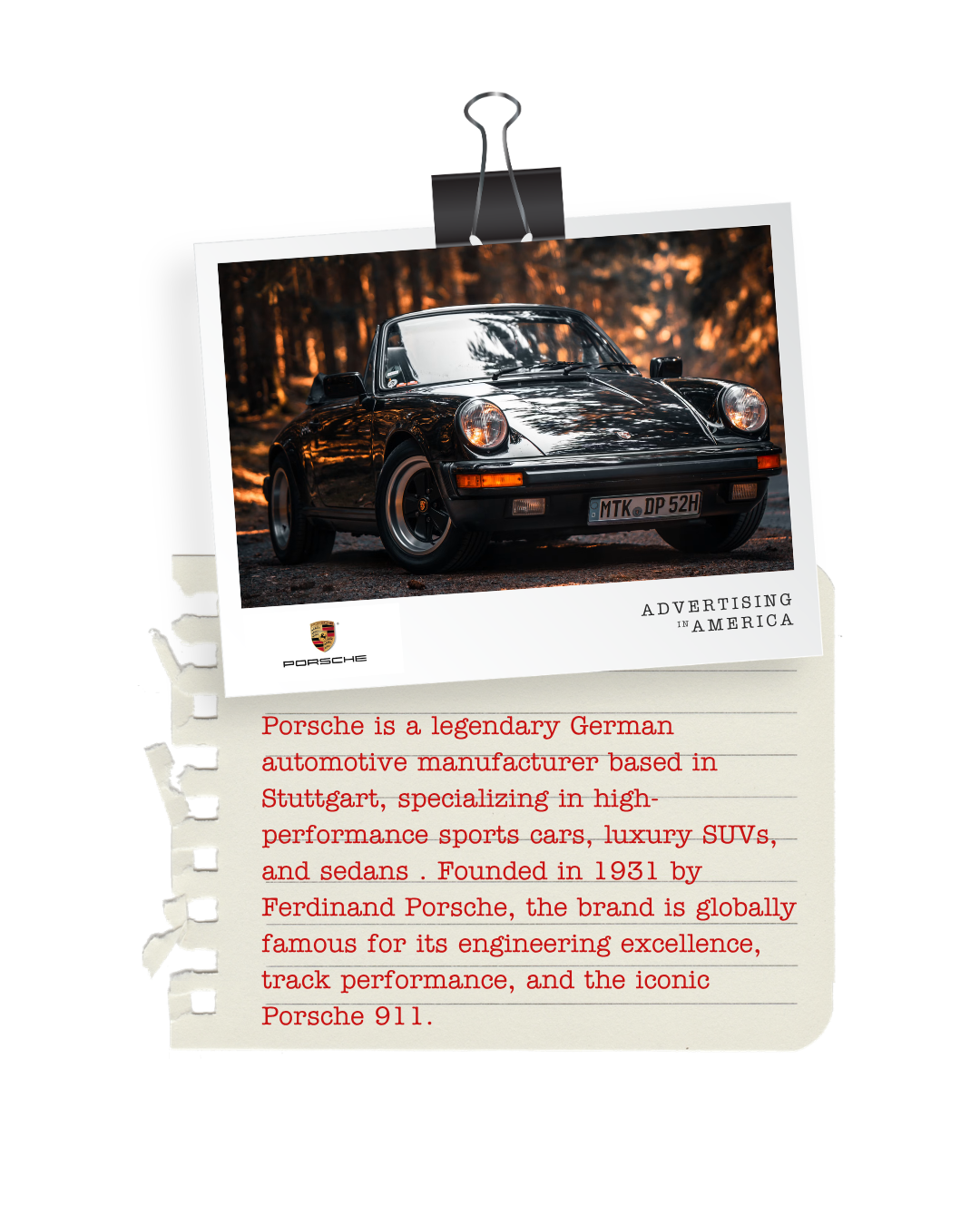
Coke doesn't advertise sugar water. Porsche doesn't advertise engineering specs. Life insurance companies don't sell financial instruments. And if you're in home services, you are not selling wrench-turning, roof nails, or refrigerant. You're selling certainty. You're selling the feeling that someone capable is handling something that was making life worse.
The gap between why you sell and why they buy is where most advertising fails and most businesses never find it because they're too close to what they sell to see what their customers are actually reaching for.
In this episode, Chris, Mick, and Ryan dismantle one of the most expensive misconceptions in advertising: that your product is the thing worth selling. They walk through the gap between what you offer and what your customer actually votes for with their wallet, why going "one level deeper" than your product still leaves you short, and how the best campaigns in history earned loyalty without ever mentioning the thing they were supposedly selling.
Mick's home healthcare client said she was in the "peace of mind business." Mick pushed back. The business she was actually in? Not going to a nursing home. That distinction is the difference between an ad that moves product and a campaign that moves people.
Episode Highlights
Don't Advertise the Category: Why spending ad money on what every competitor can also claim is money you're giving away.
The Literal vs. The Ethereal: Why the greatest ad campaigns in history don't spend a second talking about the product.
The Co-Op Dollars Trap: Why accepting Goodyear's money to mention Goodyear in your ad means you just paid for half a Goodyear commercial.
The Nursing Home Campaign: How "live where you want to live" defeated every stair-lift competitor in a single tagline.
New Coke Proves Everything: People preferred the new formula in blind taste tests and rejected it anyway. Feelings beat facts. Every time.
The Quarter-Inch Upgrade: Levitt said don't sell the drill, sell the hole. But it's not the hole either. It's the picture. It's getting your spouse off your back about the picture for six months.
The Swap Test: Cover your logo. Replace it with your biggest competitor's name. If the ad still makes sense. Congratulations, you've been advertising for them.
Attract Some, Repel Others: Why a campaign that speaks to everyone belongs to nobody and why that's exactly right.
Captain Confusion Is the Villain: The emotional enemy in home services and the story that defeats it.
🎧 Hit play if you've ever run an ad and wondered why it didn't move the needle. The answer is probably in the first three minutes.
👉 Does your ad still make sense with your biggest competitor's name on it?
On this episode of Advertising in America, I got to admit, I thought this was going to be the easy one.
These days, you can't hardly walk past a marketing guy without hearing the term ROAS, return on ad spend. First of all, if something has the word ass in the name, you've got to wonder if they're talking about you.
Business owners not knowing what business they're in is actually a tremendous opportunity for you because your competitor probably doesn't know what business he's in either.
If you're advertising beer, I already know how to use it. I already know what's in it. None of your ads should tell me about the beer. Now, your advertising has to tell me why you're the beer for me.
So, if everyone else is advertising facts, features, or benefits, you've just won the lottery because you're going to advertise feelings. You're not going to advertise why you sell it. You're going to advertise why they buy it. And if you're not sure what the difference is, don't advertise at all because you don't know what business you're in, which means you don't know what the fuck you're doing.
Ryan Chute: On this episode of Advertising in America, I going to admit, I thought this was going to be the easy one. What are we advertising? You sell pizza, you advertise pizza. You sell trucks, you advertise trucks. Ain't that the game?
Computer says no.
Ryan Chute: Apparently, the greatest ads aren't really about the thing you sell at all, which is going to require some explaining. What you talking about, Chris?
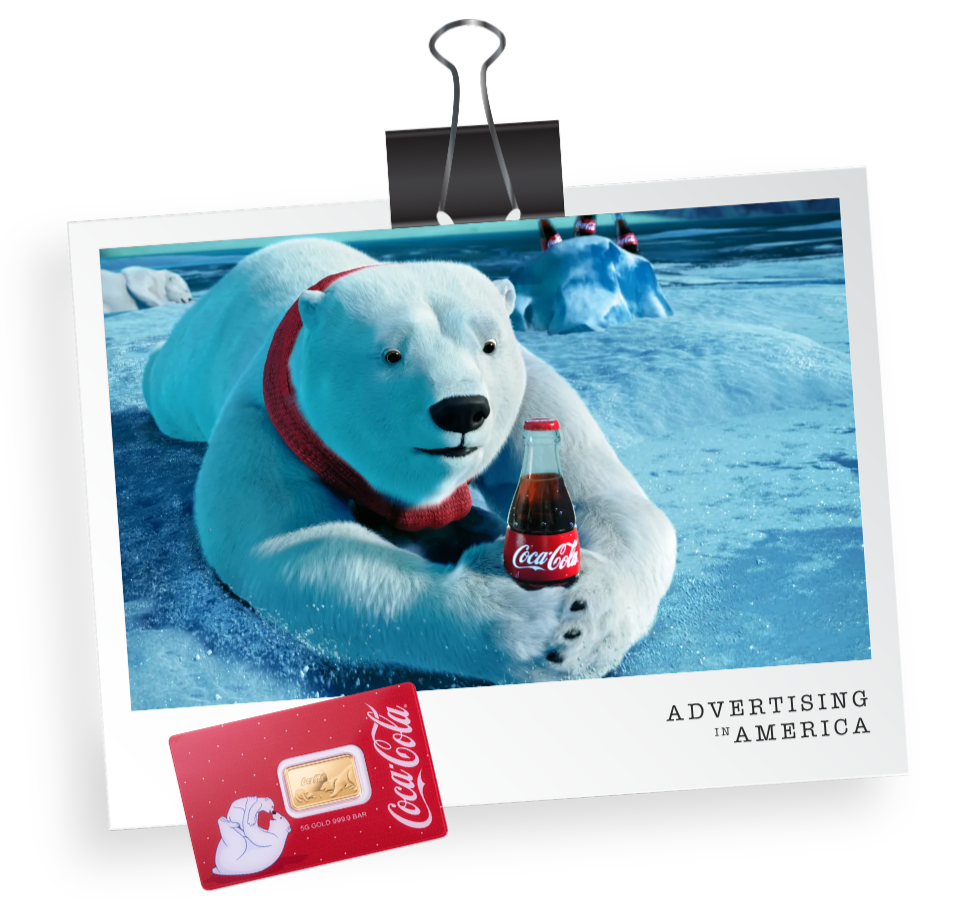
Chris Torbay: Isn't it funny how sometimes the best ads out there, the most successful ad campaigns you can remember, don't really advertise the things they're supposedly advertising? Coca-Cola is a sweet, caramel-tasting cold drink in a cool-looking bottle with fizzy bubbles. They mention that exactly never in their ads. The sweet, fizzy, caramel-tasting cold drink is 100% of why people love it, and they mention it 0% of the time. Coke spends all their effort just trying to be the brand you like. These days, you can't hardly walk past a marketing guy without hearing the term ROAS, return on ad spend. First of all, when something has the word ASS in the name, you're going to wonder if they're talking about you.
But second, when you're trying to figure out if you're getting the right ROAS, maybe your ad spend is advertising the wrong thing to generate your return. I recently bought one of these things on the internet. I'll pull it out of my pocket. It's a little credit card-sized thingy, and if you fold it this way and fold it this way, it turns into a little tripod you can stick your phone into. Now, if you're going to try and sell me one of these, which they do all over social media, you've got to tell me how it works. You're going to show me how easy it is to set up, and you've got to tell me that it's made out of strong materials that aren't going to break, and it's light enough to carry, and it's exactly the size of a credit card, so I already have a place to put it. And then you can tell me all the times it'd be great to use this to hold my camera instead of going like this all the time when I want to take a selfie.
You need an ad that is all product information, design specs, and usage cases. If you're advertising beer, I already know how to use it. I already know what's in it. None of your ads should tell me about the beer. Now your advertising has to tell me why you're the beer for me. If you're advertising diamonds, you don't have to educate me on cut, color, clarity, and carat weight. I don't even care about your expertise except insofar as it will help me. You have to tell me why I will be better served or reach a better outcome when I buy them from you.
If you're a plumber, you don't have to tell me how intricate it turns out your job really is. You just have to tell me that your work will give me a shower that will be awesome. Advertise the things that are going to make you the brand for me. Why are you over your competitors? Don't use any of your ad spend to tell me things that are true across the category. And yes, quality, great service, wide selection, competitive prices, convenient location, and a qualified staff who really care about your needs are claims made by everyone, so they can't be the thing that you advertise to make me choose you, even if they're true. If other people say it, it cannot be your differentiator.
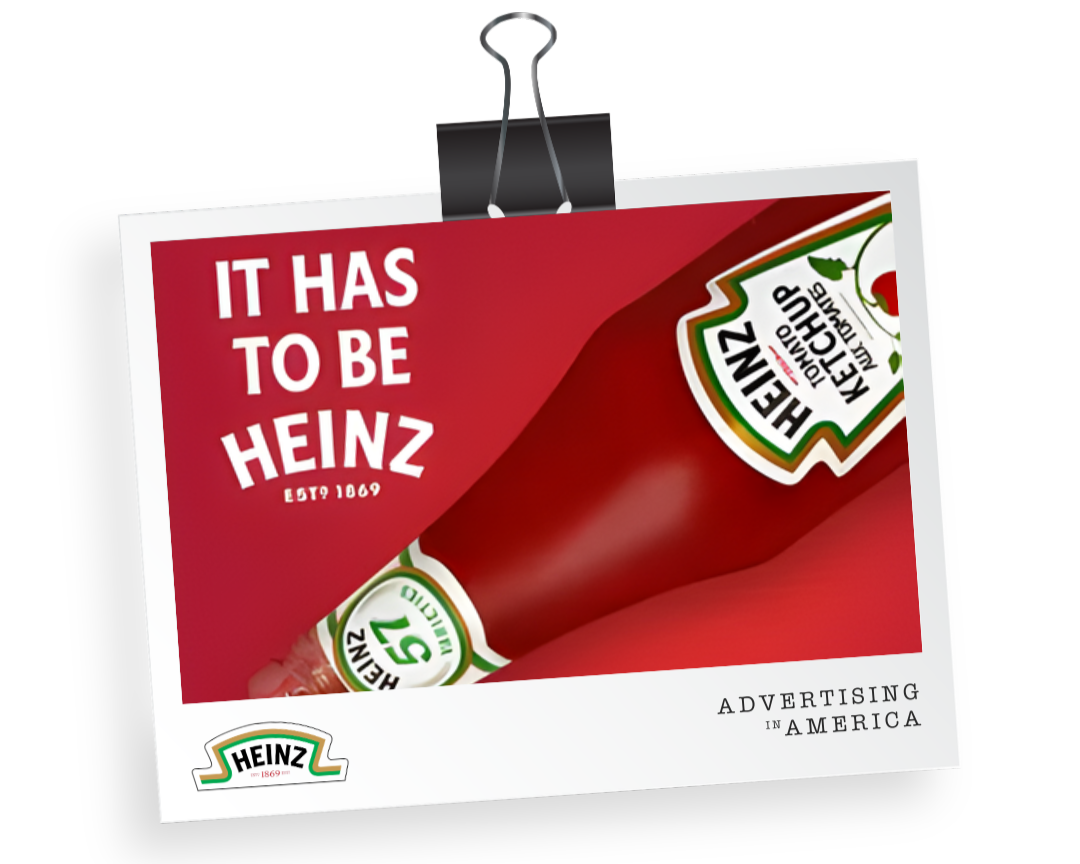
Don't use any of your ad spend to grow the category unless you are by far the category leader. Even Heinz Ketchup doesn't spend much time telling you new, fascinating potential uses for ketchup. They tell you when you should choose Heinz. And don't devote any of your ad spend to the brands that you sell. People can get those brands somewhere else, too, so you should be spending your money on why they should be getting them from you. Co-op dollars might not be as good a deal as you think if the message ends up being about that brand and not about yours. Don't advertise the literal. Advertise the ethereal.
On the surface, Porsche and Kia advertise largely the same way: cool cars, fun to drive. Even though one of them is actually a German-engineered race car. The trick is that something about the Kia campaign makes Kia drivers think that's the car for them, and something about the Porsche campaign reaches Porsche drivers right in that secret spot that makes them go, "Oh, yeah. Right there."
Advertise that thing. That's the kind of advertising that gets you RO in your ass.
Ryan Chute: Chris just spent 45 minutes describing his thingy. A thingy. Wouldn't tell us what it was, just kept calling a thingy. God bless your wife for staying with you all these years. How long did it take you to sell her on your thingy? Never mind, no. I don't want to know. Mick, please take it away.
Mick Torbay: I've mentioned this before on this program. I'm convinced that fully half the time people don't know what business they're in. Chris phrases it differently. He says they're advertising the wrong thing. I say they don't know what business they're in.
As long as Porsche thinks they're in the transportation business, they don't stand a chance. Thankfully, they're one of the few businesses that understand what they're really selling. They're selling the opportunity to feel like a race car driver, and that's something that people, mostly men, have been yearning for since they were five years old. We've always wanted to feel like a race car driver. Porsche gives us this feeling by making an actual race car and then putting enough technology into it so that we don't actually kill ourselves whilst driving it to work.
Here's the giveaway. They put about as much effort into making the engine sound like a race car as they do into making the engine perform like a race car.
That's how I know I'm right. Business owners not knowing what business they're in is actually a tremendous opportunity for you because your competitor probably doesn't know what business he's in either. Plumbers think they're in the wrench-turning business. Roofers think they're in the business of nailing shingles to the top of houses, and that's great. Keep it up, guys. My clients know better, or at least their ad guy knows better.
Rule of thumb: look at what everybody else is advertising. What is their pitch? What business do they appear to be in? Great. Let them own that. Don't try and beat them at that game. It's probably the wrong game anyway. Your job, or if you work with us, my job, is to find out what game you should have been playing all along, the game you play better than anyone else, the game the consumer is playing.
And the consumer is motivated by feelings. Remember what I said? Porsche is in the business of letting you feel like a race car driver. Feelings are much more powerful than facts, features, or benefits. Life insurance companies understand this. Life insurance is a very practical thing. It allows you to solve financial problems when the primary earner is no longer generating revenue. That's what it is, but that's not how they advertise it. Note how quickly they pivot to protecting your family. That's about feelings, friend. So if everyone else is advertising facts, features, or benefits, you've just won the lottery because you're going to advertise feelings. You're not going to advertise why you sell it.
You're going to advertise why they buy it, and those things are almost definitely not the same. And if you're not sure what the difference is, don't advertise at all because you don't know what business you're in, which means you don't know what the fuck you're doing.
Ryan Chute: Mick said plumbers think that they're in the wrench-turning business. I got to admit, the last time I called my plumber, I did not want a wrench turner. I wanted a hot shower. Not with the plumber, of course, just, like, in general. There were no wrenches on my mind. We'll be right back.
Ryan Chute: Okay, we're back. Did you notice the twins said pretty much the same thing? Chris says, "Don't advertise the literal." Mick asked, "Do you even know what business you're in?" Either way, same answer. The thing you think you sell isn't the thing the customer's buying. Let's pull this mess all apart. So let's start off with Ryan's fun fact. The quote that everyone in marketing has heard, one that I personally disagree with,
"People don't want a quarter-inch drill, they want a quarter-inch hole."
This was popularized by Theodore Levitt, originally Leo Geneva, it's the whole notion of don't sell the feature, sell the benefit. And the reason why I disagree with this, which alludes back to Mick's point about you, you do not sell what you think you sell, is we think we're selling benefits. We think that when we sell a mattress, we're selling a better night's sleep. The fact is, we're not selling a better night's sleep, and we're not selling a mattress; we're selling a better waking day the next day. So it's the advantage that the better night's sleep gives you; it's the advantage of the benefit. And this is where most marketers make the mistake. They're only taking it to the next step; they're not taking it to the step that the customer actually cares about.
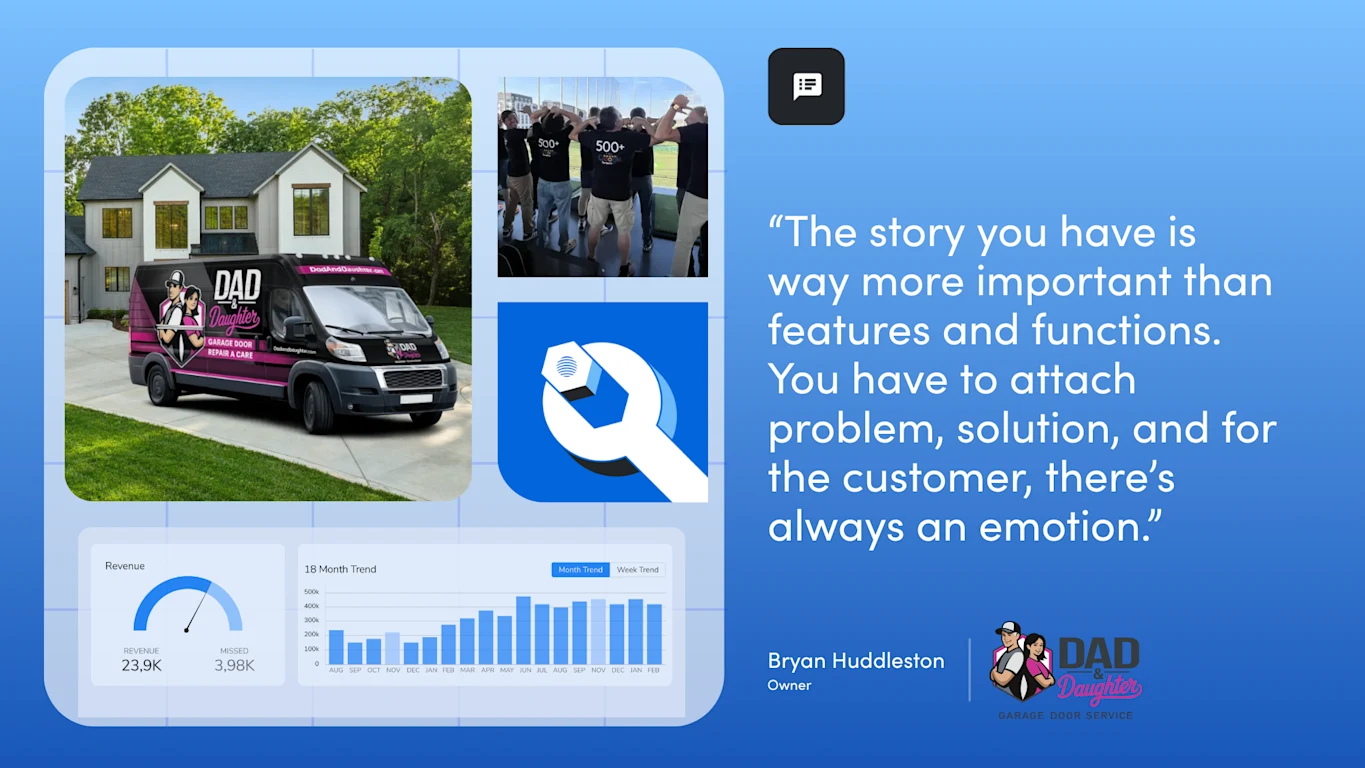
Chris Torbay: I think that's the important part is people have gone through this exercise a number of times, and they always get to the first level away, and they think they've accomplished it. That's not... “That's right. We don't sell widgets, we sell peace of mind.” And you go, “Yeah, peace of mind." That, you are only one step in. You are still nebulous; you're still not changing my life.
Mick Torbay: And I guess when you, the good part about that story is that at least you're thinking about it. We know it's not the drill, it's the hole. Is it the hole, or is it actually, I'm trying to hang a picture?
Is it I'm trying to hang a picture, or is it I'm trying to get my wife off my back for she's been telling me to hang that picture for six months? At least you're going down the right path. But the danger that can come up when you're trying to figure out what business you're in is that I find out, I find very often when I say to somebody, “Have you thought about what business you're in? Because it might not be the business you, you're specifically in," is that they tend to want to get more broad in it. “We're in the people business. We're in the solutions business,” which is so broad that now it includes fricking everything.
Chris Torbay: Every company is a solutions company, and you have no idea what it is they actually make or do.
Mick Torbay: So what I try to remind them is that when you're talking about what business are you really in, it is in fact a very specific business; it's just, and probably narrower than you think, but it might not be the one that you think of every day. And the best example of this is a company that I used to work with that was in what they would call the “home healthcare business”. So they sold scooters and wheelchairs and stair lifts and devices that would go in your bathroom, so you could hold onto the tub and get in and out. And this is specifically for people who identify with disability or might be older and are not quite a- as safe, feel as safe as they once were.
And I said, "Do you know what business you're in?" And she said, "Oh, yeah, I'm in the home healthcare business."
“No. I don't think you're quite onto it." And she said, “We're in the feeling comfortable, peace of mind business." There you go.
Chris Torbay: The first level away
Mick Torbay: The first level. But it's "No, you're in a very specific business, and once we nail that down, I think we can make a very powerful campaign."
And I made her work at it a little bit, but what I said was, "The business you're in is in, you are in the business of not going to a nursing home." And that's very powerful, because that's emotional, right? Nobody wants to go into a nursing home. So I built everything, the entire campaign, around staying in your home longer. Because the reason why people go into a nursing home is that they don't want to climb the stairs anymore. Because they feel uncomfortable in the bathroom or falling in the bathtub. They're going to fall down.
It's all those things. It's you can solve all those problems by going to a nursing home, or you can just fix the problem. And then you get to stay at home longer. And I can't seem to chase my grandkids around. It's like if you had a scooter, you could. And even the tagline that I wrote for them was, "Live where you want to live, and live with confidence." It's about not going to a nursing home.
So all of their competitors are offering, are talking about the stair climber 5000 with the six horsepower motor and the racing stripes and the cup holders. The features, the benefits the brands were telling them to advertise, because that was what made that product a particularly good product. It's fuck all of that, and actually speak to the consumer about what matters to the consumer in the language of the consumer, and you won't be surprised that those ads really move the needle.
Ryan Chute: Not surprisingly, most of the consumer behavior, behavioral sciences from the 1950s has been lost in a sea of distraction, shiny objects, and nonsense.
But back then, when David Ogilvy and Eugene Schwartz were talking about product awareness, situation awareness, the sophistication of the market, all of these things were helping us clarify.
In home services, if somebody doesn't have a problem with their air conditioner or hot water tank, they're not product aware, they're not problem aware, they're not situation aware, but they're sophisticated about hot water tanks in so much as they know that hot water tanks make my water hot, and there's a million choices out there. So advertising to that person who doesn't care is hard. But when something breaks, it's way easier to speak to that customer. The fact of it is that we're not speaking to them when it breaks. We're speaking to them before it breaks, if we're doing it well, or at the moment it breaks, and hoping to compete in that world, in that realm with everyone else.
And this is where we're going with it, if we're really going to connect with the customer, we have to choose when we're going to connect, but we also have to choose how we're going to connect with the messaging that we use. And the messages change. Before, they didn't care about your name, they didn't care about your brand, they didn't care about your products, they didn't care about the features, they didn't care about the benefits.
They care about themselves. They care about their life going on as it always has. So let's use the most valuable currency we have, and that's entertainment, until such time. Now we're entertaining them about the salient product of what we sell. But we have to pay attention to that throughout this whole process of if we're going to advertise, what the heck are we going to say that actually makes a difference?
Coca-Cola sells happiness, friendship, and connection using polar bears. They haven't advertised cocaine sugar water since 1868.
Mick Torbay: And they're not even in the polar bear business.
Ryan Chute: No.
Mick Torbay: To Chris's point, regarding my brother's thingy, I think there's a really interesting point in the home services world. Plumbing, HVAC, roofing, garage doors any of those sort of essential services for somebody's home.
In every example, the consumer, the homeowner, understands those things completely. We do not have to explain what replacing your broken water heater is all about. We don't have to explain the concept of “You're too hot, we're going to replace your air conditioner, and then it'll be the right temperature.”
This is a wonderful opportunity from a messaging perspective, because we don't have to do any of that. We can simply just have you feel good about this brand, think of it first, like it the best, have a good internal feeling about it, and we can spend 98% of our time just making you feel good about this brand, and then all we have to do is, "You know we fix air conditioners when they break, right?" That's it. That's it. It's done.
Ryan Chute: Which is sales activation. That is a call to action, right? And a lot of people lose sight that it is as much of a call to action as anything else, right? You don't have to have "It's 29 bucks. If you don't buy it today, it's going to be gone forever," no nonsense. You can actually just say, "Hey, we sell this thing. Just so you know, if you need that thing, we sell it."
Chris Torbay: And that's the misconception there that what business people think you're in is the low-price business or something like that. And that's not the aspect of it, and that's where, again, erroneously, a lot of companies use the power of the brand name of the thing they sell as a reinforcement of what their brand must be like or what, what they must be like as a company.
You and I worked on a company that was a Goodyear Tire retailer. I talked about the idea of co-op dollars, right? Where you think, "Hey, if I mention Goodyear three times in a commercial, the Goodyear company will pay half of the thing." This seems like a good idea, except that what's happening is you are now not telling me why you are the person I should get those Goodyear tires from. You're telling me why Goodyear is awesome, which people already know. And so you are advertising the wrong thing. You should be spending all of your money on why I should get them from you, because I can get them from somewhere else. And using someone else's brand to have a rub-off effect on why you are the brand is a tough leap to get the consumer to make.
Mick Torbay: I think a lot of the time people think of it in terms of, "Hey, Goodyear's going to pay for half of my ad." And I'm always thinking, "You just paid for half of a Goodyear ad." Because you can buy tires a lot of different places. And if you're paying for Goodyear, that's good for Goodyear. I'm not 100% sure that's going to give you ROAS.
Ryan Chute: There we go. But leading into this, Ryan's fun fact: Theodore Levitt, 1960, guys. This is not new information.
Mick Torbay: Even before Chris was born.
Chris Torbay: I think so.
Ryan Chute: I don't think so. Harvard Business Review number one most downloaded article ever in the history.
Chris Torbay: In 1960, they were downloading this article. They had to go to Harvard. You had to take a stone rubbing of it.
Ryan Chute: Most reprinted, and it still continues to be downloaded. You can actually, I looked it up. All right. You can actually download this article. Marketing Myopia is the name of it, and Levitt's argument is that companies fail because they define themselves by the product they sell instead of the customer they need to serve.
And this is exactly it. When you're advertising Goodyear, you've defined yourself as Goodyear and by Goodyear, not by the customer and their needs. And what this alludes to is that we already know that this is a mistake, yet we continue to do it because somebody who doesn't know anything about marketing is giving you supposed marketing advice.
Chris Torbay: And they think they're in the wrong business. "I think I'm in the business of selling Goodyear tires." Yes, but no, what business are you actually in?
Mick Torbay: And this is client-focused thinking. And given no other input, what is the client naturally going to do? If you own a Goodyear store and you sell a lot of tires, what are you going to? What is going to be the first thing in your mind?
By the way, today you just bought $100,000 worth of tires. Probably from Goodyear. And you're thinking to yourself, "Holy crap, I'm going to sell a whole lot of tires over the next six months. I should tell people because I just bought a bunch of these that I'm in the business.
Chris Torbay: Goodyear tire
Mick Torbay: So what is that business owner going to be thinking that they need to do? You’ve got to give the business owner a bit of a pass for getting that wrong. It's not their fault. But a kind advertising person will say, "I know you, you feel like..." And I had the same conversation with my home healthcare person, who had just spent $100,000 on scooters and was like, "I'm going to sell some scooters." It's like, "You need to sell not going to a nursing home, and the scooters will go." The stair lifts will go. You need to be the place that people think of when someone, when their deadbeat son-in-law says, "We should just put Grandma in a home." It's like, "No, I should fix my bathroom. That’s what I should do, and I've got some money."
Ryan Chute: Which requires them to stay in their home, which means that they need a scooter to get down to the mail.
Chris Torbay: We need a stairlift to get them upstairs. And they'll figure out that when I go to this store, who's going to help me with this? I might buy a scooter, I might buy a handle, I might buy a stairlift. They're
Ryan Chute: Clayton Christensen, Harvard Business School, Jobs to Be Done Framework. This was back in 2016. He's written earlier articles on it, but the customers don't buy products. They hire products to do a job in their life. Understand the job, and you'll understand the brand.
I think that's a very interesting article that I read, and it was really instilling the idea that not everything that we buy is to tell the world who we are, and we're a part of the world. So it tells us who we are. It tells our inner circle, our outer circles who we are, what our status, what our rank is, what we see as valuable, important, and true. And it's tapping into that chemistry that's going to get us the result.
Mick Torbay: It's amazing how many products or categories you can connect with identity, which shouldn't be connected.
Chris Torbay: There's some that you expect and then others that you don't.
Mick Torbay: Yeah, clothing, you get it. Okay. You wear this ridiculous shirt all the time. We're not sure what you're trying to prove with that. But the point is that, for whatever reason, that's your identity. Computers should not be part of your identity, and yet some people buy Apple and some people won't. And why is it that I keep buying these stupid overpriced Apple products? Why? It's because that is part of my identity. I am the sort of person who buys a MacBook Pro and not a Dell. I cannot parse it out why I do that. It makes no sense. It's not what the computer looks like shouldn't matter. It's the thing that comes up on the screen, and that should matter, and that's all the same, but it does, and that applies to cars.
Chris Torbay: Yeah, I was going to say, automobiles, it's weird because of how much we talk as if we are buying them for technical reasons. We buy a pickup truck because of its towing capacity
Mick Tobray: How often are you towing shit with that?
Chris Torbay: Because of the size of the engine. It's no, you just want to be the guy who owns the Dodge Ram. Come on.
Mick Torbay: So far, too many things are connected with identity, which makes me think maybe it's everything. Maybe the roofer you call defines who you are. And therefore, if you are the roofer who somehow portrays yourself as this kind of person, and thus this kind of brand, then people will say, "That's the kind of roofer I would hire." It shouldn't work, but I think it does.
Chris Torbay: Yeah. Think about coffee shops, right? Coffee is coffee. You can argue the different places make it different ways. But coffee shops very much align with the kind of person you are. Are you a Starbucks person? Are you a Dunkin' person? And both of them will say, "Ah, that place isn't right for me. This place is right for me."
Ryan Chute: And they're both a badge of honor too. I mean, in a weird way, at the end of the day the Dunkin' person looks at the Starbucks person and says they're a bunch of pretentious twats, and then the Starbucks person looks at "Oh, you're a Dunkin' person?"
Mick Torbay: And then if someone goes to the local craft coffee shop and says both of those.
Ryan Chute: Exactly. Gets offended when they actually sell milk from a cow. So I watch a lot of Brooklyn coffee shop on TikTok. Very funny. I recommend. Let's think about it. Plumbers don't sell wrench turning. What do they sell? Are they selling the hot shower? Are they selling?
Mick Torbay: You're asking too big a question. This would vary client to client. When we're working with a client, the idea that any good, strong marketing idea is interchangeable with another client, I would submit, is either the wrong idea or not a particularly good one. SoI'm going to question the premise of your supposition. In the home healthcare business, I think it's clear. But that's a niche category. Plumbers, people understand it. I think it would come back to what does this plumber stand for? And thus, what do I, as a consumer, how would I relate to that guy?
Chris Torbay: Well, because, and again, your first inclination to say they sell confidence or they sell, that your water heater's going to last or that your toilet's not going to leak, or they sell competence, they sell confidence.
But then, I agree. I would put it back to the person and say, "How are you going to do that in a way that your competitor, who is also taking that first leap away from I sell toilets to I sell plumbing confidence?"
I've got an electrician client in Chicago who is 100% electrician. Against many of his competitors, what he can sell is the expertise of being a guy who does that and that only, as opposed to other people who may do a bunch of things half-assed and yet he does this 100%. But it has to come then from the brand that when you sell that confidence, you sell it from a perspective that is unique, too.
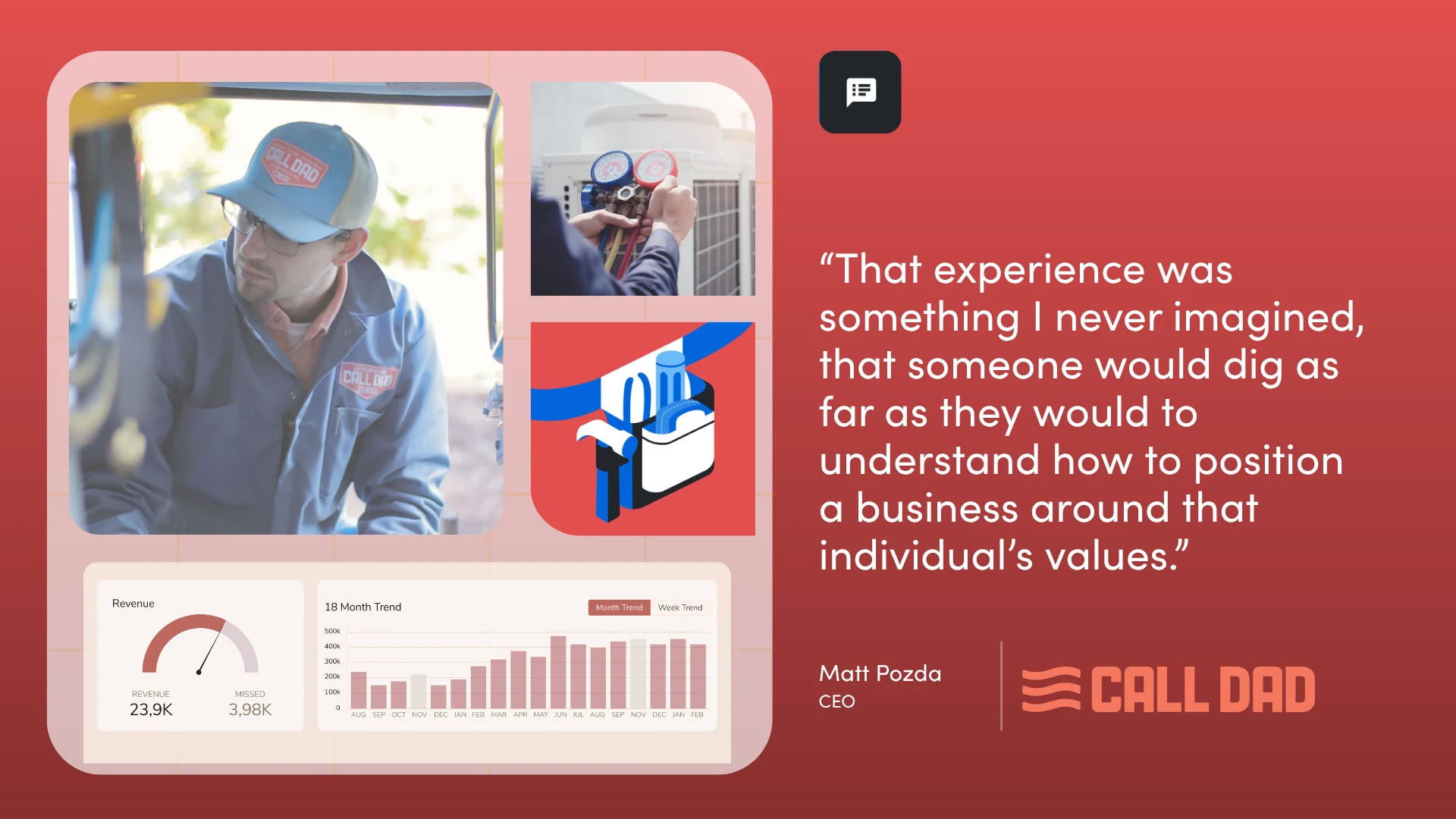
Ryan Chute: Both of you holding those positions, what it seems like I'm hearing is that you're selling certainty more than anything else, which is probably the biggest culprit that we deal with against. Now, how we show up in uncertainty and solving for certainty is what the home services space fights against- the villains that we fight against and all of the different iterations and variations, which is where the story becomes unique.
Who's the hero? Here's the guide. Who's the villain, how are we fighting the villain in all of those, in those framings? But it's not unlike jewelry. We're not selling jewelry per se; we're selling the look on the woman's face, or to be said more directly, we're selling blow jobs.
Mick Torbay: You're not even allowed to sell that in a lot of places.
Ryan Chute: No, this is it. But if you sell jewelry, here we go. It ends up being this really interesting decision of what is it that we're trying to achieve here, and it goes back to this whole stuff that we see from Ogilvy & Mather about how sophisticated the market is. What is it that they feel as the real pain at different stages, and how can we lean into that in a very broad storytelling way?
Many angles of approach, as Roy would say, to get in and get the customer to pay attention in an entertaining way.
Mick Torbay: If you're doing it well, it should attract some, and it should repel others. With that, that's going to scare people right from the beginning. It should attract everyone. You cannot be all things to all people. If you're all things to all people, you're nothing, and you're nobody, and you can be ignored.
I've got a client on the West Coast that has a family-owned, female-owned business, and we built a whole campaign around how it's this very motherly type person who looks after her staff the way a mother does. And she speaks to them like a mother, and she jokes with them like a mother, and they joke back as they would with their mother, and you get this, and we never say family-owned, and we never say female-owned. But we show it rather than telling it.
And I've got another client on the East Coast where the company is owned by former Marine Corps officers, and he tells the story about how he was trained as a Marine Corps officer. He's a true leader, and he has tremendous respect for the people who work for him, and he runs his company with military precision, and he has specialists who, just like the military does, they operate like specialists, and they take things seriously. It is not; there's nothing joking in his. There's nothing fun about that campaign. It is about taking things seriously and translating a life where things used to be life or death, and then saying, "We take it that seriously when we're fixing your water heater." Not interchangeable at all. That campaign, some people will be very attracted to that campaign, some people will find that off-putting. That's okay.
We are not for everybody, but there are going to be a lot of people who are going to say, "I like the kind of guy he would hire is going to be incredibly good at their job, because if they're not good at their job, he would be repulsed by that.” Again, this is a good example of why a good campaign can only work for this client. If you think you can rip off someone's idea and say, "I'm going to do that," good luck. It will not work. The consumer will smell that pretense so far away, and it will die quickly.
Ryan Chute: Even if you're a Marine, frankly, because the disposition of these gentlemen is very different than the disposition of other Marines that I've met. And, jokes aside, being a Canadian military myself…
Mick Torbay: You can’t help yourself ...
Ryan Chute: I really can't. Just so many crayons. This guy didn't have a single crayon in his office...
Mick Torbay: Say nice things about Marines.
Ryan Chute: But what it circles back to me in this conversation is advertising why they buy, not why you sell, right?
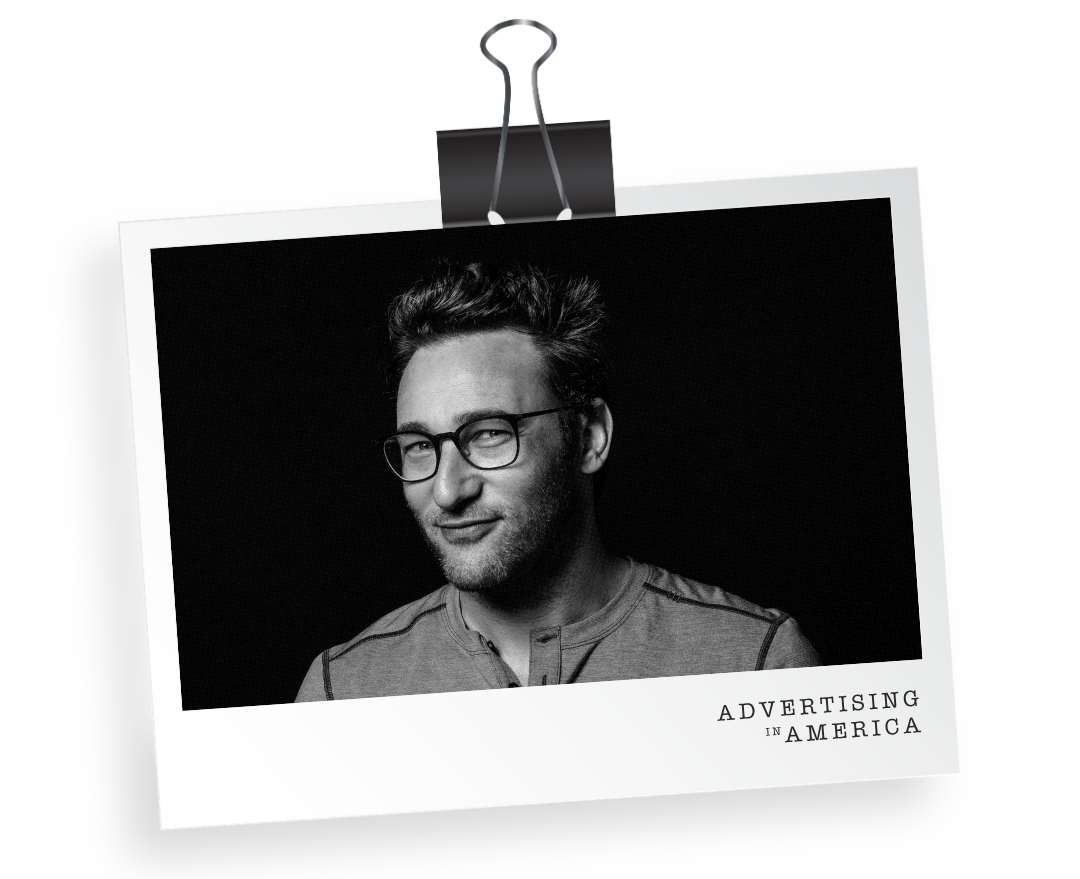
So Simon Sinek came up with this whole notion of start with why. What most people took from that is, what do I believe in, and all of this context, the Golden Circle and the whole thing, great. I love Simon Sinek, and his notion is right.
But where it leads astray when we get into marketing is that we're talking about ourselves and what we sell. Why do we sell it? Why we sell it is only the first part, just like we talked about with features, benefits, and advantages. The why we sell it is the benefit. The advantage to the customer is why the customer would buy it in the first place. They don't care about us. They care about what's going to solve their problem. This is the thing that we, as creatives, strategic creative writers, and strategists, are coming up with individually for each client, to your earlier point. Yes, everybody is defending and fighting uncertainty in their own ways with their own stories, their own messages. They're bridging the gap of trust with empathy and competence. But without that understanding that we have to go one step past what you sell into why they would buy, we miss this whole point.
Chris Torbay: Why is the why that you have for selling it important to me as the buyer?
Mick Torbay: I think Simon Sinek does a good job of at least breaking out of the original thing, which is, "Here's what we do. Here's who we are, here's what we sell." And that's what we have to remember the bar is tremendously low. In marketing, regardless of category, it doesn't really matter, regardless of market, it doesn't matter. Most advertising, television, radio, digital, "Here's who we are, here's what we sell," which is, of course, answering two questions that nobody is asking. Who are you? Who are you? What do you sell? And what do you sell? So he did the right thing by saying, "For God's sake, stop talking about who you are and what you sell,” because nobody gives a shit. And that's a start, but you're right, he doesn't go far enough, and that's why Roy, in his books, Roy Williams, goes farther along saying, "Speak to the consumer in the language of the consumer about what matters to the consumer.” Stop talking about your fertilizer. Talk to me about my lawn. That's the next stage. But frankly, just to get to where Simon Sinek got is already like miles ahead.
Chris Torbay: You're 85% of the way there.
Mick Torbay: We're talking about the last 15 here.
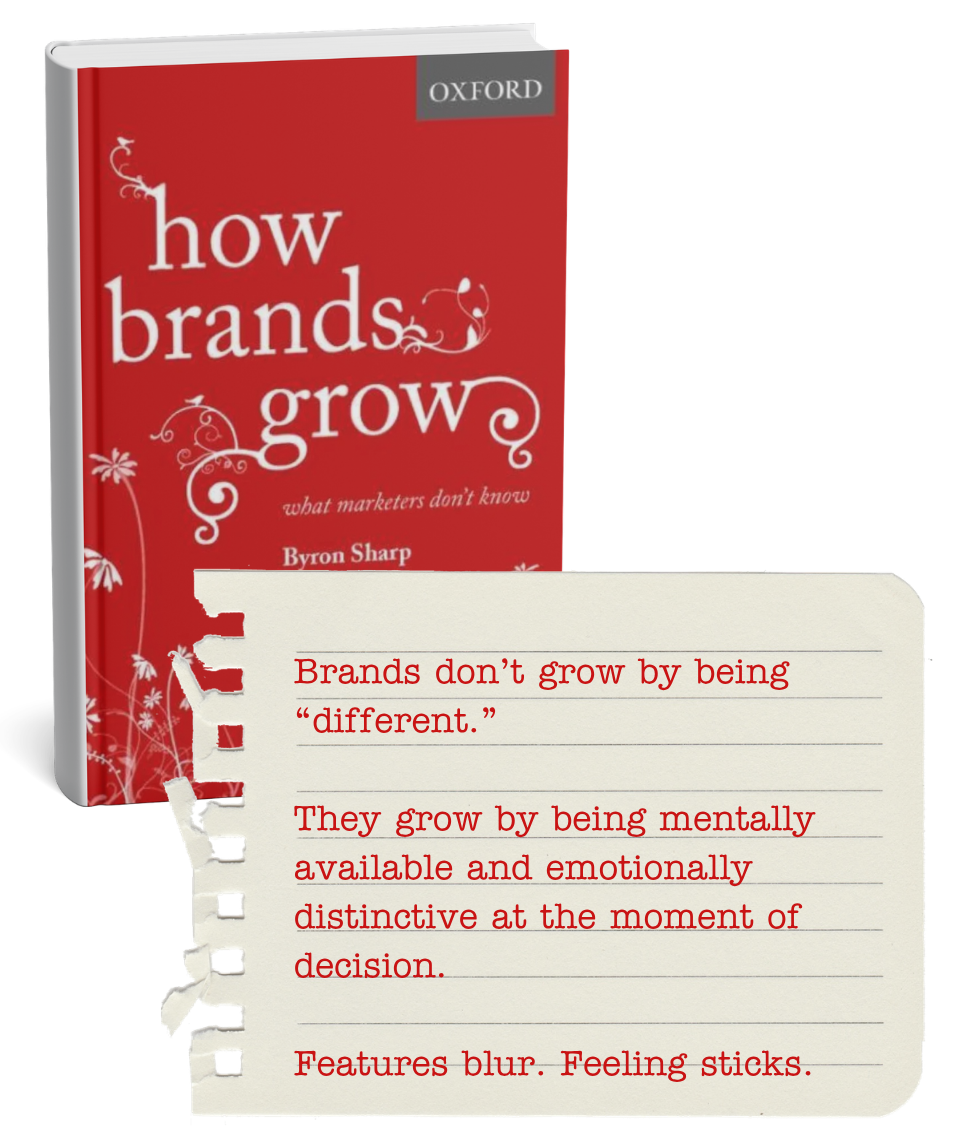
Ryan Chute: That's it. Fun, Ryan's fun fact: Byron Sharp, How Brands Grow, brilliant book, Oxford University Press, 2010, and the ongoing peer-reviewed work of the Ehrenberg-Bass Institute. Brands don't grow by being different. They grow by being mentally available and emotionally distinctive at the moment of decision. Features blur, feelings stick.
Powerful statement, and that's really what we're trying to get to here in this conversation is understanding the nuance of those differences.
Mick Torbay: I think Coca-Cola proved that in the '80s when they changed their formula to something that, in focus groups, consumers preferred. They focus-grouped the hell out of that formula change. They focus-grouped that to the ends of the earth. People preferred the new taste of Coke, absolutely 100% in blind taste tests. The new taste of Coke tasted better. But people didn't feel good about it. They liked the slightly shittier flavor because they had grown up with it their entire lives, and they were repelled by the idea, "I can't have that anymore." It's "You don't like it." "I don't care if I don't like it." It's, "
Chris Torbay: “Give me more of that cod liver oil."
Mick Torbay: It's insane. But it just goes to prove we, we make our decisions based on emotion. And when we have to remember that, what business are we in? We're in the emotion-creating business. We create feelings. That's what we, that's what we do for a living. We make people feel things that they shouldn't. They shouldn't have a feeling about an air conditioning company. They shouldn't.
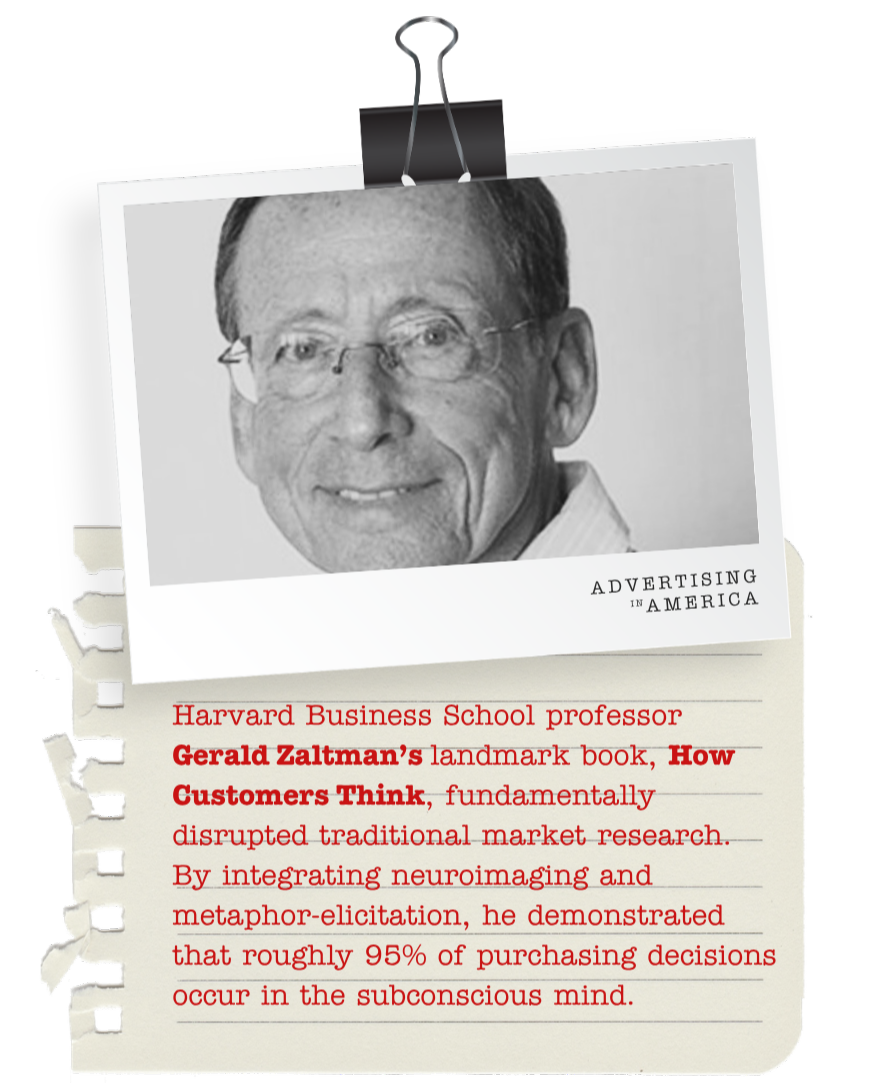
Ryan Chute: In 2003, Gerald Zaltman said that exact same thing in Harvard Business School: How Customers Think. He was using neuroimaging and metaphor elicitation research. Zaltman found that roughly 95% of purchase decisions are made unconsciously, driven by emotional associations the buyer can't even articulate.
Mick Torbay: “I know I'm going to buy that thing; I just have to spend a couple of days figuring out how I'm going to explain it to my wife. I’m going to go and cherry-pick some facts and figures so that I can buy that thing that I am going to have.”
Ryan Chute: And that shows up in Daniel Kahneman's work Thinking Fast and Slow. We've certainly been talking about it with Wizard of Ads for eons. It is the precipice of this.
People aren't buying with reasoning, they're buying with emotion. And it goes into the brain emotionally, goes over to the rational side for reasoning, and then the rational side kicks it back to the emotion to make sure that it feels right before they tip the scales, break the seal, and step into the sale.
Mick Torbay: So, as a business owner, I would say you almost certainly can't do this exercise by yourself. You almost certainly can't figure out what business you're in as long as you're in it. As long as you're sitting in your office and you're doing the thing that you do all the time, you're kinda going to land in the same place that everybody else who sits in your chair lands in. So wherever you naturally feel that's who you are, and that's what makes you distinctive and what makes you who you are, all your competitors are going to land in the same place. And if you're wondering why all ads sound the same, that's why. It's that client-based perspective. And so if you want to break out of that, you really do need professional help. You need someone outside who will dare to tell you you're not in the business you think you're in, and won't get beat up for that.
Ryan Chute: Look, I see it as three layers to start, one is the features. Family-owned, and we do this, we have people care, and all the blah, blah, blah. Then we have the layer number two, the benefits. We fight uncertainty in home services. But that's where most people stop when they're doing a better job than most. The whole Simon Sinek notion here of start with why. But then there's the next layer beyond that is how are we fighting uncertainty? What is it that we do?
Mick Torbay: Prove it. Prove that you're fighting uncertainty.
Ryan Chute: And the problem in that layer is that even if you're really good at figuring out the uncertainty part, you're probably not going to tell the how and what of the golden circle of your why that the customer cares about in an entertaining way.
Mick Torbay: Probably not.
Ryan Chute: So great, you've just told them in an incredibly boring way how and what you do to fight uncertainty, and no one cares.
Mick Torbay: It's hard. It's harder than it looks.
Ryan Chute: It's way harder than it looks. That, listen, the first time I stepped into the very first partners meeting in 2017, by the time the first day ended, I was like “I'm not going to write a damn thing for anyone ever."
This way beyond my scope of ability, and I would have had to have started 30 years ago, like you guys did, what, I think, 30 years ago.
Mick Torbay: 75 years ago for Chris.
Ryan Chute: 75 for Chris.
Mick Torbay: I mean, it's coming up to
Ryan Chute: It's more than 30 years. We'll just say that. That's yeah, so we're just celebrating anniversaries at this point.
Mick Torbay: It was the cotton gin you were first working on.
Chris Torbay: Yes. The cotton gin, yes. I think it's really going to take off.
Ryan Chute: He helped Jim Beam with his first run.
Let's do the swap test. Take your last three ads, cover up your company's name, replace it with your biggest competitor's name. Does the ad still make sense?
Mick Torbay: Or is it absolutely impossible? Would it be absolute gibberish?
Ryan Chute: If the ad still works word for word with a different company name on it, congratulations, you're not advertising for yourself anyway. You're advertising for the industry. A real brand ad would feel completely wrong when somebody else's name was on it, to your point, Mick. That's the bar that you need to set as a minimum bar. Yeah. And it's through entertaining storytelling where you're coming up with, based on a true story, characterizations that speak into the customer's why, not your own. This has been a fantastic conversation, guys. I look forward to us getting onto the next episode.
Ryan Chute: Here's the thing. If you're running a business in America, here's what I'd want you walking out the door with. One, stop selling the little purple pill. Sell the gleeful stroll to work the next morning. Your customer isn't calling you for your thingy.
They're calling you for what your thingy gives them. Two, the biggest feeling to overcome is uncertainty. People buy what you have to sell when you make them feel better than your competitor does. Three, forget different. Be distinct. All your competitors look exactly like you. Find a way to show up in a distinct way.
Pull every competitor ad in your zip code, then refuse to advertise the same thing. Everyone says quality service, 24-hour emergency, family-owned since whenever. Cool. Let them have that. Go tell a crazy story that takes the emotional high ground they were all too scared to or too incompetent to claim. If you don't hear anything else, hear this.
You are not in the home service business. You are in the feelings business, and your greatest villain is Captain Confusion. Kill the bad guy and win the sale. Go tell that story. Until next time, this is Advertising in America. Thanks for tuning in.
Thank you for joining us on Advertising in America. We hope you enjoyed the show and captured a nugget of marketing magic. Wanna hear more? Subscribe, leave a review and share this podcast with your friends.
Do you have questions or topics you want us to cover? Join us on our socials @advertisinginamerica.
Until next time, keep your ads enchanting and your audience captivated.
(Ad Campaigns)
(Campaign Strategy)
(Customer Targeting)
(Ad Strategy)
(Marketing Strategy)
(Advertising in America)
(Advertising Analysis)
(Brand Identity)
(Customer Experience)
(Kinds Of Ads)
(Brand Strategy)
Advertising in America
The podcast that turns marketing into magic! Hosted by the brilliant Ryan Chute and the ever-entertaining Michael Torbay & Chris Torbay, this show dives deep into the world of American advertising, revealing the secrets behind the most successful campaigns and exploring the latest trends.
Rare, bizarre, and unexpected tools, tactics, and techniques for profitable persuasion beamed directly to your pocket periodically, without warning.
Thank you! Your submission has been received!
Oops! Something went wrong while submitting the form.
(No spam. No strings. Let's just grow your service business.)
Frequently asked questions
Questions? We’ve got answers.
Why Wizard of Ads for Services?
Are you ready to transform your business into a distinctive, emotionally resonant brand? Here's why hiring Ryan Chute, Wizard of Ads for Essential Services is the game-changer your business needs:
Distinctiveness Beyond Difference: Your brand must be distinctive, not just different, to stand out. We specialize in creating an emotional bond with your prospects to make your brand unforgettable.
Building Real Estate in the Mind: Branding with us helps your customers remember your brand when they need your service again, creating a lasting impression.
Value Proposition Integration: We ensure that your brand communicates a compelling value proposition that resonates with your audience, creating a powerful brand-forward strategy.
Who Should Work with The Wizard of Ads for Services?
Wizard of Ads for Essential Services start by understanding your marketing challenges.
We specialize in crafting authentic and disruptive brand stories and help build trust and familiarity with your audience. By partnering with Ryan Chute, Wizard of Ads for Essential Services, you can transform your brand into one people remember and prefer. We understand the power of authentic storytelling and the importance of trust.
Let us elevate your marketing strategy with our authentic storytelling and brand-building experts. We can take your brand to the next level.
What Do The Wizard of Ads for Services Actually Do?
Maximize Your Marketing Impact with Strategic Alignment.
Our strategy drives everything we do, dictating the creative direction and channels we use to elevate your brand. Leveraging our national buying power, we ensure you get the best media rates for maximum market leverage. Once your plan is in motion, we refine our strategy to align all channels—from customer service representatives to digital marketing, lead generation, and sales.
Our goal is consistency: we ensure everyone in your organization is on the same page, delivering a unified message that resonates with your audience. Experience the power of strategic alignment and watch your brand thrive.
What can I expect working with The Wizard of Ads?
Transform Your Brand with Our Proven Process.
Once we sign the agreement, we visit on-site to uncover your authentic story, strengths, and limitations. Our goal is to highlight what sets you 600 feet above the competition. We'll help you determine your budgets and plan your mass media strategy, negotiating the best rates on your behalf.
Meanwhile, our creative team crafts a durable, long-lasting campaign designed to move your brand beyond mere name recognition and into the realm of household names. With an approved plan, we dive into implementation, producing high-quality content and aligning your channels to ensure your media is delivered effectively. Watch your brand soar with our comprehensive, strategic approach.
What Does A Brand-Foward Strategy Do?
The Power of Strategic Marketing Investments
Are you hungry for growth? We explain why a robust marketing budget is essential for exponential success. Many clients start with an 8-12% marketing budget, eventually reducing it to 3-5% as we optimize their marketing investments.
While it takes time to build momentum, you'll be celebrating significant milestones within two years. By the three to five-year mark, you'll see dramatic returns on investment, with substantial gains in net profit and revenue. Discover how strategic branding leads to compound growth and lasting value. Join us on this journey to transform your business.

.png)




%20(1).webp)
.webp)
.webp)
.webp)

.webp)