Most business owners say they want bold, different advertising, but reject it the moment it arrives. Learn why breakthrough campaigns only look safe in hindsight, and what it actually takes to commit to the idea that makes your stomach drop.
Advertising in America
June 25, 2026
You say you want something different.
You don't.
You want something different that looks like something that already worked. You want risk with a guarantee attached. You want a breakthrough idea that a focus group approves. That's not different. That's a polite version of what you've always done, wearing a new shirt.
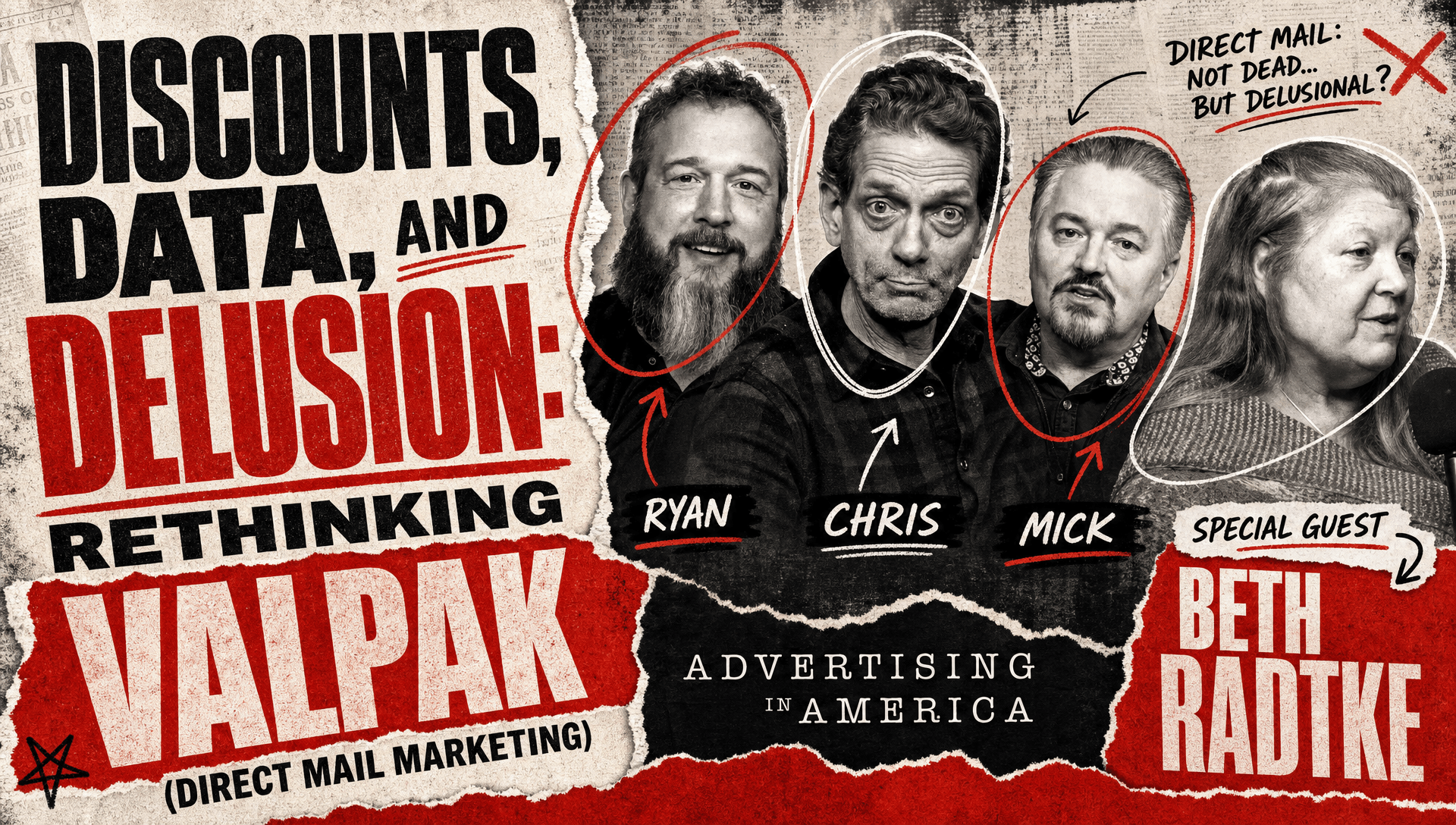
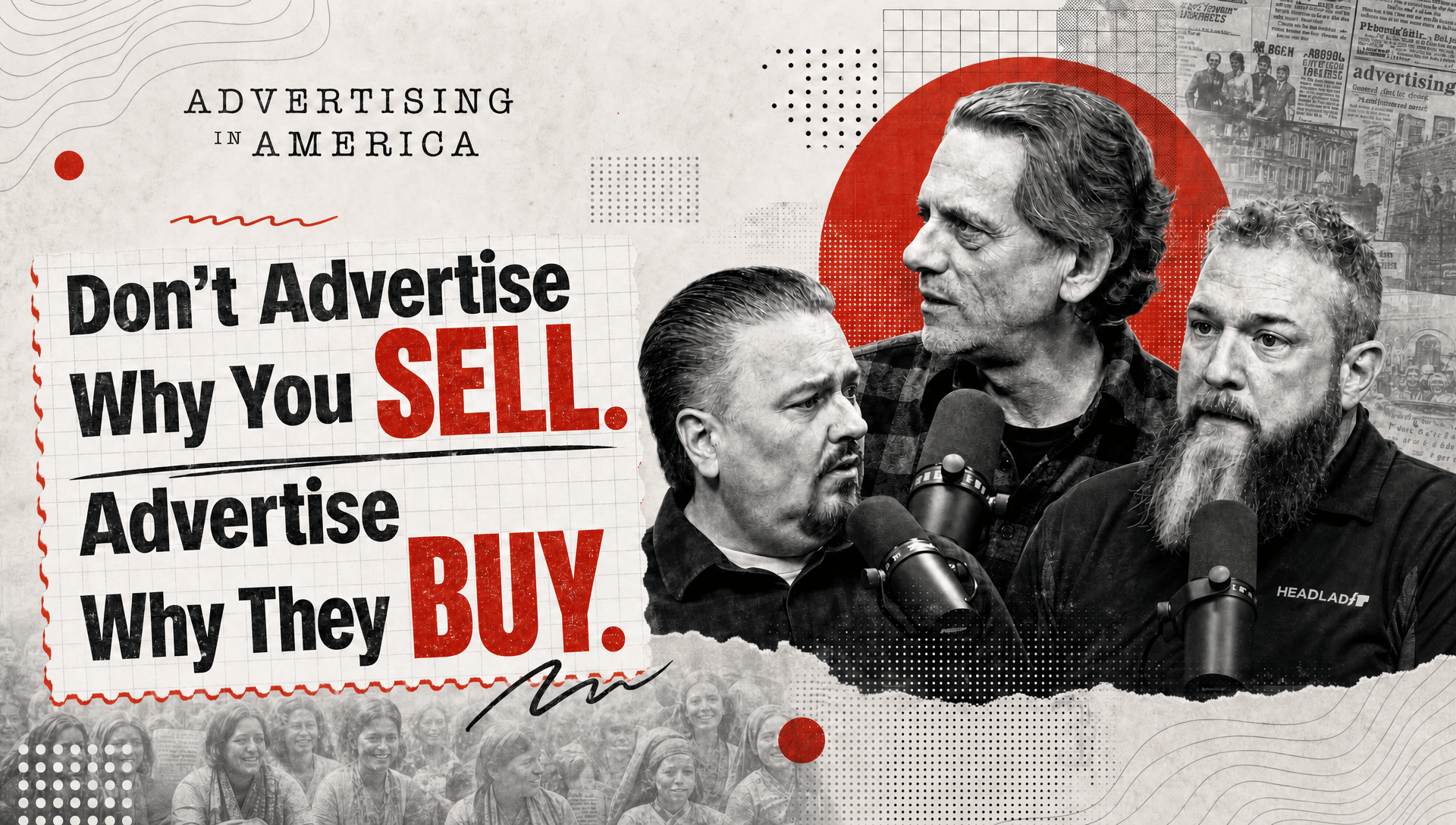
In this episode of Advertising in America, Chris, Mick, and Ryan go after one of the most dangerous lies in marketing: that clients want to do something bold. The truth is, most of them have already had bold presented to them. They just didn't buy it. They bought the safe version that came before it on the deck. Or after it. The one that felt like advertising.
The conversation moves from Jack Nicholson improvising his way into movie history, to why The Sopranos cast assumed they'd never get a second season, to why the campaigns every business wishes they ran Old Spice, 1984, Got Milk, only look brilliant in hindsight.
Because breakthrough ideas don't look like winners when you're staring at them in a boardroom. It looks like getting fired in 4K.
Episode Highlights
You Can't Handle Different: Why clients ask for it, reject it, and then applaud it when someone else pulls it off.
The Staring Off the Cliff Feeling: What true breakthrough ideas actually look like when they hit the table and why they terrify everyone in the room.
The Deck Order Truth: Why agencies present the safe idea first, the wild idea second, and expect you to run with number three.
The Sopranos Problem: Why the people closest to the most revolutionary things are always convinced they won't work.
Risk and Reward. Pick One: Why you can't live in both worlds at the same time, and what it actually costs to stand out.
Mere Exposure Effect: The 1968 research that proves repetition isn't lazy, it's how people come to love what they feared.
The Parasocial Brand: Why your customers call the same HVAC company every time—not because they know you, but because they feel like they do.
Different is the Story, Not the Operation: Why the thing that separates you isn't your service model, it's the strange, specific way you tell your truth.
You're Not the Hero: Why the home services company that leads with "we're here to save the day" has already lost the plot.
🎧 Hit play for the most honest conversation in marketing you'll hear this year. If you've ever been in the room when the bold idea got watered down, this one will feel uncomfortably familiar.
👉 Are you actually ready for something different, or are you just ready to say you were?
On this episode of Advertising in America, I’m a little nervous.
In advertising, clients see great ads in the market, sometimes for their competitors, and they say, “We should do something like that. Something new and different, and that takes the world by storm, something that is unignorable and totally unique, something that is going to blow up on social media.”
Maybe you want something basically the same as everyone else’s marketing, that delivers basically the same results.
So different isn't about what you're doing. Different is about the story you tell, and how you tell the story.
If you want to absolutely take over your industry, playing it safe is not for you. But if you don't have the stomach for everything that comes from risk, be honest with your marketing people, play it safe, down the middle, don't offend people.
You'll never be rich, but you’ll never be poor either.
Ryan Chute: The topic today is, “Don’t ask for something different.” And I didn’t know you weren’t supposed to ask for that. I think I’ve been asking for that for years. Nobody told me. I just thought I was being helpful. Anyway. Chris is gonna start. He knows stuff. I’m just gonna sit here and learn somethin’. Chris.
Chris Torbay: There’s a great behind-the-scenes story about the filming of A Few Good Men. We all know the pivotal scene: Jack Nicholson is playing a big, tough General being questioned in court by brainiac lawyer Tom Cruise, who’s trying to trip him up and catch him in a compromising position.
At some point, Cruise dramatically shouts, “I want the truth!” and Jack Nicholson snarls back, “You can’t handle the truth!”
Little-known fact: the line in Aaron Sorkin’s brilliant script was supposed to be “You already have the truth!” But Jack improvised in character and changed movie culture forever. Interestingly, though, both those answers are good.
In advertising, clients see great ads in the market, sometimes for their competitors or sometimes just other great advertising out there in the world, and they say, “We should do something like that!” Something new and different that takes the world by storm. Something unignorable and totally unique. Something that’s going to blow up on social media.
Then they challenge their agency: “Hey, why don’t you give us something new and different that people will stop and remember us forever for?”
And that’s my answer: Don’t ask for something “different.”
You can’t handle “different!” And also, most times you’ve already HAD “different!”
The hardest thing for clients to realize is that these great, new, breakthrough ideas they see and wish their agency was doing for them, they only see them when they’re done. And they’re out there in the world, making a splash. Sure, everyone wants one of those ideas … IN RETROSPECT.
But that’s not what those ideas look like when they get presented to you.
As the former CCO of Wieden+Kennedy said, “When you’re looking at a truly breakthrough idea for the first time, it doesn’t feel like looking at a winner. It feels like staring off the edge of a cliff. Your stomach drops. Your brain plays a montage of you getting fired in 4k. Every instinct screams, “Turn back, you idiot!”
Truly new ideas feel terribly wrong in the moment they’re presented to you. It doesn’t look like anything you’ve done, or anything your competitors have done, and so you have absolutely no yardstick by which to evaluate it. It doesn’t look like advertising or marketing as you’ve learned it in Community College or even in your years of experience that have finally put you in this nice cushy office, so you don’t buy it!
The truth is, your agency presents something like that to you every time they get a chance. It comes right after the “safe idea” they present first, but right before the last idea, which is less crazy than this one is, so maybe you’ll at least go for that. Everyone has a good laugh at the really out-of-the-box idea, and then buys the one they can get their head around.
You want a new idea that will really stand out? You need to be comfortable with discomfort. You need to surrender control to the “crazy new idea people” and sign the contract and write the cheque, even though everything inside you says this is crazy and shows no guarantee of working.
That’s what 1984 did for Apple, that’s what The Man Your Man Can Smell Like did for Old Spice, that’s what “Wassaaap” did for Budweiser Brewing Company APAC.
Don’t ask for ideas that are revolutionary. You’ve had them, and either you or your committee watered them down. Or we didn’t bring them, because we knew you couldn’t handle them.
Ryan Chute: Gettin’ fired in 4K, I appreciate the specificity, but I don’t need 4K. The whole point of imagining your career ending is that it’s supposed to be a little blurry. Let’s do montages on a VHS. Don't upgrade the resolution on that one. Mick. Whatcha got?
Mick Torbay: When a client brings in a new agency or a new ad guy, by definition, they’re looking for something different. We know this, of course. It’s why all agencies start the first meeting by saying that everything the last guy did was wrong. We know we’ll all be on the same page if we begin with that one.
I mean, if you don’t want something different, then why did you fire the last guy?
But there’s always going to be a conflict between wanting something different, which is a good and honorable thing, and wanting something proven, which is also good and honorable. And completely incompatible with “different.” So sit with that for a while.
How comfortable are you with saying to your marketing team, “Bring me something completely unproven. Something where nobody knows whether or not it’ll work. Let’s find out together if this is a complete waste of my money. It’ll probably take a year to know for sure. So I’ll write the checks, you write the copy, and we’ll meet again in twelve months and see if this was a good idea or not.”
Seriously. Sit with that awhile. Say that last bit out loud. Imagine yourself saying it with a straight face. Word for word. Because when you ask for something “different,” that’s what you’re asking for. Now, maybe you want that. And maybe you don’t. But for goodness sake, be honest with yourself. Maybe, just maybe, you don’t want something different. Maybe you want something basically the same as everyone else’s marketing that delivers basically the same results. It won’t make you stand out, but it won’t blow up in your face either.
Risk and reward. Pick one. Take no risk, and live in mediocrity. Take risks, and well, stay up nights worrying if you’ve screwed everything up because maybe you did. But don’t pretend you can live in both worlds at the same time.
Please find me the billionaire who says, “I always played it safe. Never really took any crazy chances.” If you want to absolutely take over your industry, playing it safe is not for you. But if you don’t have the stomach for everything that comes from risk, then be honest with your marketing people. Play it safe. Down the middle. Don’t offend people. You’ll never be rich. But you’ll never be poor either.
But please don’t call the Wizard of Ads people. Because we don’t play that shit.
Ryan Chute: Mick told us to say that whole thing out loud. The part about writing the check, handin' it over, and waitin' twelve months to find out if it worked. So I tried. Said it out loud in my kitchen. My wife walked in and asked if I was okay. I just said, “Nobody knows.” We'll be right back.
Ryan Chute: We’re back. Everybody keeps askin’, “How can we be different?” The more I think about it, I don’t think that’s the question. Maybe, instead, we ask, “How do we get prospects to love us long-term?” What do you say, soldier boy?
Chris Torbay: It's an interesting contrast because one of the things that we know is that, in fact, consistency is one of the strongest things in marketing.
I had an interesting challenge with a client a few months ago, in that I inherited it from another person, and they had been running pretty heavily in the market for a couple of years. And so on one hand, I'm coming in as the new guy, and I had been brought in to be the new guy, and obviously, do things in a better way. But if I completely threw out everything that had been done before, then all of that equity you've built up is gone, right?
So the question became, what can I keep from the previous campaign and just do it in a new and different or better way? And so in a sense, I was brought in to be different, but if I just came in with a completely different idea, that's actually going to negate 24 months of advertising.
Ryan Chute: You could lose something,
Chris Torbay: The client, the consumer's going to go, "What happened to this brand? Because I thought they were all about this kind of thing."
Ryan Chute: It's what's important to protect at all costs, that did have value and some echoic retention. One of the biggest challenges that Ken had at Gettle was that you have this decades-old brand that you just can't get rid of, even though no one knows how to spell it. It was associated with not the most exciting of news when he took it over, and he brought it back with his values, his virtues, his personal brand, bringing that brand back to life.
Chris Torbay: But don't throw out everything.
Ryan Chute: But don't throw out the name. Don't throw out the patents. Don't throw out all the things that made it what it was.
Chris Torbay: Made it worth your purchasing in the first place or taking over in the first place. The other sort of big example from that from the big agency world is the number of times agencies, including Wieden+Kennedy, have tried to replace "Just do it" as the tagline for Nike.
It's been there, and every new creative director or every new copywriter who gets put on the brand goes, "You know what? Maybe it's time that we, it's been 20 years, it's been 25 years, it's been 35 years." Everyone is always trying to be the one who replaces "Just do it." And you know what? Keep "Just do it." It's there. Don't give me different. Give me more of that. Give it to me in a new way, maybe, put a new spin on it, but you don't throw everything out necessarily.
Ryan Chute: Baby in the bath, with the bath water.
Mick Torbay: It's almost never the consumer that's asking for the change, isn't it? And I think that also raises an interesting difference between the way the Wizard of Ads people work and the way the typical marketing world works, where the typical marketing agency charges based on the amount of time and work that they put into it, which encourages them to want to change more stuff.
We're paid on results, which means we're going to look at what you're doing right now that's working, and we're going to encourage you to keep whatever is valuable because why would you lose, why would we encourage you to take away something that's delivering results? We want to tighten things up, we want to fix what's broken, but we don't want to fix anything that isn't broken, because ultimately we only care about you selling more things, you making more money, increasing your revenue. Whereas at the agency, if they change everything, they get to bill more. And it, again, this is not evil, it's just simply the way the system is working. And it is the rare large agency that dares to say, "Maybe the guy three agencies ago kinda had it." I mean, Budweiser went through this exact thing when they changed the tagline, because they thought that “This Bud's for you” had run its course. Because they had run it for 20 years, and then they tried this one, they tried that one, they tried that one, and..
Chris Torbay: “Proud to be Your Bud…Well, there was a bunch of them.
Mick Torbay: There was a shake hands with the long-neck Bud, which is a little dirty for me.
Chris Torbay: There we go. But you can see why that one didn't work ...
Mick Torbay: But the point is, eventually they were like, and then they do focus groups and people are like, "Oh, yeah, Budweiser, yeah, this Bud's for you."
It's "Son of a bitch, we haven't said that for 15 fucking years." It's, yeah, but that's actually the one that's still resonating, and then eventually the marketing people have to be dragged into the reality of the consumer. It's "If this is what they're saying, why are we saying something else?"
Ryan Chute: Fun fact, guys, Robert Zajonc (1968), Journal of Personality and Social Psychology. The “mere exposure effect.” The more times your brain sees the same thing, the more you like it — even when you don’t consciously remember seein’ it. Repetition isn’t lazy. It’s how affection actually works.
Chris Torbay: So I guess there are two. Just before we continue, we're going to collide with when do you change your ads. A lot of what we're saying actually sounds like, “When you going to change your ads?”
I wonder if we come back to, when do you do something new and different? If you're a new brand, and I ask this question, you said something at the end of your rant, which is that if you do something similar to what's out there, you'll never be rich, but you'll never be poor. I challenge that. I wonder, depending on where you are, what kind of market, what kind of business you're in, if you don't do something different, are you in fact going to be poor? If you start a new cola today and you don't do something outrageous, I'm sorry, you're just going to... your business is gonna fold in 18 months.
Mick Torbay: Okay, you're not wrong. But I guess what I was getting at is that if you are… cola is probably not the best example of that because you're 100% right with that.
Ryan Chute: I don't think it's a bad example. Look at Liquid Death
Mick Torbay: But you're not going to be able to start a new cola without interesting advertising. And I think that's the point you were trying to make.
Chris Torbay: Jones Cola is doing all right because the packaging is different, and the label's always different every month,
Mick Torbay: I guess what I'm saying is if you wanted to start an air conditioning company, and you wanted to run, get yourself wrapped by the truck wrap guy and run those ads that look like all the other ads…
Chris Torbay: People shaking hands with a helpful homeowner at the front door. All those things.
Mick Torbay: We've seen it. You could do a lot worse, and as long as you're a good operator, you can do okay that way. You're not going to take over the world. You're not going to beat the leader, but you probably can do okay. You can probably not be the worst guy in town. You can probably be somewhere...
You could be the middle-est. Something that can feed your family and be okay. Are you going to, are you going to be the one that changes the world? Are you going to build an empire? No, you're not going to build an empire. That's all I was saying. If you're thinking of this as essential services, plumbing, electrical, roofing, and garage doors. In those worlds, if you kinda do close to what everybody else is doing, you'll pick up a few customers ... you can get by on that. Running advertising that is not going to scare people is not going to really be out there. You're not going to take any risks. You can do okay. You're not going to blow the doors off your industry. You're not gonna be Ken Goodrich doing that.
Chris Torbay: Yeah, I guess we're the first ones to say if there are four plumbers in town, and they're each splitting the business four ways, and you come and open a fifth plumber, you don't, by definition, you are not entitled to 20% of the business.
Now everybody else is gonna get 20% each, and you're gonna get your fair share of 20%. There is no reason for people to go to you unless you are doing something that says, "Why shouldn't I go to these four people? Why I should go to this one?"
Mick Torbay: But when people hire us, they're not asking, they're not looking to get their fair share. And that's what I was getting at the end of my rant, which is if you call us, you're not trying to divide it by, instead of by four, you want to divide it by five. You actually want more than your fair share. That's why you bring us in. And it's also important to note that, like you, I don't want this conversation to turn into you shouldn't do anything different. Absolutely you should do something different. That is exactly what we do. We build empires. We build leaders. You take a leadership position by doing something different. All we're saying is when you do something different, it requires risk. It requires consciously deciding that what we're going to do is go, may not work.
Why? Because it's different, because it's unproven, because it's not what everybody else is doing. It could blow the doors off the industry. It could blow up in your face. Now, you can mitigate that risk by hiring people who have done this sort of thing before.
Chris Torbay: So they've done different before. But they haven't done this different before.
Mick Torbay: They haven't done this different before. Exactly.
Chris Torbay: But it also takes a certain constitution. We've got another client in Nashville where we've done that, where he said he wanted to do something completely different, and when we presented it, he had this moment where it's like, "Okay," and he, to his credit is 100% invested in it and went with it, but boy, you could see the pucker happening.
Mick Torbay: If it gave him pause, that's how you know it was different.
Chris Torbay: That's how you know. And at some point you have to just have the internal constitution to say, "I am going to take this on faith that if we are all in and all behind it, it will eventually work." But there is no reassurance at the beginning. And so if you ask for it, I guess this is the point of my rant, that if you're going to ask, be prepared to be freaked out. And we will get there, but it is not going to be an enjoyable ride. You're not going to know from first, from the first blush that this is going to be a hit record. We just got to get it out there and wait for it to build up. There's going to be a huge moment of uncertainty while you wait for it to freak the audience out, and have them go "This is weird. I wonder what this is."
Ryan Chute: And I think it's important for us to stop and reflect on the three inflection points that we're talking about here. Inflection point number one is you currently have a brand that is doing what it can do to capture the low-hanging fruit of existing demand and is looking to do this next thing.
Yes, that requires you having a different story than nothing.
Then there's the different story than the thing that's not working very great. That's different.
Then there's the “I'm new to market and I need to show up in a way that interrupts the pattern.” Pattern interrupts.
So all of these things are different points of different or distinctions? But it all comes down to the likelihood of you doing something different operationally in home services is basically zero from the customer's perspective.
Mick Torbay: Or darn near zero ...
Ryan Chute: As far as perception in the public goes. So different isn't about what you're doing, different is about the story you tell and how you tell the story. This is a critical point to make is that this whole story is the distinction. You do the same things. How do we change that? We change that in a way that says mad scientist and British nanny, right? We talk about some crazy dynamic that, that makes sense but also gets noticed. That's the whole point of different. Without losing sight of the fact that if you've already done something that's gosh darn good, why not hang on to that thing? Because different for the sake of different isn't the mover, right? Mick, you regularly say capturing lightning in a bottle is hard. Why in the world are we trying to do that again and again?
Mick Torbay: And to Chris's point earlier in his rant, it's very easy to retroactively go back and say, "Yeah, that was a great idea."
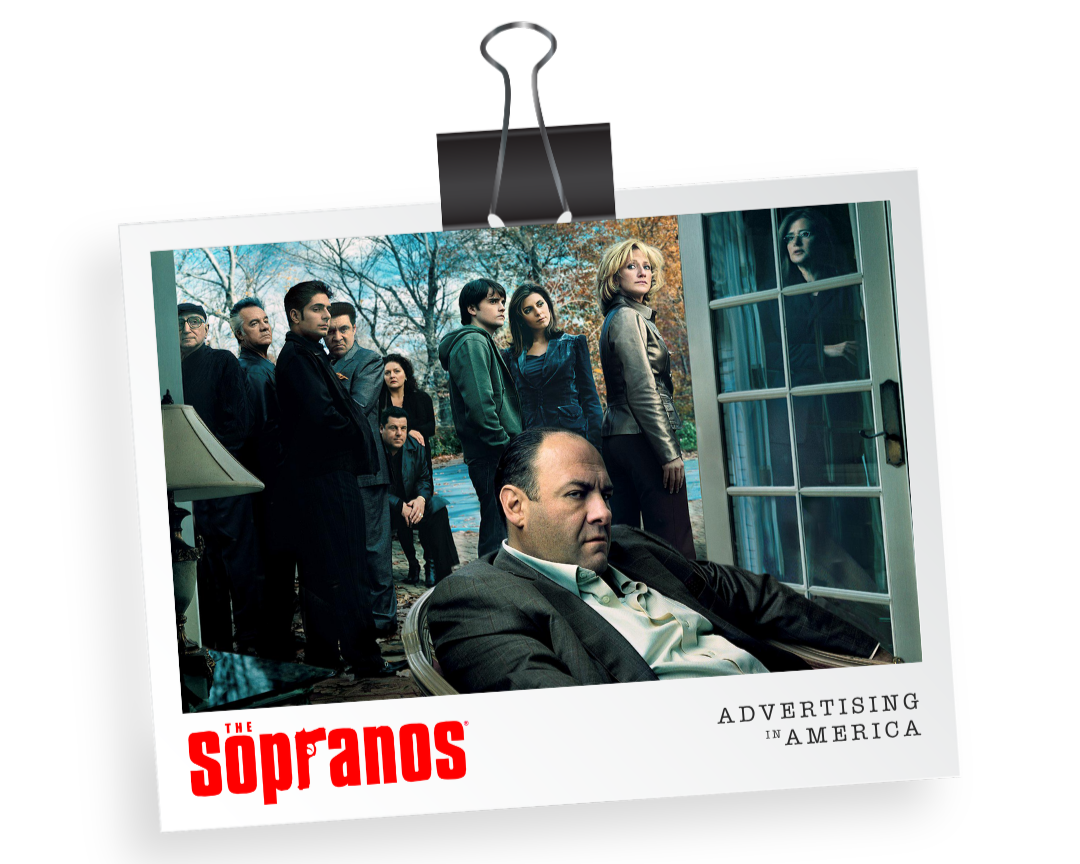
I'm reading a book right now on The Sopranos, which we take for granted, so many of the parts of that program that were innovative at the time. The anti-hero really wasn't a thing on TV. Shooting a television show like they were an hour and 50-minute movie really wasn't done until they did it first. When they go when they had the pilot made the cast made that pilot, and then they were like, "Yeah, this is never gonna get picked up." There's no possible way."
And then it got picked up, and then they shot the entire season, 13 episodes, before they ran the first one. So they had an entire season in the can before it went on television for the first time. And at the end, when they had them all done, they were like, "There's no way we're getting a second season."
"There's no way they're gonna pick this up because it's just too fricking different."
Now, in hindsight, it's very easy to say, "Oh, no, it was brilliant. It was awesome. It did all these things differently. It broke all of these rules." And now these are rules that, that are routinely broken. They are now almost in fact rules.
That's why we have Breaking Bad. That's why we have all these other programs where we have. That's why we have Dexter. It's why we have programs where it's like, "That's a terrible person, and I kinda like him, and I wanna see what he's gonna do next." So, it's easy in hindsight to say, "Bring me something different."
But at the time, everyone involved in that program was like, "There is no possible way this is gonna, this is gonna get picked up." And for us now to look at that, it's "That's impossible." It's like, "No, it's completely possible."
Chris Torbay: And that's partly why both in Hollywood and in advertising, the decision-makers often try to compare it to something they can research. Show me another campaign that did this kind of thing, and how did it perform, and let me compare it to a bunch of benchmarks.
If you're asked for an idea that, that comes at it in a new way, there is not going to be anything else that you could compare it against to say, "If we do this crazy thing, there's a good chance it could actually work," because there isn't one of those and therefore, you're the guy who has to take that painful risk.
Mick Torbay: And what have we learned since that program ended in 2006? Fuck all, that's what. Because what kind of movies are they making now? Another fricking comic book movie. Why? because if we make yet another Deadpool movie, we know that it'll sell. That's not different. That's just another one of those. We're actually afraid to do anything new, even though what you really should be doing is "Let's make the next Sopranos." That is to say, something that's never been fucking done before and be the guy. But that's freaking terrifying.
Ryan Chute: It is. But, fun facts. Fun facts. Bient & Fields…
Mick Torbay: It better be fun by the way, or I’m going to be pissed. I didn't curse in my rant, so I have to curse now.
Ryan Chute: This is it. Binet & Peter Field, The Long and the Short of It (IPA, 2013). Campaigns that hold the line for three-plus years deliver roughly 2 to 3 times the profit growth of campaigns that “refresh” every year. The boredom is the discipline is the point of that of that research.
The whole point of “I’m a Mac, I’m a PC” ran for seven years. 66 spots. Two characters. Mac went from under 2% market share to over 10%. Big boys playing in the big boy fields, going 10%'s a lot of computers.
Mick Torbay: That’s a lot of copies.
Ryan Chute: They didn't get different every quarter. They got familiar. Familiarity is what breeds it. And that leads us to a fun fact. Another fun fact. Horton & Wohl (1956). We’re going back to the heyday, this is the golden era of behavorial science. Psychiatry, vol. 19, they coined the term “parasocial relationship.” It’s the real emotional bond audiences form with consistent characters they’ve never met. It’s why you cried at the Friends finale. It’s also why your customer loyally calls the same HVAC company every time they don’t know you personally, but they feel like they do know you.
Mick Torbay: They feel like they do. And that's actually more important.
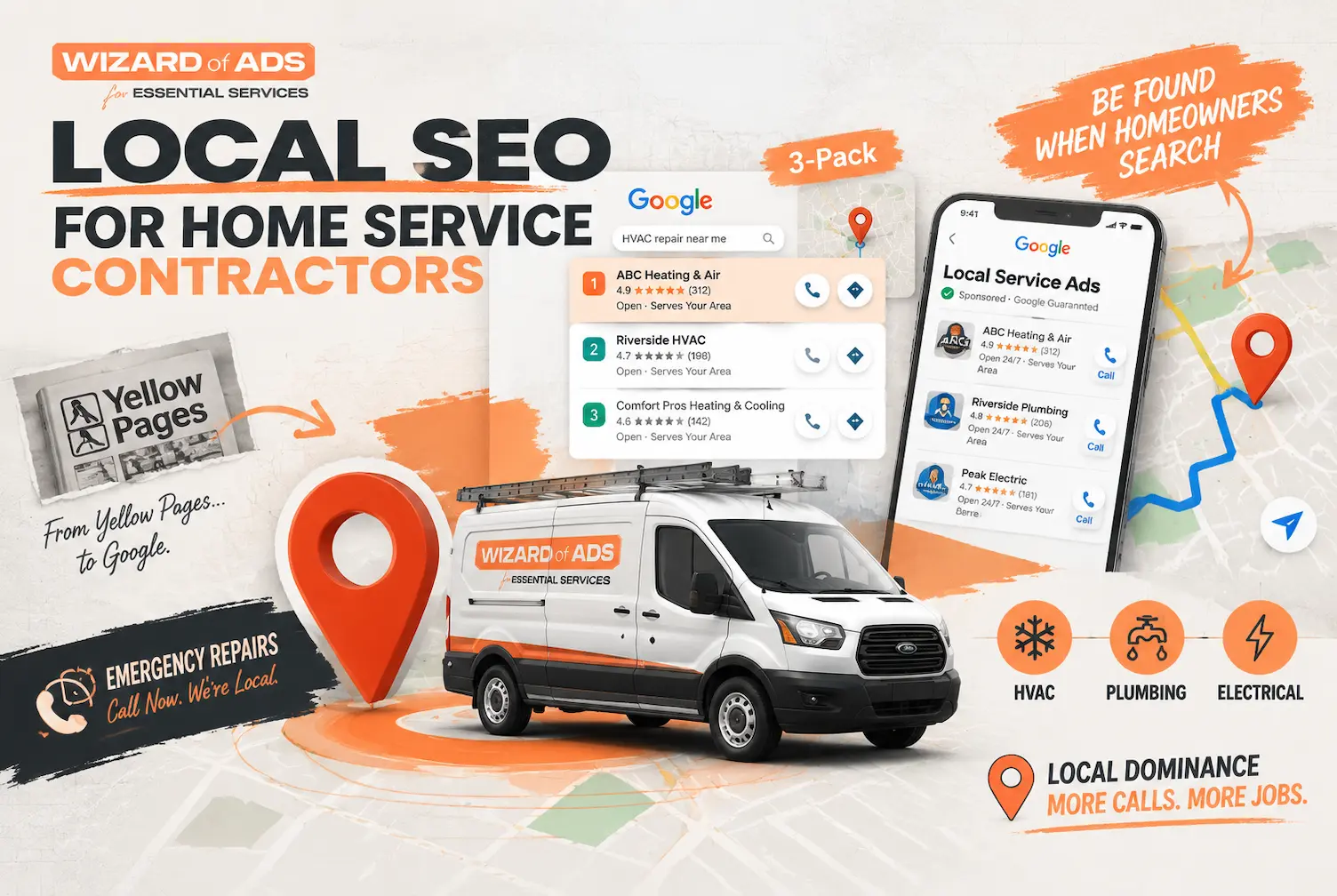
Ryan Chute: That's much more important. And it comes back to this whole idea of the story as the differentiator. And it's not the wrap, it's not the logo, it's not the five-star service guarantee, despite what people from stage might be beaking off about. Most of that stuff is nonsense. Real talk, your customers cannot tell your truck wrap apart from your competitor's truck. It's invisible. They've all got a smiling mascot holding a wrench on the side. The wraps just start to blur together when they all start to look the same. Your customer thinks every HVAC company is basically the same. Every plumber, every electrician, the same stock 1950s cartoon, same uniform, same speech about quality and service and family-owned heritage. None of it really matters because none of it actually makes people feel.
The only thing that we can actually tell apart is how you made them feel the last time you showed up. That's the brand. That's literally the message, the story. The weird way that it's told is what's actually moving the needle for you. It's not the generic nonsense that keeps coming out of your mouth on a radio ad or a billboard, or what's on the side of a truck. It's what you say that makes people move.
Fun fact. Antonio Damasio, Descartes’ Error (1994), with follow-up peer-reviewed work in Cerebral Cortex (Bechara, Damasio & Damasio, 2000). I actually did do the research with actual real research. The somatic marker hypothesis: Patients with damage to their emotional centers literally cannot make decisions. Not even small ones. Because every decision is emotional first, rational second. This is actually tested in the brain. The “rational” part is the story we tell ourselves about a feeling we already had, which is really just storytelling inside our brain between the left and right hemispheres to get the part. Even when we actually make the decision on the rational side, the emotion has to make the choice.
So you have to be able to release yourself into the wild to feel right about the decision. People don't decide who to call when their AC dies. They ‘feel’ who to call.
Mick Torbay: They feel good about something.
Ryan Chute: They reach for the company they've had feelings about. Maya Angelou? Angelou. Angelou. Angelou said it better than anybody,
"People will forget what you said. People forget what you did, but people will never forget how you made them feel."
One of the most brilliant points ever made in the history of storytelling.
Mick Torbay: I think what business owners really need to do is they need to decide which side of that line they're going to be on. Are you going to be one of many, or are you going to be the one that's gonna stand out? And it's very easy to say, "Oh, I wanna be the one that stands out." And I think what we're here at this table saying out loud, and almost nobody ever says it, is “No, seriously, this is a harder question to answer than you might think.”
Because if you want to be the one who stands out, that does carry with it some risk that you might not have considered. You, there is no easy way to say, "I am going to stand out." You're going to have to risk money. You're going to have to risk reputation. You're going to have to risk, you're going have to make sacrifices that the people who are going to head down the middle of the road won't have to make. And not everybody's cut out for that, and it's okay to say, "Hey that's not the, that's not the place for me."
One of the partners in my airplane, runs a $10 million business, and he has no desire for it to be any bigger. He's perfectly happy. He has lots of time. He's making some money. And he does not want to take over the world. And I respect him for that. He's not under any delusions.
A lot of business owners are under delusions. They think that something magical is gonna happen. It is not. If you want to become a leader, if you want to take over your industry, if you wanna be the one that everybody's paying attention to in your market, you have to do something big and different and scary. And if you want to do it, you can mitigate that by working with people who do big and different and scary for a living, the Wizard of Ads group being one of those outfits. But to some degree, you can do that with any marketing company. You just have to dare to say to them, "We're going to do the crazy shit."
We're not just gonna do the straight-ahead down the middle thing. We're actually going to have some fun.
Chris Torbay: We're not going to focus group it because the focus group's going to be in the same position where they go. They're going to tell you right to the set ... "I don't know about that ad, man. It doesn't look like any ad that I've seen on TV." And so they're going to inject even more uncertainty into the process. That’s if you ask them. At some point, you just have to say, "I'm going to go for this."
Mick Torbay: Part of this is asking yourself who you are. Like, what kind of person are you? And be okay with that.
It's not whether you're a good person or a bad person, it's just let's decide whether you're an empire builder or not.
Because not everybody is. Most people probably aren't.
Ryan Chute: And let's all stack hands, that different is by definition change, and change for most people is terrifying and very difficult to implement into their businesses. While so many of them say, "Say whatever you need to say to get the job done," we're saying, "Tell your true story in a unique way."
And there's a fundamental divide between those two concepts, if you're going to lie your way to success, guess what? You're going to go out of business because good advertising's only going to accelerate you into the thing that was already going to happen.
Mick Torbay: And people can see through that shit so easily.
Ryan Chute: It's superficial, but it's also contrived. As you said, people are gonna see through it. But then there's nobody that's going to back you up in, in your culture. It's "That's not us. That's not what we do. That's not what we say. You say all these funny things. They come here, and then they get a totally different experience." Guess what?
I have always said and will continue to always say that your operation and what you deliver, the experiences you deliver to the buyer, are going to be the number one branding exercise of your business. There is nothing else that does more branding than your own experience, and that's just a fact. No matter what we do.
Mick Torbay: Marketing needs to follow that, not the other way around.
Ryan Chute: That's right. That is marketing in so much as done right, your marketing becomes word of mouth through referral and repeat business, much more than it becomes acquisition of new customers. There's no city in America where there's an endless array of customers. So ultimately, it comes down to there's a certain amount of people who are going to want to do business with you the way you do business. How do you get them coming back and craving more and letting their friends know that you're only, that you're the only guy in town?
Mick Torbay: But you don't solve that problem by having marketing write checks that you can't, that your team can't cover.
Ryan Chute: Absolutely. Absolutely. And there are a lot of ways to tell really interesting stories. I think one of the biggest mistakes that's told in storytelling, for home services in particular, is the hero story where they assume that they're the hero.
They're not the hero, they're the guide.
Mick Torbay: I am terribly important.
Ryan Chute: Yes. And that they're coming to save the day when, in fact, what they are is the old man in the woods helping the hero, our customers get the result that they're looking for to overcome that villain, whatever it might be, the hot water being out, the Mother Nature, the whatever. All of these end up changing how stories are told. Good storytelling is hard. Good storytelling when you don't know what you're doing is-
Mick Torbay: Damn near impossible .
Ryan Chute: Well, it's embarrassing to see some of the stuff that we have seen.
Mick Torbay: Most people frankly don't even try, though. You're actually criticizing the people who are at least trying, and that's not most of them.
Most of them are quality, service, selection, price, convenient location, free parking, and we have professional staff who really care about your needs. My God.
Ryan Chute: So little bonus material here. Distinction's what gets you noticed. Familiarity is what gets you hired. Every campaign we still talk about, Old Spice 1984, Got Milk, Whasssup, Mac versus PC, ran long enough for the audience to fall in love. That's the broad strokes right there.
The brave idea is half the equation. The patience the patience is the other half.
Most folks quit before the patience part starts paying off. So these are the things that we want to start thinking about when we think about, how are we going to advertise our business?
It's going to be I need to tell a bold story. I need to say something that matters. I need to be okay with it being a different story. I don't need to run a different operation that I have to get my employees bought in, because if my culture doesn't deliver on what my brand promises, then the brand is going to be what your culture delivers.
Chris Torbay: Maybe that's an interesting, reassuring point to wrap it up for people, is if you take that approach that you just talked about with consistency and a long-running story, maybe that makes the initial freak-out a little easier to take.
You only have to throw yourself out of the airplane once every time you parachute, and that moment of "Am I going to throw myself out of this airplane or not?" only happens once. Once you do, and you pull the rip cord, and the chute opens, now it's actually a ride that you can stick with, and you're still up there, and there's still things to worry about. And it's fun.
But that moment of plummeting over the edge happens at the beginning when you call your ad guys, and they say, "Okay, here's this thing. We're going to have two penguins, and they're gonna be mud wrestling." And then you go, "Oh, my God, that does not look like anything that I've ever seen before."
You will have... That, that's the moment of throwing yourself out of the airplane. But then the more you stay with it, the more you are dedicated to it, the more other aspects of your business start to pick up on that idea, and it becomes the whole thing that you are known for, then it gets more and more tolerable as you move on.
And maybe that's the reassuring thing, "Don't worry, this is going to freak you out in this meeting, but it's going to get better from here. If you can get past this, if you can write the check this time, it's going to get better, and it's going to get better, and it's going to get better. This is not going to be what it is like to work with me for the next five years."
Mick Torbay: And if you're not good at this naturally, for goodness sake, don't do it yourself. Find somebody who's good at this.
Ryan Chute: It's the who not how concept. If you wanna get there fast, if you're looking to dominate your marketplace, you're not going to do it yourself.
You're going to do it with the help of others, the experts who know what they're talking about. If you try to do it yourself, bring it in-house, but even then, you have the danger of your in-house person getting infected with the curse of knowledge, and this becomes one of the big challenges that you have to consider when you're doing something different. It's so easy to fall into the trap of information. But information has never led to transformation, ever. It's always transformational storytelling that moves others to take action. Not even inspire them, not even get them excited about it, but to literally take the step that needs to be taken to get you to the next level of revenue.
Ryan Chute: So look. If you’re running an essential home service business in America, heating, air, plumbing, or electrical, here are the three things I’d want you to walk out the door with.
Stop chasing “different.” Create a unique story, not a unique value proposition. The best ad campaigns are like micro-sitcoms. Same characters. New situations. Month after month. Year after year. Pick truths about your business and stay married to it long after you get bored with it.
It’s never been your truck wrap. Or your logo. And nobody cares that you’ve been “family-owned since whenever.” You could replace your name with literallyany competitor. The only thing your customer can actually tell you apart from the herd is the way you made ‘em feel. The feeling is your brand. Make somebody feel somethin’ real good, and anchor it to the pain they feel when something you can sell them breaks. They won’t call anyone else.
Tell your TRUE story. Not the one you wish you had. Are you funny? Earnest? A bit of a renegade? Are you the hero who shows up at 11 p.m. when the AC dies on the hottest night of the year? Find the authentic story, then figure out how to tell it in an entertaining way. Maybe you get a mad scientist and a British librarian to tell that story?
If you don’t hear anything else, hear this. You do not have to be more clever than your competition. You don’t even have to outspend them. And you certainly don’t have to chase whatever shiny new platform showed up on Tuesday.
You just have to be more like yourself than your competitor could ever hope to be.
Then stick around long enough that folks can only imagine your truck pulling up their home. Go tell your story in a weird way. And do it long enough that you become the company they raise their kids on.
Until next time, this is Advertising in America. Thanks for tuning in.
Thank you for joining us on Advertising in America. We hope you enjoyed the show and captured a nugget of marketing magic. Wanna hear more? Subscribe, leave a review and share this podcast with your friends.
Do you have questions or topics you want us to cover? Join us on our socials @advertisinginamerica.
Until next time, keep your ads enchanting and your audience captivated.
(Company Story)
(Ad Campaigns)
(Advertising in America)
(Ad Strategy)
(Ad Message)
(Advertisement Analysis)
(Advertise Your Business)
(Advertising Methods)
(Advertising Philosophy)
Advertising in America
The podcast that turns marketing into magic! Hosted by the brilliant Ryan Chute and the ever-entertaining Michael Torbay & Chris Torbay, this show dives deep into the world of American advertising, revealing the secrets behind the most successful campaigns and exploring the latest trends.
Rare, bizarre, and unexpected tools, tactics, and techniques for profitable persuasion beamed directly to your pocket periodically, without warning.
Thank you! Your submission has been received!
Oops! Something went wrong while submitting the form.
(No spam. No strings. Let's just grow your service business.)
Frequently asked questions
Questions? We’ve got answers.
Why Wizard of Ads for Services?
Are you ready to transform your business into a distinctive, emotionally resonant brand? Here's why hiring Ryan Chute, Wizard of Ads for Essential Services is the game-changer your business needs:
Distinctiveness Beyond Difference: Your brand must be distinctive, not just different, to stand out. We specialize in creating an emotional bond with your prospects to make your brand unforgettable.
Building Real Estate in the Mind: Branding with us helps your customers remember your brand when they need your service again, creating a lasting impression.
Value Proposition Integration: We ensure that your brand communicates a compelling value proposition that resonates with your audience, creating a powerful brand-forward strategy.
Who Should Work with The Wizard of Ads for Services?
Wizard of Ads for Essential Services start by understanding your marketing challenges.
We specialize in crafting authentic and disruptive brand stories and help build trust and familiarity with your audience. By partnering with Ryan Chute, Wizard of Ads for Essential Services, you can transform your brand into one people remember and prefer. We understand the power of authentic storytelling and the importance of trust.
Let us elevate your marketing strategy with our authentic storytelling and brand-building experts. We can take your brand to the next level.
What Do The Wizard of Ads for Services Actually Do?
Maximize Your Marketing Impact with Strategic Alignment.
Our strategy drives everything we do, dictating the creative direction and channels we use to elevate your brand. Leveraging our national buying power, we ensure you get the best media rates for maximum market leverage. Once your plan is in motion, we refine our strategy to align all channels—from customer service representatives to digital marketing, lead generation, and sales.
Our goal is consistency: we ensure everyone in your organization is on the same page, delivering a unified message that resonates with your audience. Experience the power of strategic alignment and watch your brand thrive.
What can I expect working with The Wizard of Ads?
Transform Your Brand with Our Proven Process.
Once we sign the agreement, we visit on-site to uncover your authentic story, strengths, and limitations. Our goal is to highlight what sets you 600 feet above the competition. We'll help you determine your budgets and plan your mass media strategy, negotiating the best rates on your behalf.
Meanwhile, our creative team crafts a durable, long-lasting campaign designed to move your brand beyond mere name recognition and into the realm of household names. With an approved plan, we dive into implementation, producing high-quality content and aligning your channels to ensure your media is delivered effectively. Watch your brand soar with our comprehensive, strategic approach.
What Does A Brand-Foward Strategy Do?
The Power of Strategic Marketing Investments
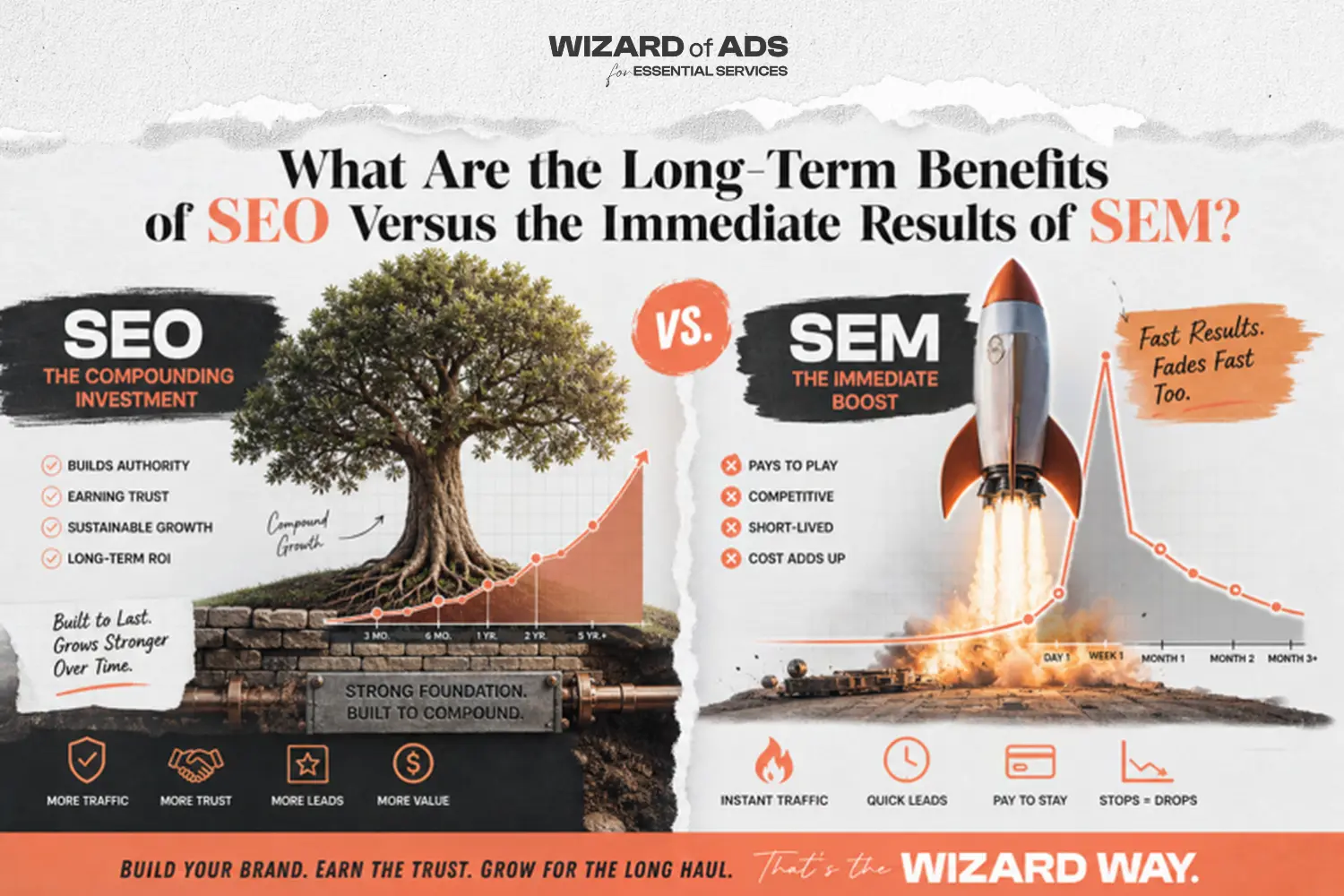
Are you hungry for growth? We explain why a robust marketing budget is essential for exponential success. Many clients start with an 8-12% marketing budget, eventually reducing it to 3-5% as we optimize their marketing investments.
While it takes time to build momentum, you'll be celebrating significant milestones within two years. By the three to five-year mark, you'll see dramatic returns on investment, with substantial gains in net profit and revenue. Discover how strategic branding leads to compound growth and lasting value. Join us on this journey to transform your business.


.png)
.png)

%2C%20Psychiatry%2C%20vol.%2019.png)



%20(1).webp)
.webp)
.webp)
.webp)
.webp)