Every terrible ad that's ever hit the airwaves was approved by someone.
Think about that. The HVAC commercial with the handsome technician and the voice-over about years of experience. The radio spot that lists quality, service, and low prices and nothing else. Every stinker. Every tune-out moment. Every ad that sounds exactly like every other ad in the category. Someone reviewed it, said yes, and unleashed it on the world.
That person might be you. Not because you're bad at your job because nobody ever taught you how to do this one.
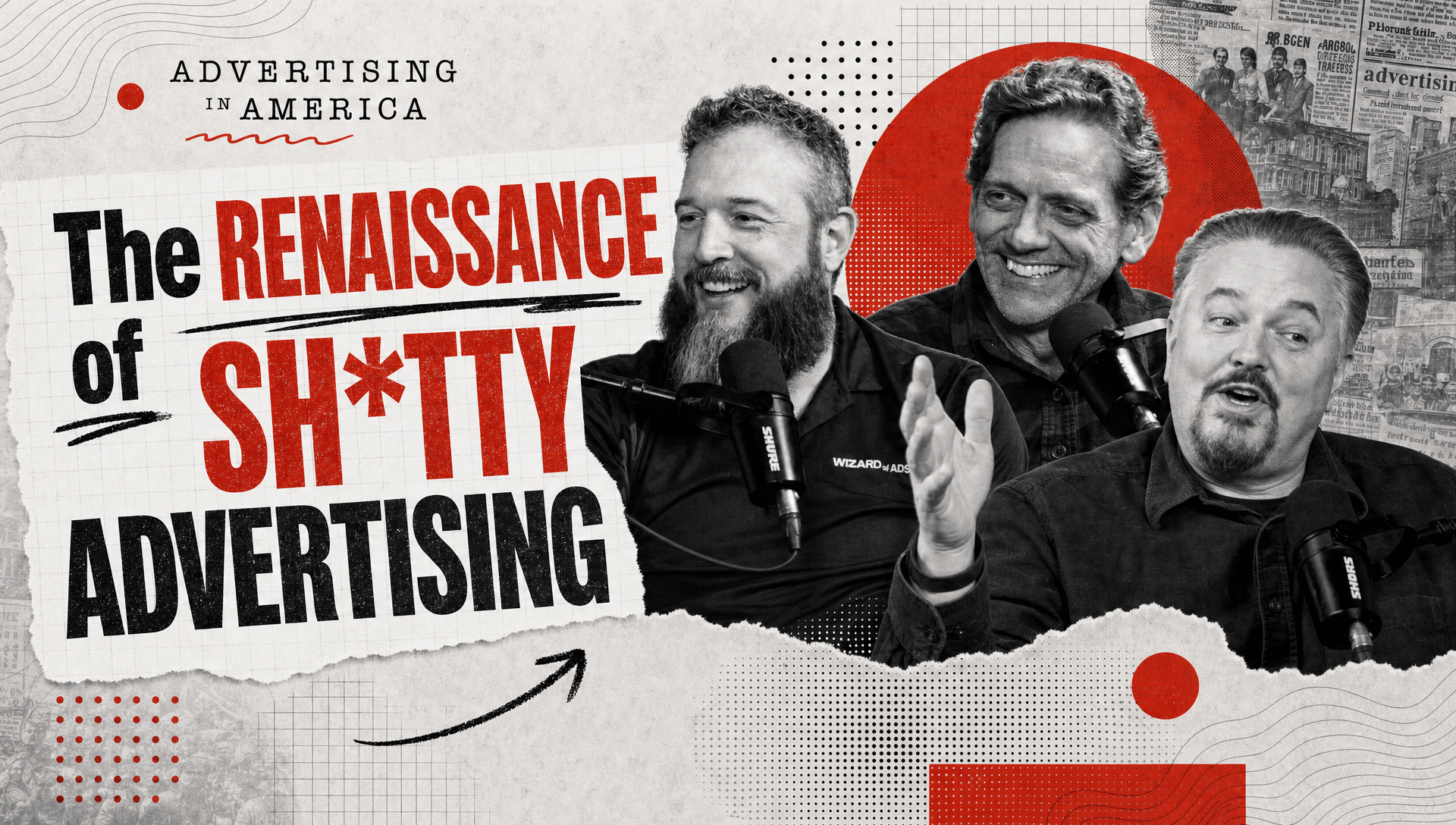
In this episode of Advertising in America, Chris, Mick, and Ryan dismantle the most overlooked skill in marketing: the approval. Chris makes the case for hiring great people and getting completely out of the way, and what it actually means to be the person who says yes to the brave idea. Mick follows with four concrete questions that separate great advertising from forgettable garbage. And the discussion goes deep on the forces working against you: the built-in psychological bias against creative ideas, the committee effect that only knows one word, and why your gut reaction to something scary is almost never the right guide.
If you've ever stared at a script and felt completely unqualified to judge whether it would work, you weren't wrong. But you don't have to guess anymore.
Episode Highlights:
- The Approval Paradox: Why the person who says yes to the brave idea gets credit for everything and why the ones who said no are never remembered at all.
- The Get Out of the Chair Rule: What hiring Ridley Scott to direct a commercial actually teaches you about restraint as a professional skill.
- The Four-Step Filter: Mick's framework for knowing exactly what to reject, what to approve, and how to explain why to the team.
- The Bias Built Into Your Brain: Research shows that people who say they value creativity unconsciously associate it with vomit, poison, and agony before they've read a single line of the script.
- The Committee Trap: Every person added to an approval committee is structurally incentivized to say no. Here's why they can't help it.
- The Apple 1984 Lesson: The board voted to kill it. One executive overruled them. The rest is the most famous ad in advertising history.
- The Rick Rubin Model: The most successful music producer of the last 20 years doesn't play an instrument or write a single note, and what that teaches you about enabling greatness without authoring it.
- The Approver's Real Job: You are not the co-writer. You are the person who creates the conditions for a great ad to exist. That distinction is everything.
🎧 Hit play to learn why the approval is the most powerful and most misunderstood job in the entire marketing operation.
👉 When was the last time you approved something that actually scared you?
📱 Subscribe wherever you get your podcasts
💥 Brought to you by Wizard of Ads for Essential Services
📞 Book your complimentary 45-minute strategy session with Ryan Chute
On this episode of Advertising in America, we’re talking about how to approve great ads.
Knowing how to approve ads is not something that is taught. I mean, other than at the course that I teach at Wizard Academy. For the most part, clients are not well trained at providing useful feedback. They typically just tell us if they like it or not.
Here’s the most powerful thing you can do to approve great work. Hire people who are really good at what they do. Get the heck out of the way. Let them do, what they do.
I can’t help but notice but you fellas are always saying the same thing from like two different doors. Chris says, “Hire well and get out of the way.” And Mick says, “Know how to reject the right stuff.” I’m starting to question if you two lied on your resumes about being master debaters.
I’m going to give you some ways you can guide your ad people to greatness. Step one…
RYAN: On this episode of Advertising in America, we're talking about how to approve great ads. I'm gonna be honest — I let these two pick this week's topic, and I'm a little concerned. I always thought approving an ad was pretty easy. Somebody else does the work, they show it to you, you say Micks’ favorite word "approved," and you go home. Done. Turns out, no. Apparently, the approving part is the hard part. Evidently, there's a whole skill set involved. Seemingly, I've been doing it wrong for all of these years myself. Up first, Chris is here to explain why if you ever hire Ridley Scott you’re not allowed to talk to Ridley Scott.
CHRIS: When something great is created, there's plenty of glory to go around to everyone involved. Some of that glory can go to you.
Everyone knows that Craig Allen and Eric Coleman, the two guys at Wieden+Kennedy who wrote "The Man Your Man Can Smell Like" for Old Spice, are the two guys who wrote "The Man Your Man Can Smell Like" for Old Spice. But when that ad became a runaway success and changed the fortunes of the brand and cleaned up at all the award shows, you can bet there were dozens of people who took credit for their part in getting it made. The creative director, the executive creative director, the head of the agency, the brand manager at Procter & Gamble, the director of marketing, the VP of marketing, the CEO of P&G, all kinds of people probably went on to stellar careers because they got to tell the story this way: "I'm the guy who approved that."
And to be fair, they're not wrong. Good on you.
We've talked before about what it's like to stare down a truly innovative idea and actually say yes. The men and women who do say yes deserve some credit. You don't have to be the person who comes up with the great idea. You just have to be the person who says, "Yeah, I'm in."
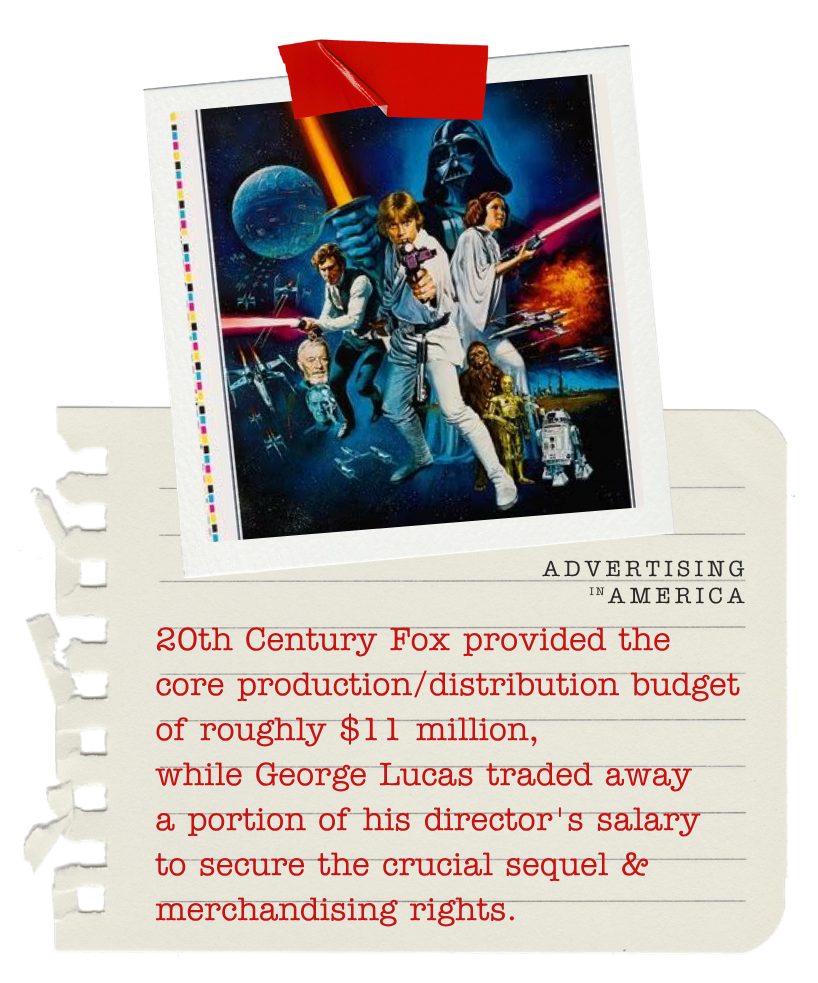
Everybody thinks George Lucas is a genius who made Star Wars, but somewhere there's an executive at 20th Century Fox who said, "Alright, I'll pay for it," even though everyone else thought it was going to be a turkey. So how can you be that guy? How can you set yourself up for success by saying yes to the right thing?
Here's the most powerful thing you can do to approve great work: hire people who are really good at what they do. Then get the heck out of the way. Let them do what they do. Resist the temptation to always think the idea needs your brain power to make it work.
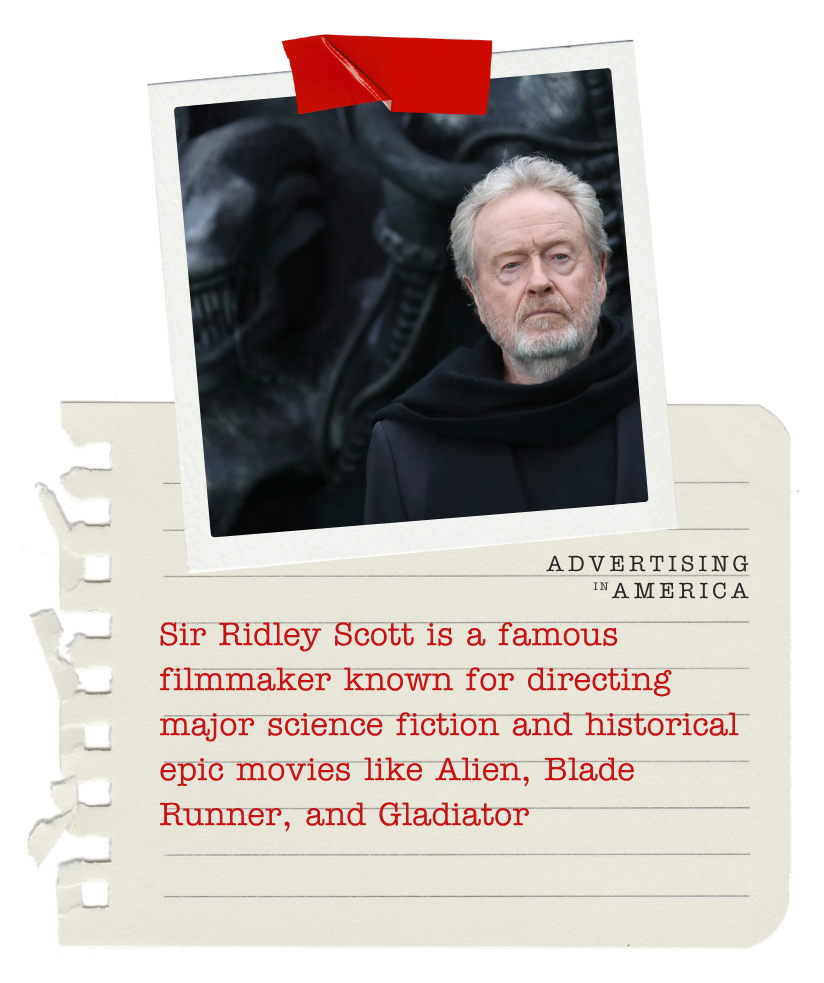
When I worked on the Gatorade business a million years ago, we hired Ridley Scott to direct some commercials with Michael Jordan. And when you work with Ridley Scott, you're allowed to come to the shoot, but you have to sit over there, eat M&Ms from the craft service table, and not talk to Ridley Scott. Because you hired him to be Ridley Scott. Don't try to teach him how to be Ridley Scott.
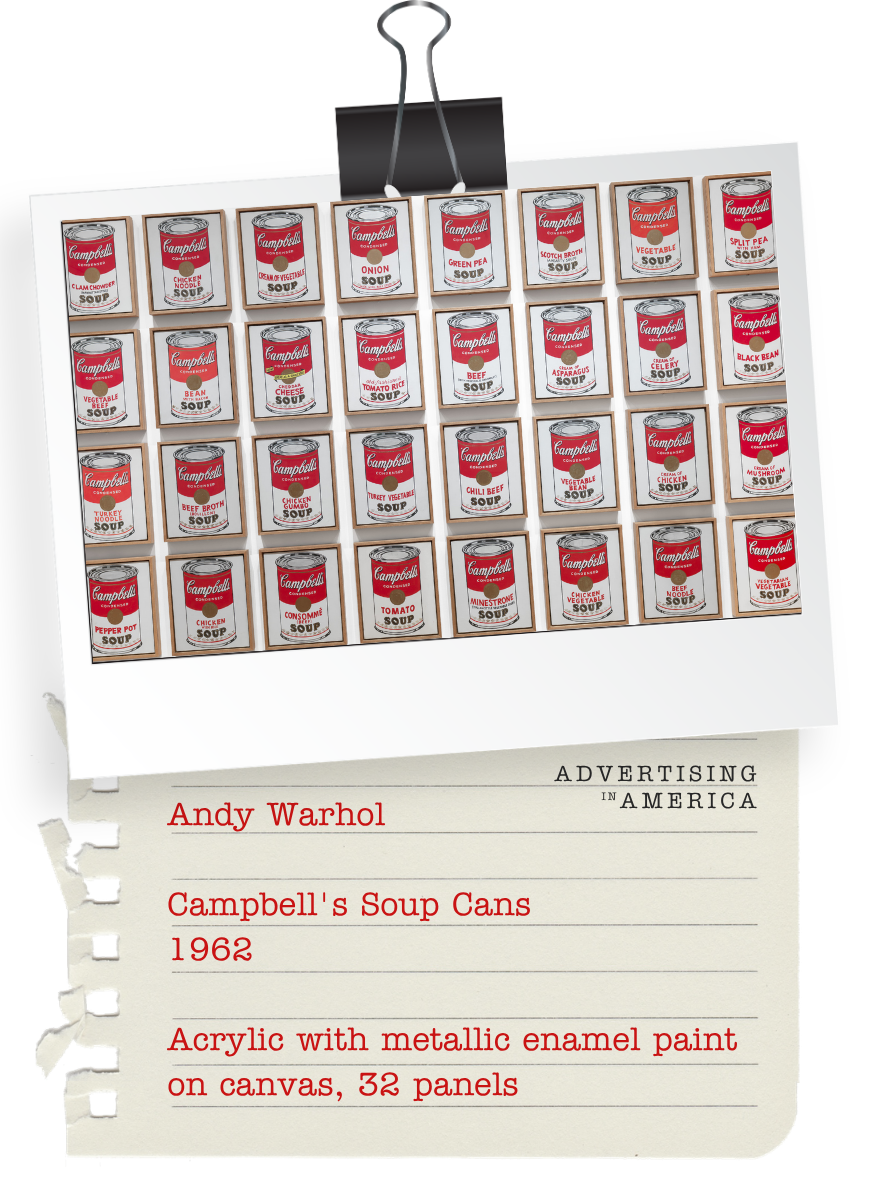
Nobody hired Andy Warhol to do a painting and then said, "I don't know, man, do you think Campbell's Soup cans are the right subject? What about bowls of fruit like all the old masters used to do?"
If you sell diamonds for a living, you know the worst customer is the one who thinks he knows more about diamonds than you, even though you have a gemologist certificate on the wall. If you sell air conditioners, the best customers are the ones who listen to your explanation of what's required to get the airflow and cooling capacity right for the house, and take your advice from years of experience. The ones who say, "I don't know, I think we can just do it this other way" don't hire me!
Hire someone you think is great at this, and let them do their thing. Sure, ask questions. You don't have to roll over and approve everything they put in front of you without explanation. But start with the assumption that this weird new idea wouldn't be in front of you if the experts in this area didn't think it was great.
Ask yourself what it says about your brand. Ask yourself if it's inimitable and distinct from all the middle-ground competitors' messages. Ask yourself if you'd rather be the person who took a leap on something that might change the world, or the person who played it safe and never made a mistake, other than never making a difference.
RYAN: Chris said, "Everyone knows Craig Allen and Eric Coleman, everyone knows." Nobody knows these guys. Their kids barely recognize them. I have not heard of either of those names in my life. If Craig and Eric walked into the studio right now, I'd assume they were looking for the bathroom. But sure, everyone knows. Mick, mail us you.
MICK: Okay. My brother Chris makes some pretty good points. If you're going to hire someone like Ridley Scott, he's probably going to make some pretty good choices as a director. But let's face it, you probably don't have a Gatorade budget. So how are you going to get good work if you can't afford to literally hire the best people on the planet?
Luckily, I will be more helpful than Chris.
Knowing how to approve ads is not something that's taught. Other than through a course I teach at the Wizard Academy, for the most part, clients are not well-trained at providing useful feedback. They typically just tell us if they like it or not. Sadly, that's not actually relevant. We don't write for the client. We write for the consumer. And "I don't like this one" doesn't get us any closer to a solution. So I'm going to give you some ways you can guide your ad people to greatness.
- Step one. Be ready to reject stuff. But it's really important what you reject. What you're rejecting is boilerplate. Table stakes. If you're an HVAC company and your ad guy suggests a TV commercial where a truck pulls up to a beautifully landscaped house, the incredibly handsome technician walks up to the door, the attractive homeowner answers, close-up on him slipping on the booties, and there's a voice-over going on the whole time about their years of experience and quality of workmanship, and we watch as he turns a wrench and polishes the condenser unit before shaking hands with the homeowner and waving goodbye. Yeah, reject that. We've seen it before. Explain why you're rejecting it.
- Step two. Ask yourself: could this ad be for any other company in my category? Yes? Into the binit goes. Explain why you're rejecting it.
- Step three. What about this ad is entertaining? Remember, no one is listening to radio or watching TV to experience your commercials. What are you doing to entertain your audience? Is it all about you? That's no good. And crowbarring a joke into an ad filled with "quality, service, selection, price" does not count. I mean actual entertainment. The audience should want to turn the volume up, not down, when your ad comes on. Have you achieved that goal? No? Keep working on it.
- Step four. What about your ad is part of a series? Is it clear that this is the next segment of an ongoing campaign? That's how you get the volume turned up, they liked the last one, they want to hear the next one. But that means it can't be a standalone. "The Man Your Man Could Smell Like" was a great ad, but it wasn't part of a campaign. You want people to react to the next one. It has to be clear that there's another one coming, and it's even better than the last one. You need to think three or four steps ahead. Are you doing that? Where does this one fit in?
Providing good feedback to your ad people is one of the most difficult skills in the world. But when you know the path to greatness, you can be part of the team that helps achieve it. If you're not part of the solution, then you're just the person who yells and swears all the time.
RYAN: Mick gave us four steps. Numbered. In order. With instructions on each one. Mick is a creative. Creatives do not number steps. He drives a self-driving car, for goodness' sake. He literally wears two wristwatches. Creatives navigate by feelings and the moon's gravitational pull. That's his entire system. We'll be right back after this commercial break.
RYAN: Okay, we're back. So I can't help but notice that you fellows are always saying the same thing from two different doors. Chris says "hire well and get out of the way," and Mick says "know what to reject, and reject the right stuff." I'm starting to question if you two lied on your résumés about being masterful debaters. Typo, I suppose. Let's pull this all apart, shall we? There are three things I want to dig into here with the lads. Mick, you said approving is a skill that most folks are very bad at. You're really not out here making friends in this area.
MICK: I never am. That's not why I'm here ever, under any circumstances. I think probably the first time a business owner is asked to approve an ad, there's likely a bit of a shock, "Oh crap, I have to approve this." There might even be some imposter syndrome kicking in, “I'm the one who has to make the final call on this”. And with no preparation and no training on how to actually do that, you're stuck with one of a couple of possible ways of doing it. One is to say "sounds okay to me, I guess I like it, it's fine." Another is that they might compare the script to the brief. Did the ad match what I asked for? If it checks the boxes — quality, service, life, price, community, just like a pre-barking checklist, then I guess this must be approved. But that doesn't mean it's a good ad.
I agonized over that enough that, with two other Wizard of Ads partners, we created a course, it was basically an academy that helps teach you how to approve good ads. Not a course on how to write, it's a course on how to say "this will succeed, this one will not," and how to know in advance. Most people, they don’t teach you that in business school, they don’t teach you how to listen.
CHRIS: Until that moment when they're charged with approving their first ad, the only was to evaluate ads was one way: as an audience member going "that was good" or "that sucked." Entirely superficial. Emotional. Based on your taste, based on what you think is a good ad as a viewer. Because you've just seen ads on TV or heard them on the radio and liked them or not as a person. As opposed to now, you have to decide is this the right thing for our brand to be doing.
MICK: And neither of those things, “I think it's great” or “I think it's rubbish,” neither of those things are helpful.
CHRIS: That's the only criteria you've ever had, and now it's the one criteria that doesn't matter.
RYAN: Well, and like you said, none of this is taught in business school. I think we've run into a few natural cognitive biases that humans have, innate desire to edit. They want to put their stamp on it.
MICK: Justify their own existence,
RYAN: Bring their own layers of flavor. Or ego. There's also the other side of the fence. Ryan's fun fact: Kumar and Goncalo, Psychological Science, 2012, the bias against creativity. People who explicitly say they value creative ideas unconsciously associate the word "creative" with: vomit, poison, and agony. I mean it, these are literal words that came out of the research, on an implicit association test. So they associate "creative" with those feelings before they've even read the page.
.png)
Calling back from a couple of episodes ago, the bias is built in. If a brave idea is in front of you, your brain is already gagging before you read it on the page. It's absolutely astounding how we have this visceral reaction from the approving side that has to be recognized when we're thinking about what we're asking our clients to do when we ask them to approve an ad. And it gets worse in groups. Anyone who's sat through a marketing committee knows this. The committee has only got one job, and Mick, you've said this better than anyone.
MICK: The job of the committee is to make itself look good to the rest of the committee. The committee is there to prevent you from doing yourself harm. So if someone on the committee thinks there might be something wrong with this ad, that person is going to stand up and say "I think you should not approve this."
CHRIS: They've been brought in to be helpful,
MICK: But in being helpful, all they can do is say no. The only thing a committee member can say is no. That's the trouble. The committee never says "here's the way to make it better." What they'll say is "you shouldn't run this ad because X." That's the inherent problem with the committee. But even if you've got just one person making the decision, the first time you approve an ad, what is the basis of that decision? Maybe you'd think, "Well, I've heard a lot of ads in my category, so... that sounds kind of like an ad in my category. I guess I should approve it." Well, we've discussed that's not a good reason. That's actually a reason to send it back: "This sounds like an ad in my category."
There's no training for business owners to guide their ad people to greatness. And especially when you start advertising, there usually isn't an ad guy, you're talking directly to the radio station, the TV station, or your digital ad person, who will simply do what you ask them to do. There's nothing evil there either, they're trying to keep you happy. They ask what you want and they do it. And what you want and what your competitor wants is the same thing. That's why all ads look the same, sound the same, and are almost interchangeable.
So you start doing it wrong, you spend most of your career doing it wrong, then you start working with good creative people, and you've spent your whole life just saying "well, I'll just approve what I think is good because I have no actual criteria on how to do it." And you perpetuate mediocrity.
RYAN: And the only reference you have without training is the authority figures around you. The people you defer to, the people you trust.
Ryan's fun fact: Solomon Asch, 1951, followed by Irving Janis in 1972 — groupthink and the conformity experiments run around committee-type thinking. If even one person says "I don't think so," they can get conformity from the rest of the group because they are following the leader; in spots where there is no leader, up to 35 percent of a room going one direction will bring the rest of the room along because they're not sure, so they follow the majority.
%20.png)
CHRIS: As a big agency guy, who spent way too much time in focus groups behind the glass, this is the problem with focus groups. You just need one guy in the room, you've got 12 people on a Thursday night, nothing better to do for 35 bucks than evaluate your ad ideas, and you just need one person to go, "Oh no, I think this is a little stupid," and then suddenly there are other people: "Well, if he thinks it's stupid, then..." The groupthink starts to really play.
"I thought it was fine, but if he thinks it's stupid, maybe I should agree it's stupid. And I'm also offended now, because I wasn't, but when he said it's offensive maybe I should vote..."
MICK: And remember, the easiest thing to say is no. Saying yes is hard. If I say yes, I'm putting my name on the line: "Torbay said yes." So when this thing crashes and burns, it's his fault. As soon as you say no, you're safe. "Hey, I didn't even want to run that."
CHRIS: No one will know whether you were right or wrong, it never got made. It never succeeded or failed.
MICK: And if it succeeds, no one will remember that you didn't want to run it. Nobody talks about the stupid board of directors at Apple who turned it down.
CHRIS: You talked about one aspect of it is that they instinctively go toward caution on everyone's behalf so they can be seen as contributing. The other thing is that people try to contribute to make a better idea: "What if you did this to it? What if you did that?" It really feels natural, especially when something's looking like a great idea, or starts to look really exciting "Well, you know what else we could do? We could put a penguin in there." They all want to contribute; they all want to put their stamp on it, say they were part of the team, that they contributed.
What is very interesting about successful things is that it is not a zero-sum game. It’s not when it got super successful, for the five people who are in charge divide it up to 20% each, and decide who gets credit for making this thing awesome. When something great hits the market, everybody who touched it gets love for it. There's a million percent more credit to go around. The camera operator gets to take credit. Everybody who's attached to it, you don't have to put your fingerprints on it in order to say, "I was in the room when we made that." So maybe that's a piece of advice on approving: you don't have to change it and then say yes in order to take credit for the success. You can just say "I think it's great, let's go for it." And there will be love that comes to you when it succeeds.
RYAN: And ultimately, that's where the ultimate courage is: being vulnerable enough to take the risk. The people who say no aren't necessarily operating from a place of courage. They're operating from a place of fear, defensiveness, and insecurity, we have to recognize that.
Now, if you're handed rubbish and expected to run it, that's one thing. There are certainly advertising agencies out there handing you a big pile of steaming crap and calling it magical. That's a risk you have to navigate by working with people who aren’t going to be handing you shit.
This goes back to the 1984 Apple reference. Around the Super Bowl ad in December 1983, the majority of the board said no. They went into groupthink; they voted against it. The idea would be terrible,
CHRIS: Why are there not shots of the computer?
RYAN: Exactly. Nobody saw the computer, we didn’t describe 100 features about the motherboard. They all voted to kill the ad. It was Steve Jobs and a small handful of executives who overturned the decision and ran it anyway, making it quite literally the most famous ad in the history of advertising.
MICK: On the topic of risk, though — if it had tanked… They would all have been on top of it.
CHRIS: Yeah, interestingly enough. Remember that? When I say hire somebody really good and let them do their thing, what's interesting is you will learn one thing for sure: whether that person is good at their job. The problem is when you hire somebody to write a good ad, then you change the script, then you make the ad. Now, if that ad performs at a mediocre level, was that a great idea that you wrecked? Or was that a crappy idea, and thank God you made that little change that made it mediocre? You don't know.
Whereas if you say to Ridley Scott, "Make this ad — off you go, do your thing." If it tanks, you know what to do, which is never hire Ridley Scott again. And that's true with us. If we come in and say we have a campaign idea and it's going to scare the bejeebers out of you, if it doesn't work, you can solve that problem. You just have to fire us and hire somebody you think is better. Whereas if you change it and you end up somewhere in the middle, you haven't learned anything. You don't know if I'm good and you ruined it, or if I'm mediocre and you saved it.
MICK: Well, and our jobs are always on the chopping block. Whenever we start working for a client, we know that if we don't deliver what we say we're going to do in year one, we will absolutely get fired.
CHRIS: But also, you see this with big agencies all the time, they pander more and more to what the client's asking for. Two or three years go by, nothing really happens. And then the agency review comes in. And no one says, "No, no, don't do a review — you gave me good ideas. I always bought the mediocre one from your presentation because it felt safe, and you kept buying it." It's the client's fault, but they always take it out on the agency.
So if you're going to make the agency the scapegoat anyway, at least let them do what they do. And if it's a brilliant idea, the one Steve Jobs forced down your throat, and it ends up being the greatest thing ever, you win. If not, you can fire them,
RYAN: I think that in itself is the fault of the agency. If you didn't hire a top-tier agency that gave you a safe option, that by default becomes mediocrity. So your agency also has to be courageous and step up to the line of vulnerability. Both for the writers themselves, who are dancing on the edge of creativity's knife's edge anyway because we're playing with emotions and people's feelings.
CHRIS: And there’s where smart agencies will not bring the safe idea. There was a tradition where you'd also always bring the "straw dog" the first ad you present, just to get the presentation going and the ego fed. And then you go, “If you like that, here's some really interesting ads.” A saying evolved: "Don't bring anything to the meeting that you're not prepared to sell." Because the client might go, "I don’t know about those crazy ones. But I like that first one where you talked about service and selection."
So the agency has to be brave enough to not bring a safe one. To only bring ideas they think are going to make a difference.
And if all three ads you present, if you're one of those agencies that comes with three different ideas, you can't make one the easy one. Because inevitably, that's the one they're going to buy. And then it's on you. Then you go back and say, "Yeah, typical client — they didn't go for the good one." Well, why did you give them that option? You brought it with full endorsement of your creative directors. Don't bring three ideas if you think it's stupid to buy the first two.
MICK: We at Wizard of Ads, we can't do that because we're paid on performance. So we will not present an idea we know is not going to move the needle, because then we will get fired, and we know it. I would rather get fired now than get fired in a year because in year one, we actually lose money considering how much work we put in, compared to what we get paid in year one —we need to get to year three before we break even. So we would never bring an idea to a client if we did not believe it could absolutely move the needle.
In the larger agency world, they bill by the hour. They'll bring a couple of ideas because they're billing for all of it. There's no downside to bringing them. And if they run the ad for a year and a half and it doesn't build the brand, they don't care; they're not paid on performance, they’re paid by the hour.
CHRIS: They’ll try again next year.
RYAN: And that leads back to this: if you don't trust the people you've hired, fire them. Don't edit them. It's a complete mistake to start putting your own little flavor on things. If you have to, you've got the wrong people.
CHRIS: If you feel like you're the only one who can fix this, then why are you hiring somebody to give you broken ideas? Do it yourself.
RYAN: And if you are going to speak up, to Mick's point, what are you speaking up about? "I like it," "it's good," "it's bad," "I don't know, it doesn't feel right" those are useless commentary.
CHRIS: You're a focus group of one person; that’s not relevant. And second of all, you may not be the target.
MICK: You are absolutely not the target. You are, by definition, not the target. If you're the client, you have to buy your products and services from this brand. So don’t tell me you’re the client, you are the one person I do not have to convince this is the brand for you. By definition, you are not thinking like a customer in this category because you’re not a customer.
CHRIS: You already know way more about diamonds, or whatever else it is, than the buyer.
RYAN: Certainly one aspect is taste, and the other is strategy. So this conversation is really about: what are we trying to achieve? How are we moving the emotional middle here to get a person to take an action or, at the very least, store you in memory because they know, like, and trust you until such time as they need what you have to sell?
MICK: The feedback is very often more along the lines of "you didn't mention enough features or benefits." And less often: "You really didn't make me feel much. You weren't reaching me on a deeper level. Can you dig in a little bit more."
CHRIS: The interesting thing that you said in your piece, was the number of times you came back to can I explain that to them, explain that to them, right? The feedback is helpful in the discussion. For example, if you say "there's not enough features and benefits" well, that's a conversation we can have now about whether we should be talking about features and benefits. We've done a previous podcast about whether you should fill an ad full of features and benefits or make an emotional ad that makes me like you as a service provider. That's a conversation I can have, and I can explain why I left features and benefits out. But that's because you said something concrete. You had an explanation to your feedback as opposed to "I don't know, I don't like it." That doesn't help. I can't debate it, I can't explain it, I can't rationalize why, even though you don't like it, it's the right thing.
MICK: But you could ask your ad person: "What is it about this ad that would make me want to listen to it, and maybe listen to it more than once even if I don't want to make a purchase in this category?" That's the entertainment question. And there should be an answer for that. If your ad person can't answer why someone should listen to or watch this ad even if they're not in the market for what you sell, you need to go back and answer that question. Give me some entertainment.
Imagine this: we're making a little sitcom, or we're telling a story, or we're doing a little vignette, and we're going to want to follow this, and we're going to want to hear the next one. We're going to want to hear the next one. It’s a story. It has a continuing story arc. Are we going to buy a water heater this week? No. But I still want to hear what these people have to say.
CHRIS: That's useful for Geico insurance. If I'm currently not in the market for insurance, why would I want to hear their ad? Well, because the gecko is funny every time. He's got a quirky little British accent; he says what he thinks, and he takes snide pot shots at people. There's an answer.
MICK: At least there’s something there.
CHRIS: And then maybe I will grow to love this brand, and when my insurance comes up for renewal, I'll switch providers. But there's an answer to the question: I can tell you what's entertaining about that.
RYAN: Well, this is all backed up by another one of Ryan's fun facts. Teresa Amabile, Harvard Business School, her 30-plus years of peer-reviewed research on creativity in the workplace, most famously The Progress Principle with Steve Kramer, 2011, shows that the single biggest predictor of creative output is whether the creator's manager protects their forward motion or interferes with it. Vague, taste-based feedback like "I don't like it" is the most destructive form of management input she has ever documented.
CHRIS: Absolutely. Yeah, that's a subtle point. It's like she's loving me. Which is not helpful.
RYAN: Roy certainly, you know, has been saying this for years. This is obviously the precipice of Mick's famous committee and leadership video that's out on the interweb. That brings us to Mick's four big questions, distilling down the questions you should be asking reflectively about the creative in front of you.
MICK: And sending it back until those things happen. One of the things I'm always reminded of when we're talking about approving great ads: every great ad you've ever seen on TV or heard on the radio, someone approved that. Some courageous person said, "Yeah, we're going with this. It's crazy, but we're doing it."
We've also discussed the fact that most advertising is terrible. In every category, in every world, in every market, most commercials are absolute garbage.
RYAN: Statistically speaking, it's +99%.
MICK: A crazy amount. Every one of those ads was approved. Let that sink in. When you see a terrible ad, a real stinker, where it's just "service, quality, benefits,” there’s nothing there. It’s all about me-me-me-me. Here's who I am, here's where I sell." It’s just that crap. Someone approved that. Someone said, "Yep, put that on TV.
CHRIS: I like the part where they hold up the package and go 'now 2 for $14.99.' Yeah, that's great. I love that you put that in there."
MICK: Let that bother you. The next time you hear an ad and think, "This is a complete waste of 30 seconds of my time," think to yourself: somebody approved that. Someone gave it a big thumbs-up, used my favorite word, wrote a giant telethon-sized check, and said, "Blast this at humanity. Make people hear it over and over and over again." This super crap ad.
Everything is approved. So how important is it to approve great ads? Really freaking important.
RYAN: And it comes down to these four questions: Is it an ad that can only be unique to us? Does it entertain? Does it set us up for a campaign? And does it make the customer feel something? If we can answer or explain those with a yes in each category, we know we're walking down the right path. Whether it's your taste is inconsequential. What matters is that it's true to your brand, and that those four things drive this forward and make something happen in the listening audience.
MICK: Most really good ads have all four. Most ads have none of them. So start with one. Dammit. Just for goodness' sake, start with one. Build up to four. It would be lovely to get up to four.
CHRIS: It’s like Everest’s base camps. You go up, you come back, you go up, you come back.
RYAN: If I were to look at these four, which one would I start with? I would start with the one that makes them feel. Then I would certainly go to "make it unique to us." By making it feel, by virtue of that fact, it's likely to entertain. You're always going to offend somebody, and that's okay. Entertain the masses and don't expect to be universally perceived well.
And then setting up for the next one, not every single one is about the campaign. There are an awful lot of people who are about the cute and clever of the moment, the killer ad, the one-stop-shop or the one-hit-wonder. And look, if that's all you have, that's better than 80% of ads out there. But to mature into a properly done campaign, you're going to deepen into those other questions.
MICK: If you can get a couple of those things into your ad, you're already going to be in the top 10%.
RYAN: This is a bonus. I think this is probably one of the biggest things that encapsulates what we've talked about today: the job of the approver is to enable. It's not to author. That's probably the big takeaway. You're not co-writing this ad. You're trusting people who know how to write to write ads. You're steering and approving. And the approval itself, by virtue of the fact that you've approved it, you've created the ad.
MICK: Your job is to call balls and strikes, not play the game.
CHRIS: Or to create the environment. I always come back to the fact that one of the best music producers of the last 20 years is Rick Rubin. Rick Rubin does not play an instrument. He was the head of Def Jam Records. He's produced a lot of great artists. He's not an engineer. not sitting there working the faders. He doesn’t play any instruments; he doesn't write any songs. He works with artists to draw out the best of their careers. And somehow he gets them to think about things differently. "Have you thought about... what else could you do to accomplish this?"
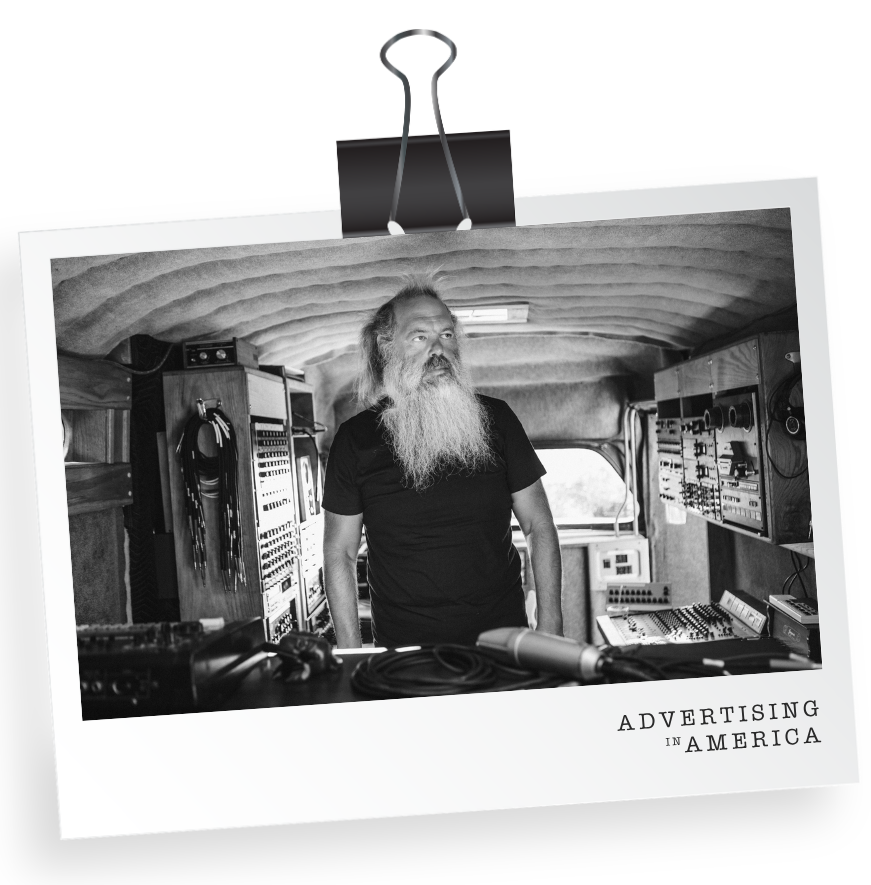
He doesn’t say, “Can you put more notes into the guitar solo? I think more notes is better than few.” He doesn't get into the granularity. He just makes people want to be better. And he makes people dig into themselves to bring out the best creative, and that’s what you can do as the business owner or as the marketing director. How do you create an inspired environment where people want to do a great ad for you? Want to do a great campaign? A great marketing idea?
RYAN: That's awesome. I feel like I'm the Rick Rubin of Wizard of Ads.
CHRIS: He has a ridiculous beard.
RYAN: Yeah, maybe that's what it is. I think it certainly has a part to play.
Gentlemen, this has been a treat. Another great conversation around what we can do to make people's lives easier and have more clarity on how to get the great stuff out into the universe.
RYAN: So look. If you're running a business in America and you're the one who has to approve the marketing, the ads, the campaigns, the next direction, here are the three things I'd want you to walk out the door with.
- One: Hire well, then get out of the way. Find the people who are great at this and let them be great at it. You didn't hire a copywriter to give you the chance to be a copywriter on the weekends. You hired them because you cannot do this job yourself. Pay them. Trust them. Then physically remove yourself from the meeting if you have to.
- Two: When you do speak up, speak about the criteria. Not the execution. "I don't like it" isn't feedback. It's a feeling. Try this instead: "This could be any competitor's ad." Or: "This doesn't make me feel anything." Or: "I don't see how this becomes the next chapter." Those are real notes. Those give the team somewhere to go. The other ones just make them quit.
- Three: Remember, the approver enables. The approver does not author. Your job is to create the conditions for a great ad to exist. Not to rewrite the great ad somebody else brought you. The names we still remember in advertising history aren't the ones who fixed the commas. They're the ones who looked at something scary and said, "Yeah. Run it."
If you don't hear anything else, hear this:
Every great ad in the history of advertising was approved by someone who said yes when their gut was screaming no. That's the move. That's the whole skill. Saying yes to the things that scare you, after you've made sure they're scary for the right reasons.
Hire the right people. Trust the right people. Get out of the way. And when it works — take the credit. They won't mind. They'll hand it to you.
Until next time. This is Advertising in America. Thanks for tuning in.
Thank you for joining us on Advertising in America. We hope you enjoyed the show and captured a nugget of marketing magic. Wanna hear more? Subscribe, leave a review and share this podcast with your friends.
Do you have questions or topics you want us to cover? Join us on our socials @advertisinginamerica.
Wanna spend your marketing budget better? Visit us at wizardofads.services to book your free strategy session with Ryan Chute today.
Until next time, keep your ads enchanting and your audience captivated.

Advertising in America
The podcast that turns marketing into magic! Hosted by the brilliant Ryan Chute and the ever-entertaining Michael Torbay & Chris Torbay, this show dives deep into the world of American advertising, revealing the secrets behind the most successful campaigns and exploring the latest trends.
Share this:



%20(1).webp)
.webp)
.webp)

.webp)

.webp)


Nothing to see here!
Nothing to see here!