
Target audience analysis gives service contractors a real map of how homeowners decide, built from demographic, psychographic, and behavioral research instead of a guess dressed up as a pay-per-click strategy. Business owners and contractors who learn how prospects actually think, instead of chasing keywords, earn the kind of brand recall that outlasts a single ad click. That's what turns a spot in Google's 3-Pack into real Main Street recognition, and turns undecided shoppers into customers who keep coming back.
What Will You Gain From This Analysis?
The first thing you get is a clear picture of the right homeowner, built by combining demographic, psychographic, and behavioral data into one usable profile. Skip this step, and a contractor ends up aiming advertising at everyone, which means connecting with no one. Target audience analysis exist to close that gap before a single ad ever airs.
The stakes here are higher than most contractors realize. The average person absorbs roughly 10,000 advertising messages a day, enough noise to drown out a generic pitch before it even registers. A furnace repair ad thrown into that noise can't just exist; it has to be built to be remembered, not merely placed. Analysis is what tells you which words, tones, and channels actually cut through that clutter for a specific homeowner segment.
What does the analysis actually produce?
The output is a strategic blueprint: it names the specific group a contractor's business is trying to reach, and pairs that with the psychological mechanics that make advertising persuasive to that group. Instead of guessing at messaging, owners walk away with a documented understanding of how their ideal customer thinks, decides, and responds.
That blueprint typically delivers:
- A defined audience profile combining location, life stage, and behavior patterns
- Insight into the psychological triggers that make an offer feel trustworthy
- A messaging direction built for recall, not just a one-time click
- A foundation for creative that stays consistent across every channel
Why does this matter more than another PPC campaign?
Paid clicks vanish the moment the budget runs dry. A brand message built on real audience analysis keeps working in memory long after the ad has stopped running. Contractors who understand what actually drives their audience's decisions build advertising homeowners remember at the exact moment a pipe bursts or an AC fails, instead of advertising that gets scrolled past and forgotten.
Why Do Demographics Alone Mislead Home Service Business Owners?
Age, income, and zip code can't predict who picks up the phone first when a furnace dies at 2 a.m. A broken heating system on a cold morning creates the same emotional emergency no matter the bracket or the neighborhood. The retired couple on a fixed income and the young family with two incomes both panic the same way when the house goes cold. No spreadsheet of demographic averages captures that shared moment of dread.
What happens in the homeowner's mind during an emergency?
Panic overrides price comparison. In that moment, a homeowner grabs the phone and calls whatever name feels familiar, not whichever ad bid the highest. Demographic targeting assumes a rational shopper weighing options; real homeowners default to recognition under stress. That one behavioral fact exposes the limits of age-and-income targeting better than any dataset ever could.
Advertising itself splits into two camps, and demographic lists only serve one of them. Informative advertising, built on facts and features, is one of the two most popular advertising types, but it only speaks to the rational buyer. Persuasive advertising, built on emotional recall and brand familiarity, wins in the moment demographics can't reach: the panic call.
Genuine Target Audience Analysis Services close that gap by layering in what demographics omit:
- Interests and values that shape which brand feels trustworthy
- Beliefs and attitudes toward hiring outside help
- Buying habits during both routine maintenance and emergencies
- Preferred media channels where recognition gets built before the crisis hits
Contractors who lean on age and income brackets alone are chasing a shopper who barely exists. The homeowner who actually matters is the one in crisis, searching on instinct, not spreadsheet logic.
What Tools Do You Need To Start?
A documented process for examining advertising has to come first, before a single new campaign gets written. Contractors and marketing leaders need a real method for determining what effect an ad has on homeowners, not a guess about what sounds clever in a meeting. Skip that diagnostic step, and new creative just repeats old mistakes instead of correcting them.
Target Audience Analysis Services supply exactly that method. The work starts by reviewing the ads already running, to see how they're shaping what prospects think and want. That review is a diagnostic skill, not a creative flourish, and it has to happen before a single new script gets drafted. Skip it, and you're writing blind and hoping the market responds.
Why does analysis have to come before creative writing?
Successful marketing research demands a documented, clear understanding of the target audience before any ad gets built. Contractors who skip this step end up with content that feels good in the office but never lands with the homeowners who actually call for service.
What does the analysis actually produce?
Applied correctly, this diagnostic work generates more leads, more sales, and more profit. The output isn't a report that sits in a folder gathering dust. It's the foundation every future ad, call script, and landing page gets built on.
The toolkit itself is simple to describe, even if the execution takes discipline:
- Collect every existing ad the business has run, across every channel.
- Examine each one for the effect it had on consumer behavior, not just its look or tone.
- Document the gaps between what the business said and what the audience actually heard.
- Translate those findings into a written audience profile before writing begins.
That sequence protects the budget, and it protects the brand's voice from drifting every time a new campaign launches.
How Do You Map Emotional Buying Triggers?
Emotional buying triggers surface the instant a furnace quits on the coldest night of the year. A homeowner shivering under blankets asks one instinctive question: who can I trust right now? That single moment of panic, not a feature list or a price point, is the real trigger contractors need to map before writing a single ad.
Mapping starts with a sequence, not a guess. Each step builds on the one before it, and skipping any of them weakens the whole map.
- Identify the moment of crisis. Pinpoint the exact circumstance, a broken AC in August or a flooded basement at midnight, that pushes a homeowner to search for help.
- Separate facts from feelings. Informative advertising leans on facts-and-figures messaging to convince an audience a product solves their problem, but facts rarely move someone mid-emergency.
- Connect as a consumer, not a prospect. Precise identification of the audience comes first; only then can messaging land on a human level instead of a sales pitch.
- Catalog wants, needs, and expected value. Document how homeowners make purchase decisions and what added value they expect from a service call, from speed to reassurance.
- Match copy to the trigger. Write ad language that speaks to trust and urgency rather than specifications.
What makes emotional triggers different from standard marketing data?
Standard data measures clicks and demographics; emotional triggers measure fear, relief, and trust at the point of decision. Target Audience Analysis Services exist to translate that difference into usable creative direction, mapping the feeling behind the search instead of just the search term.
Why do facts-based ads fail during home emergencies?
Facts-based ads assume a calm, comparison-shopping buyer, but an emergency strips away all patience for specifications. A homeowner facing a broken system wants reassurance first and details second.
How Do You Capture Auditory Memory Cues?
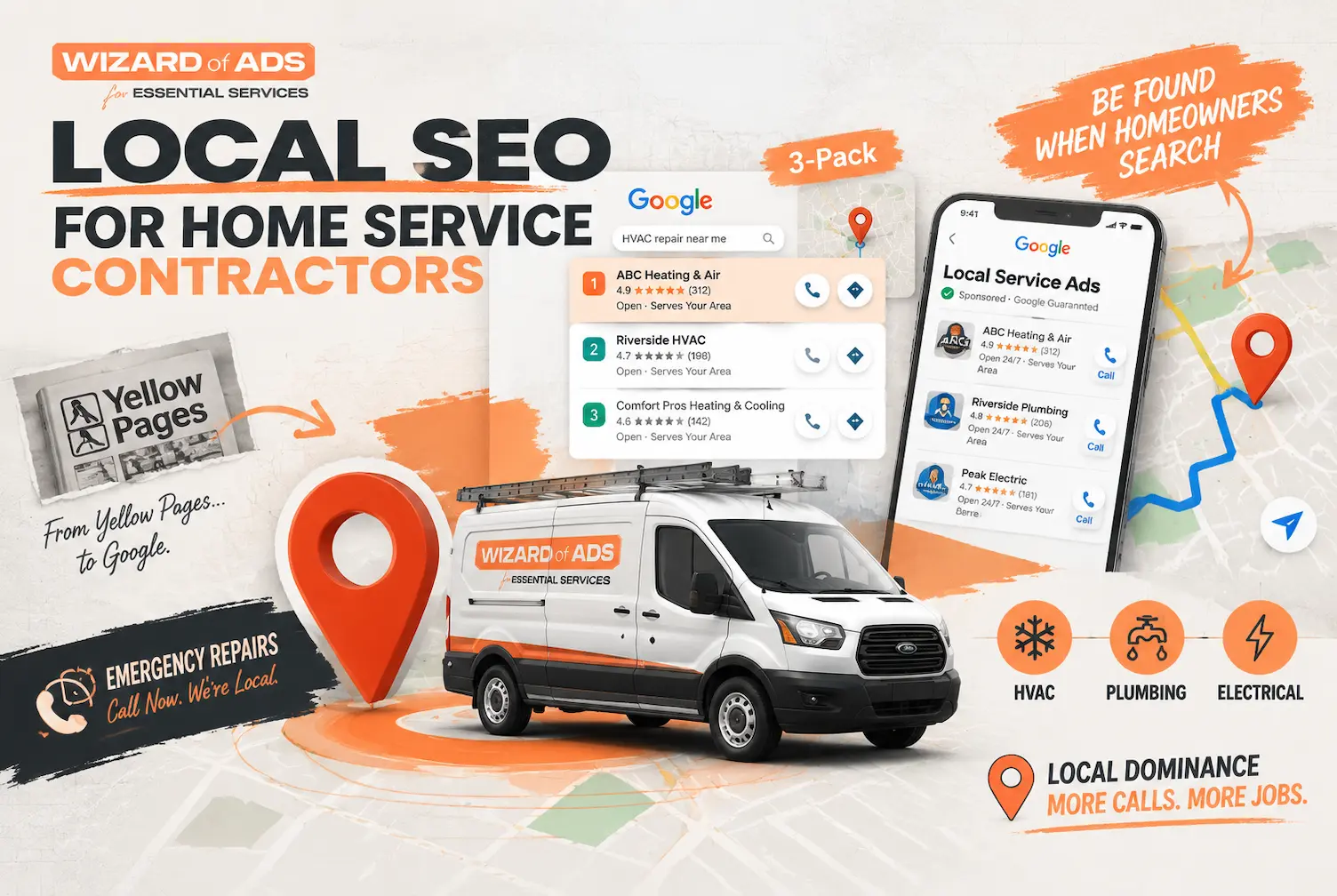
Capturing auditory memory cues starts with building a sonic signature: a repeatable sound, phrase, or jingle that lodges in memory long before a homeowner ever searches for a plumber or an HVAC crew. Contractors who skip this step lose the call the moment a prospect opens a map app and scrolls through a crowded list of look-alike listings. Google Maps now functions as the modern storefront, and ranking high there only delivers real visibility once a brand already lives in memory. That digital Main Street stays packed with undecided shoppers, and only the name already anchored in recall earns the tap and the call.
Before building an auditory identity, marketing leaders should run a round of Target Audience Analysis to confirm which sounds, phrases, and cadences actually resonate with the homeowners the business serves. Skip that groundwork, and you risk a jingle that sounds generic instead of one the brand can own.
Follow these steps, in order:
- Define the one or two emotions the brand wants homeowners to feel during an emergency call.
- Draft a short phrase or sound mark built to repeat across every call center greeting, radio spot, and video script.
- Test the phrase aloud with staff and real customers before locking it into paid campaigns.
- Repeat the cue across every touchpoint for a full media cycle before judging whether recall took hold.
Why did print directories disappear so fast?
Print directories vanished from households almost overnight once search engines took over, proof that attention always migrates toward the easiest channel to recall. For decades, households reached for directories organized by service category rather than brand name, a habit any distinctive audio identity now has to override.
Does a jingle still matter in a digital-first market?
Yes, because the same recall mechanics that made category directories obsolete now reward brands that own a sound. Homeowners search for a name they already remember, not a category they have to scroll through.
How Do You Build A Homeowner Persona?
Building a homeowner persona starts with research, not assumption. Contractors and marketing leaders define the exact household calling for repairs, replacements, or new installs, then build messaging around how that household actually behaves. Guessing at an audience just wastes media spend. Any business that wants to win at marketing has to understand, recognize, and actively target its specific audience instead of guessing at it.
Persona development follows a sequence, not a brainstorm session. Every step builds toward one outcome: turning an undecided homeowner into a paying customer.
- Define the core target group first. Persona work should always tie back to converting a visitor into a buyer, which means identifying that core group with precision before writing a single ad.
- Map the homeowner's triggering moment. Pinpoint what happens right before someone searches for a plumber, an HVAC tech, or an electrician.
- Document decision patterns. Note how the household compares providers, what stalls the decision, and what pushes it forward.
- Align the persona to brand voice and media channels. The persona should dictate where dollars go and what the ads say, not the reverse.
Target Audience Analysis Services from Wizard of Ads for Essential Services, headquartered in Halifax, NS, build these personas directly for contractor clients, turning raw homeowner behavior into usable creative direction. A ten-person team keeps that research tightly coordinated across every phase, from discovery through media buying, so nothing gets lost between strategy and execution.
What makes a homeowner persona different from a typical buyer profile?
A homeowner persona centers on urgency and trust, not just demographics. Most essential service calls happen under pressure: a broken furnace, a leaking pipe. The persona has to reflect decision-making under stress, not leisurely browsing behavior.
How Do You Apply Insights To Media Buys?
Media buys succeed when persona research dictates channel, message, and timing, not the other way around. Homeowners don't dig through directories for help anymore, so media dollars need to follow them into the digital and broadcast channels built for recall, not into outdated listings nobody opens. Target Audience Analysis Services translate raw persona data into a buying blueprint that media planners can execute with precision.
The process follows a defined sequence:
- Map the persona to channel habits. Identify where the target homeowner actually spends attention, broadcast, streaming, search, or social.
- Match creative tone to the moment. Decide whether the message needs to inform or persuade; that choice depends entirely on the business goal and the situation being targeted.
- Align the Google Business Profile with persona language. A cleaned-up profile becomes a first impression, a source of social proof, and a conversion engine once persona insights shape its content.
- Lock in buying power before launch. Secure placements that reinforce the message across every touchpoint simultaneously.
Should informative or persuasive creative run first?
Neither format wins universally. An informative approach suits a market that doesn't yet recognize it has the problem. A persuasive approach suits a market that's ready to choose between providers. The persona research is what tells you which stage the target homeowner is in.
Does Google Business Profile optimization belong in a media plan?
Yes. A profile shaped by persona insight becomes a digital storefront. Skip that alignment, and you waste the recall built everywhere else by paid and broadcast media.
Wizard of Ads for Essential Services builds this sequencing into every buy, so strategy, not guesswork, decides where dollars land.
What Mistakes Undermine Audience Analysis Results?
Three mistakes sabotage most audience research: chasing SEO jargon instead of strategy, treating every homeowner as identical, and stopping at surface demographics. Home service businesses that fall into these traps burn ad budget on tactics that generate clicks but never build lasting brand recall. Correcting course takes a disciplined, repeatable process, not another shortcut.
Why does chasing SEO tricks waste marketing budget?
Confusing SEO jargon promises fast rankings but delivers results that don't last. A strategic, sustainable approach built on real audience insight outperforms magic-trick tactics every time, because it targets the homeowners most likely to call instead of gaming an algorithm.
How does treating all homeowners the same hurt results?
Lumping every prospect into one bucket erases the real differences between an online-savvy single professional, a budget-conscious working family, and a high-earning homeowner researching from a mobile device. Target Audience Analysis fix this by separating those groups before a single message gets written. Contractors avoid this mistake by following a clear sequence:
- Segment prospects by income level, household type, and age range.
- Identify how each segment shops: mobile-first, desktop research, or word-of-mouth.
- Match messaging and media channel to each segment's behavior.
Skipping the deeper layers, attitudes, interests, values, lifestyle, only compounds the problem. A contractor who knows nothing beyond a prospect's zip code is still guessing at what actually triggers a service call. Engagement patterns, not just demographics, show which homeowners respond to urgency, which respond to trust-building, and which need both.
The fix stays the same in every market: build a strategic, sustainable, service-driven presence instead of reaching for whatever ranking trick is trending this quarter. Audience analysis done right protects the budget and builds the kind of recall that outlasts any algorithm update.
FAQ
What is target audience analysis for home service contractors?
It combines demographic, psychographic, and behavioral research to map how homeowners actually decide, replacing the guesswork common in pay-per-click targeting. The result is a detailed customer profile that drives measurable marketing results.
Why do demographics alone fail to predict customer behavior?
Age, income, and zip code can't predict who calls first during an emergency, like a furnace dying at 2 a.m. Homeowners across every bracket and neighborhood panic the same way when they're facing an urgent crisis, and that panic overrides price comparison.
How does audience analysis improve a contractor's advertising?
It identifies which words, tones, and channels actually cut through the daily clutter of advertising messages homeowners see, building brand recall that outlasts any single ad click.
Conclusion
Target audience analysis transforms contractor marketing from reactive guesswork into strategic precision. By mapping homeowner personas across demographics, psychographics, and behavior, service businesses align every message, channel, and dollar to the moment of greatest need. The result is a brand homeowners remember first when crisis strikes, not because of clever tactics, but because strategy drives every decision. This disciplined approach builds lasting market leverage and the kind of trust that outlasts trends.
Share this:





%20(1).webp)
.webp)

.webp)



.webp)

.webp)




Nothing to see here!
Nothing to see here!