
Friday, November 13 is coming. Some of your competitors will run an ad that says "Don't let your luck run out!" with a black cat and a broken furnace. Don't be one of them.
A while back we wrote about symbolism, superstitions and the messages hidden in ads. Here's the part we didn't say clearly enough the first time: superstition isn't really about luck, it's about control. Once you see that, you'll never write a fear ad again.
Here's the short version. People reach for a lucky charm when they feel helpless, and your customer feels most helpless the moment something in their house breaks. Your brand's job isn't to scare them. It's to be the thing they reach for.
Superstition shows up when people feel helpless
The best proof of that isn't in a lab, it's on the ballfield. George Gmelch spent five years playing in the Detroit Tigers' minor-league system before he became an anthropologist, and in his essay "Baseball Magic" he noticed something: players pile rituals onto hitting and pitching, where failure happens constantly, but barely bother with fielding, which works out more than 90% of the time. He was building on anthropologist Bronislaw Malinowski, who'd found the same pattern years earlier: Pacific Island fishermen leaned on ritual out in the open sea, but not in the calm lagoon.
In 2008, a paper in Science pushed the idea further, claiming that making people feel out of control in a lab was enough to make them see patterns that weren't really there, superstitions included. Here's the honest part, though: when later researchers ran seven experiments trying to reproduce that effect, they found nothing. The same thing happened to the famous study claiming a lucky charm improves your golf game.
So no, you can't flip a switch in a lab and turn someone superstitious. But put a real person under real stress, and they'll grab for anything that feels like order. That's the part that matters to you.
The furnace dies, and your customer is stepping up to the plate
Nobody calls a plumber on a good day. They call with water on the floor, kids in the house, and no idea what this is going to cost them. They can't see inside the wall. They can't judge your work. They're about to let a stranger into their home.
That's the textbook setup for magical thinking: high stakes, no control, no way to know what happens next. So people start looking for signals. Does the truck look clean? Does the guy wear a uniform? Have I seen this name before? Did my neighbor use them?
None of that proves you'll fix the leak. But it's what a stressed homeowner can actually see and hang onto. Your symbols are doing the same job a rabbit's foot does: they make an uncertain moment feel a little more predictable.
Fear ads work. That's not the question.
Let's be straight about this. A big 2015 review of 127 studies found that fear appeals do change attitudes and behavior, and they almost never backfire. So yes, "Get your furnace checked before your luck runs out" will book you some tune-ups.
But look closer at what made fear work in that review. The messages that worked best gave people a clear, doable action that actually fixed the problem, and they worked best for a one-time decision, not something ongoing. Put simply: fear works when you hand people back their control.
And that's the trap for a service brand. A scare gets you one call. It doesn't make you the company they think of first for the next twenty years. Fear is a tactic. Being the calm in the storm is a brand.
Be the lucky charm
A lucky charm has three traits: it's familiar, it's always the same, and it shows up right when you're nervous. Your brand should have all three.
Familiar. The homeowner should know your name before they ever need you. That's what mass media is for: you're not buying calls, you're buying a spot in their memory for the day the furnace quits.
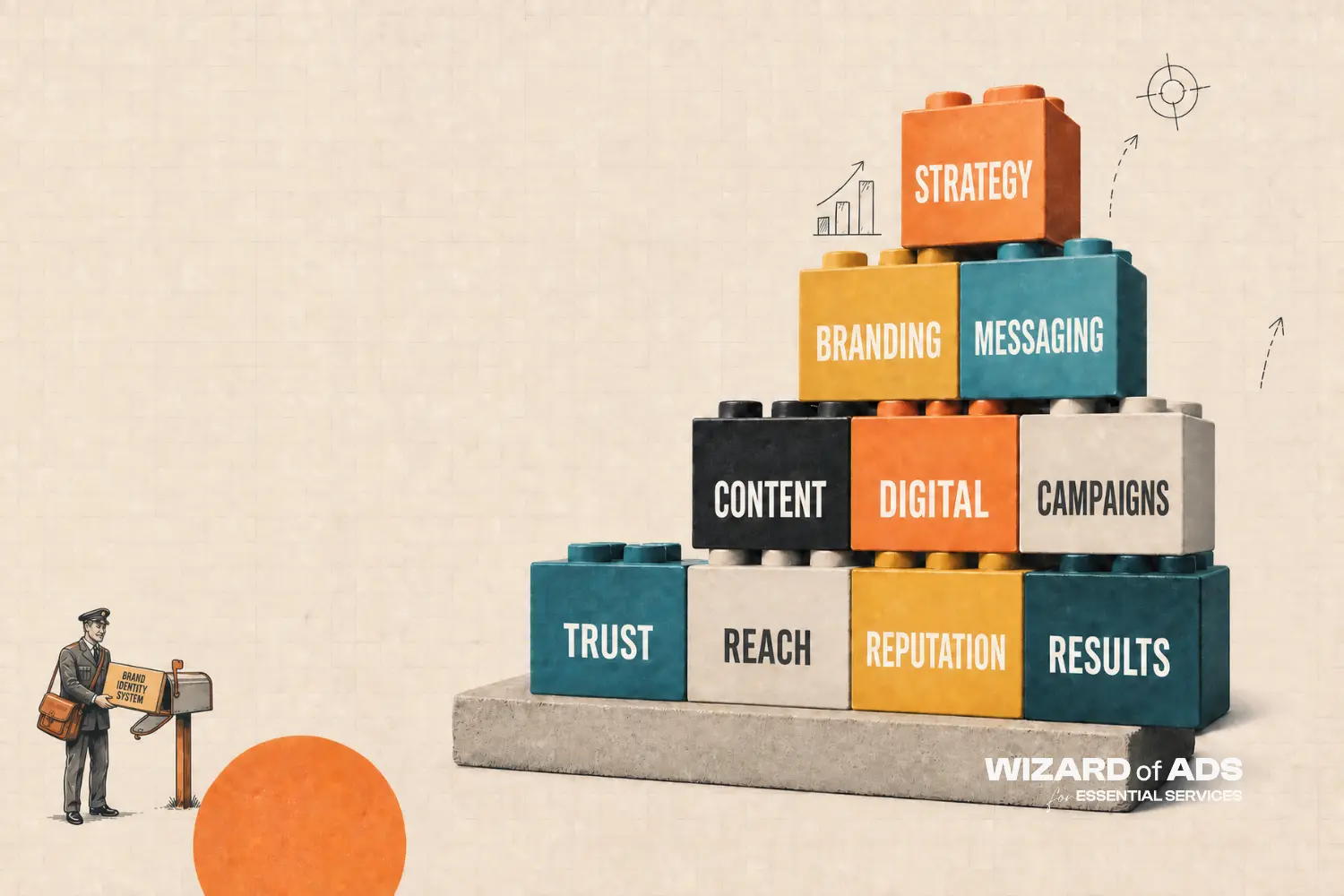
Always the same. Superstitions are rituals, and rituals don't change. Same colors, same character, same voice on the radio, same sign-off. Switch them up and you're starting over from zero. That's why we build a distinctive brand-identity system instead of just a logo.
Shows up when they're nervous. This is where most contractors drop the ball. The scariest part of the job, for your customer, is the wait. A text with the tech's photo and name. Shoe covers at the door. A price before any work starts. A tech who explains what broke in plain words. Each one hands a little control back to the homeowner.
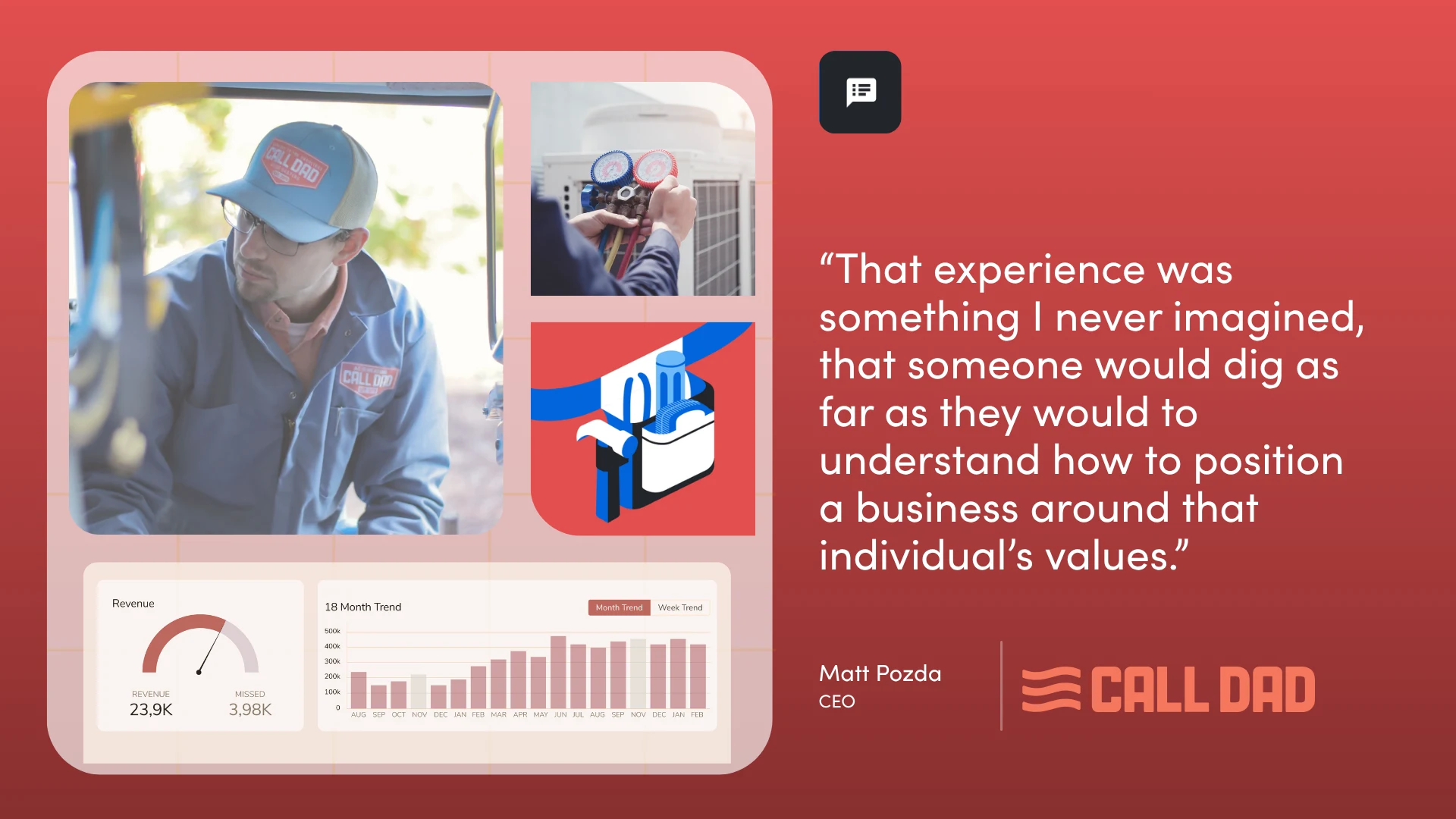
One idea can carry all three at once. Sky HVAC became Call Dad, built on a single promise: when you've got a problem, Dad's on the way to help. See how that rebrand grew the company 67% in a year. Nobody's afraid of Dad showing up to fix the sink.
Your November 13 playbook
If you want to play with Friday the 13th, play the lucky charm, not the black cat.
- Flip the script. Skip "before your luck runs out." Try "Nothing unlucky about a furnace that just works." Same hook, except now you're the fix, not the threat.
- Make the ritual the offer. A 13-point safety check. A "no surprises" price before work starts. Give the homeowner something concrete that puts them back in charge.
- Bust a myth, don't spread one. Superstition posts get shared. Pair the folklore with a fun fact, like the Dutch insurance study that found fewer traffic accidents on Friday the 13th than on other Fridays (Global News).
- Keep your look. Don't swap your colors or your character for a Halloween-style one-off. The whole point of a charm is that it never changes.
- Time it. Post the article the week before, then the social posts on the 12th and the 13th. The next Friday the 13th after this one is August 13, 2027, so build something you can reuse.
One warning: you'll run across a claim that Friday the 13th costs U.S. businesses $800 to $900 million. That number traces back to one folklore historian's estimate, Donald Dossey, and there's no published method behind it (Marginal Revolution, 2010). Don't build an ad on it.
Don't be the black cat
Your customer is going to meet you on one of the worst days of their month. They'll be stressed, and they'll be looking for a sign. You can be the thing that makes them more nervous, or you can be the thing that makes them breathe out.
Build the brand they reach for when it all goes wrong. That's not luck. That's strategy.
Want help becoming the name your town reaches for? Book a call.
Share this:








Nothing to see here!
Nothing to see here!