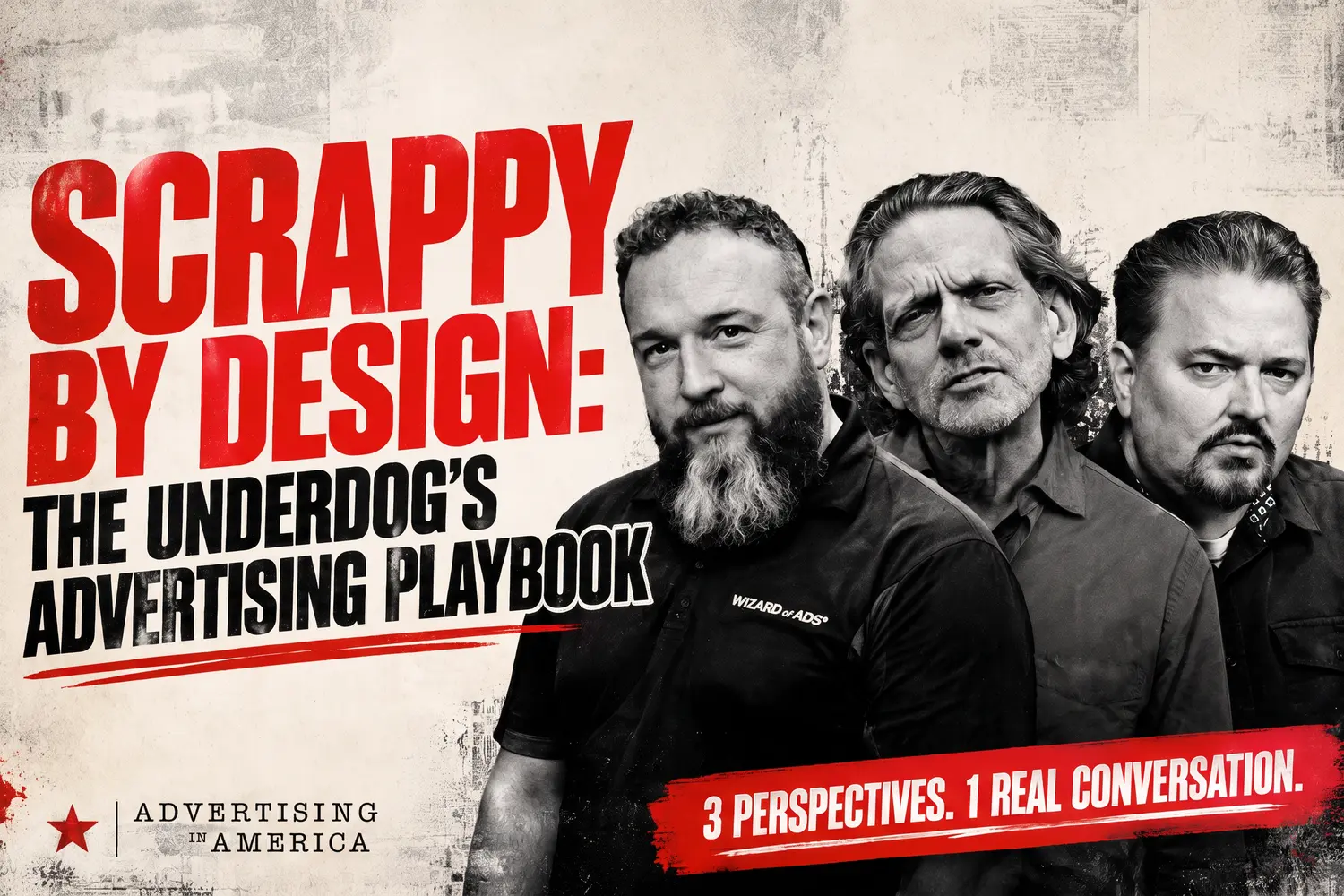
You can't beat the giant at his game. So quit trying.
Guerrilla marketing isn't about being clever on the cheap. It's a survival strategy for the outnumbered: the two-truck shop going up against a competitor with 10,000 Google reviews and a blimp. You can't match their budget. But you can change the terrain.
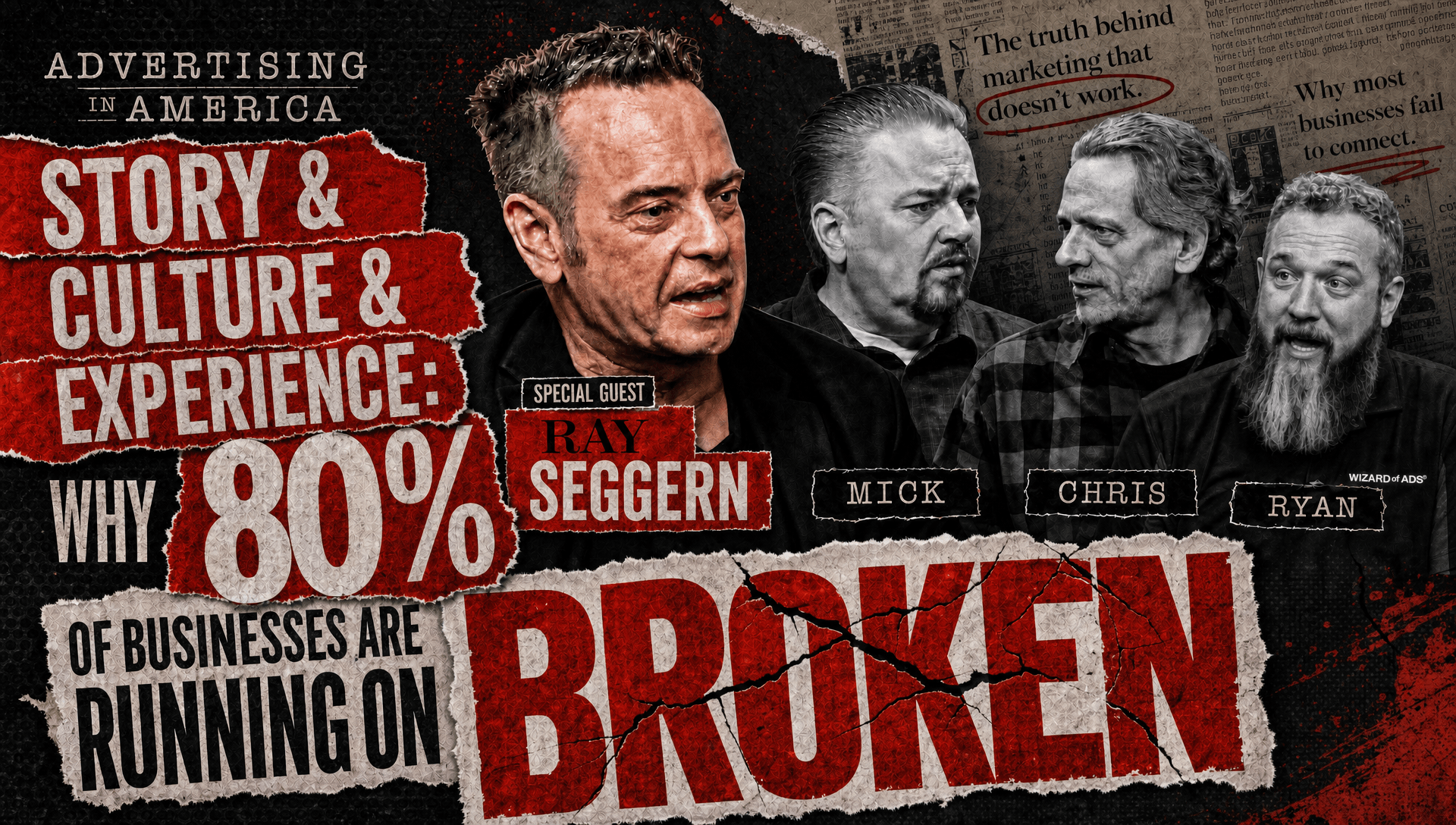
In this episode, Ryan Chute and the Torbay brothers break down what guerrilla marketing actually is (and what it absolutely isn't), why an apology letter beats a branded door hanger every time, and how a $20 bundle of balloons once doubled a bike shop's Saturday foot traffic.
This is the underdog playbook. Low cost. High effort. Ruthlessly personal.
But there's a catch, and it's the one nobody talks about: every move you make now will be remembered forever. Win the battle today without blowing up your shot at the war.
Episode Highlights:
- Change the Terrain: The only way the outnumbered win is by refusing to play the wrong game.
- The Apology Letter: How a landscaper grew his business by telling his client's neighbors he was sorry — and handing them his personal cell number.
- Brand Fit or Brand Bomb: Why guerrilla marketing works for Red Bull and would destroy The Ritz-Carlton.
- The $20 Experiment: Balloons, a bike shop, and the embarrassingly simple tactic that actually moved the needle.
- The Measurement Problem: Nobody calls and says "I hired you because I saw your poster under an overpass."
- Ugly Letter vs. Pretty Brochure: Why looking like marketing is the fastest way to be ignored.
- Win the Battle. Bank the War Chest: Guerrilla keeps you alive. It won't take you to the top. Know the difference.
🎧 Hit play to learn how to fight smarter when you can't fight bigger. Because the giant's got the budget, the blimp, and the 10,000 reviews. But you've still got the one thing they sold off years ago.
👉 What's the one thing your competitor can't buy their way into? That's your whole guerrilla marketing campaign.
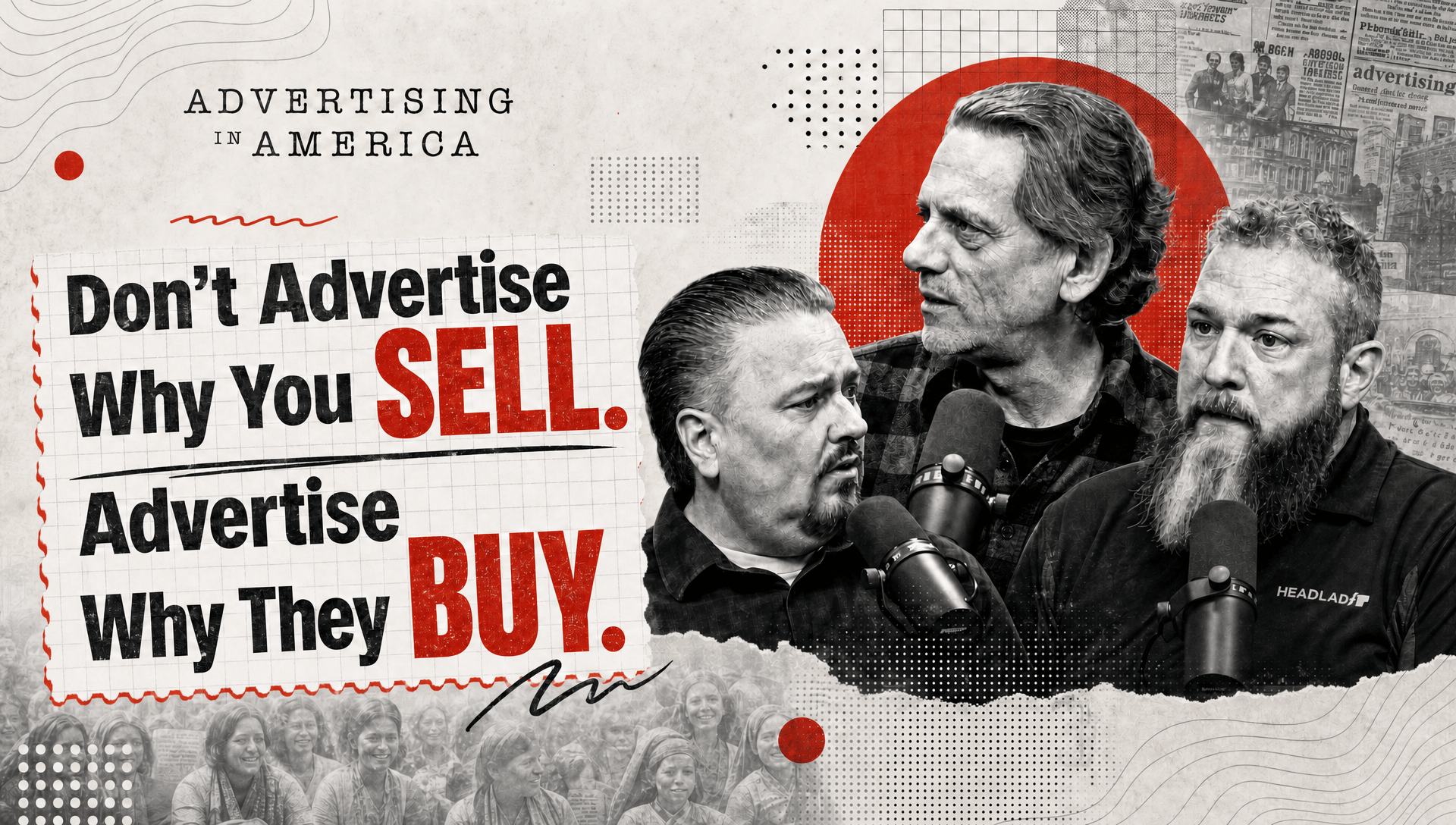
On this episode of Advertising in America, we're talking guerrilla marketing.
Guerrilla marketing. I learned a lot about this a couple of decades ago. I bought into a small retail store. We had no ad budget, no experience, and no ability to compete on a level playing field. Does it work? No question it does.
I've done it. Is it a replacement for a properly developed advertising campaign? Oh, good lord, no.
Does guerrilla marketing work? Of course it does. Or no, it doesn't. There are plenty of failures. Why risk it? If your TV commercials are crap, and your media buy is lame, and you bail out after one 13-week cycle when your business doesn't magically turn around, TV doesn't work. Do something great, totally works.
People use guerrilla marketing tactics all the time, and they work when the ideas are clever and insightful. They don't work when they're unremarkable. Guerrilla marketing techniques can keep you alive, but they cannot take you to the top.
Ryan Chute: The first time I heard the term, I pictured a guy in a monkey suit thumping his chest and chucking coupons at people. David Attenborough was narrating. Turns out it's got nothing to do with the Discovery Channel. That's a guerrilla, different spelling. I did look it up, and everything to do with being that little guy who can't afford to fight the big guys, which if you're a two-truck shop going up against an outfit with 10,000 Google reviews and a blimp it's going to be more or less your whole life.
Mick's leading this one off, and Mick loves the underdog. Mostly, I think, because he thinks he's the underdog, which he is compared to his taller, more handsome older brother. What you gotta say about this, Mick?
Mick Torbay: Guerrilla marketing. I learned a lot about this a couple of decades ago. I bought into a small retail store. We had no ad budget, no experience, and no ability to compete on a level playing field. I bought the book. Jay Conrad Levinson wrote the original. But the techniques have grown since then, and there are options available now that we didn't have back in the '90s. Does it work? No question it does. I've done it.
Is it a replacement for a properly developed advertising campaign? Oh, good lord, no. Let's explore the concept a little deeper. Guerrilla marketing is very well-named. JCL discussed marketing a small business while being outmatched by major competitors that are more established, better funded, and have a track record of success.
His analogy was warfare. The other guy has an army, infrastructure, a team ready to follow a plan. You've got a few guys, no uniforms, no money. The only thing that can save you is the plan, a plan with no budget and no experience. Guerrilla warfare. On a level playing field, you lose. We all know that, so the only thing we know for sure is that you can't beat them at their game.
Your only hope is to change the nature of the game, and then play that one really well and hope you win the battle. If you win the battle, maybe you'll live to fight another day. Note that it's possible to win the battle. Don't confuse that with winning the war. We're not trying to defeat our enemy; we're trying to stay alive. Just don't get completely obliterated today. And for that, you can buy the book and the sequels and go to town. I don't have time to go over the techniques. There's too many to list.
Rule of thumb, they're all based on having low budgets and an abundance of time and effort to invest. Remember what Penny Williams says, "Time and money are interchangeable. You can always spend more of one if you're short on the other." So if you're a business owner with no customers to serve, then you've got the time to do some of this other stuff. Don't just sit there waiting for the phone to ring. Bang some pots and pans together. Do something, for crying out loud. But consider the transition, because if you do it well and you win the battle, then you've just got a new problem, the transition.
Being small and insignificant and underfunded is not a long-term strategy. Your goal is to grow, expand, and maybe even take a leadership position, which means you're going to have to build up an army. You will have to play their game their way eventually. So my advice to you is to make sure nothing you do at this stage fucks up your plan for the next one, and bear in mind, everything you do now will be remembered forever.
Keep your eye on the ball. Begin the process of joining the big guys just as soon as you beat them once. Build a war chest, because this war will be fought with conventional weapons, and you can't call yourself a winner until you can hold your own in that world. Guerrilla marketing techniques can keep you alive, but they cannot take you to the top.
And since you wanna be a leader one day, make sure the stuff you do now doesn't bite you in the ass later.
Ryan Chute: So Mick says guerrilla marketing keeps you alive but won't take you to the top. You gotta build a war chest, and whatever you do today better not bite you in the backside later. Motivational Mick, we call him. Congratulations on surviving. Now please prepare for nuclear war. You're a fortune cookie written by a Navy SEAL, and you're the one who bought into that little store with no budget and lived through this whole thing. Wait, no, that was you, Mick. You two swap war stories so often I lose track of whose foxhole I'm in. Chris, what you gotta say about all this?
Chris Torbay: Does guerrilla marketing work? Of course it does. Or no, it doesn't; there are plenty of failures. Why risk it? Like any marketing campaign, you make a mistake if you begin by saying that the solution is that medium. Just like people who tell you that TV doesn't work anymore, the answer isn't the medium; it's what you do with it.
If your TV commercials are crap, and your media buy is lame, and you bail out after one 13-week cycle when your business doesn't magically turn around, TV doesn't work. Do something great, and it totally works. People use guerrilla marketing tactics all the time, and they work when the ideas are clever and insightful. They don't work when they're unremarkable. The medium isn't in and of itself a winner or a loser. The bigger question to ask is whether guerrilla marketing is right for your brand, and what I mean by that is, is it the right way to reach your target? And in reaching them that way, what does it say about your brand that you chose that method versus mainstream media?
And for the record, we must surely now have to admit that there is mainstream social media as well. A campaign only on social media was surely considered guerrilla just a few years ago. But a guerrilla campaign says something about your brand, and that something has to fit. You don't sell Mercedes with a guerrilla marketing campaign, or The Ritz-Carlton, or United Airlines.
If you wanna be a trusted leading brand in your category, maybe that's not your vibe either. Guerrilla marketing is for the underdog, the trickster, the disruptor. It might be helpful to define what I mean by guerrilla, by the way. By its original definition, a guerrilla campaign is grassroots and cheap. Mostly fly-posting, or what the Brits call wheatpaste, because that's the cheap glue that they use to stick posters onto construction hoardings. It works great for new album releases by edgy artists or upstart fashion brands. Banksy is great at it.
But guerrilla marketing isn't marketing stunts, unless you're Red Bull of course, who absolutely have a strong guerrilla marketing campaign of marketing stunts, one after another, and it works like crazy. But those great physical stunts are right for Red Bull because that's the spirit of their brand. One of Red Bull's early guerrilla marketing ideas, by the way, was to go around putting empty Red Bull cans into garbage cans in cool neighborhoods near bars so that people would think, "Wow, everyone's drinking a lot of Red Bull."
Genius. The biggest difficulty with guerrilla campaigns is measuring success. Not the how did you hear about us measurement. We've already ranted about how stupid that is, and even when it works, no one is actually ever going to say, "Oh, I saw your poster under an overpass." So don't ask them. But on TV and radio and out of home, we have third-party verification of viewership and listenership and traffic, so we know people are seeing the messages in specific quantities.
Google will pretend to give you impartial reports on how many people saw your banner ad or clicked on your link. With guerrilla marketing, we're stuck with vague statements about how it went viral or generated buzz, and that's hard to connect to success. We hear great guerrilla ideas all the time.
They're fun, they're clever, but usually they are just empty awareness. They don't build the brand, but work because of the brand that has already been established, usually in traditional media.
Ryan Chute: So the hardest part of guerrilla marketing is proving it worked? Because nobody ever calls up and says, "I hired you because I saw a poster under an overpass." And also that Red Bull big idea was putting empty cans into the trash so folks would think everybody was drinking it, which means somewhere there's a marketing genius whose entire job was to litter. I don't know how I feel about that. I guess we'll be right back
Ryan Chute: We're back. So both fellas agree, guerrilla marketing absolutely works. It's just not a forever plan. It's how the little guy stays alive long enough to become the big guy, and the trick is winning the whole town's heart without spending money you don't have. Let's pull this apart. So, jumping into this, I'd like to start off with where Chris started. Or I'd like to start where Chris finished, and that's that guerrilla marketing has essentially evolved into cheap publicity stunts versus some of the more tactical elements of pooling resources and doing the, the grassroots things that we classically knew guerrilla marketing for. So why do you feel that transition's happened?
Chris Torbay: It's interesting. So guerrilla marketing's literally was stuff that you could do really cheaply, and that was sticking up posters, right? Anybody could go down to the photocopy shop and run off 100 posters about their band, and they could put them up, and maybe people would come and see you this Friday.
It's interesting when it's moved into other media, right? When the interweb grew, then suddenly people were building funny websites. The subservient Chicken for Burger King, and so people have tried to make guerrilla campaigns work in other media. Ostensibly just as cheaply, although when you think of some of those kinds of things, they're advertising agencies, so still developed, and they still had to go through a production process. And you go, you're actually still spending as much money as you are on a TV commercial, so where's the grassroots sorta cheap way of doing it?"
I think it's interesting in how it's evolved. That is the sort of thing between is it just about cheap, quick, and dirty, or is it about nontraditional ways and nontraditional media and stunt-oriented things that may cost a lot? Red Bull, man, the things they pull off can cost a lot of money.
Mick Torbay: Probably more than a major advertising campaign.
Chris Torbay: When some kid's doing BMX stunts on the back of a moving train while a plane flies underneath him or something there, there's some resources behind that. That is not a local band, sticking their posters up ahead of a concert.
Ryan Chute: Yeah, and certainly deviates from the original intent and purpose of what Jay Levinson created for guerrilla marketing, in his manifestation of what it is meant to be. It is this, this grassroots, but not just grassroots. Grassroots is photocopying and putting a bunch of posters up with a stapler. Red Bull's the other extreme of that of sheer unadulterated publicity stunt, and I think that's the dichotomy we see between the formal army versus the guerrilla rebel force. Which, if we really explore that, which I have, I'm a certified guerrilla marketing guy. I was one of the first marketing things I ever did well before I was knee-deep into Wizard of Ads used it for my own family businesses and the things that we were doing to, to, to do things on the cheap. We'd come up with these clever cross-promotional type ways that would give us reach, but also add additional value at no cost to us. Ooh, I remember one time with the furniture store, we got a bunch of coupons from a bunch of different local suppliers, from tanning bed companies to coffee shops to other kinds of shops in town.
Mick Torbay: “Free cancer with every sectional.”
Ryan Chute: Look, nowadays we barely know it as that, but back then it was like, you wanna get tanned, you live in the north, it's gonna be a challenge. But putting all those things together basically was the cost of us then, and then we'd literally hang these, these things in, in, in bags on people's doorknobs.
So it's very low cost, but a very, very high impact. It got us a lot of traffic that, that we wouldn't have otherwise had throwing our own coupons into the mix along the way, and being willing to do the, the elbow grease work to do that. Stencilling, not stencilling, but cleaning sidewalks.
Chris Torbay: The pressure washer stencilling- with pressure, where your stencil's actually created by removing the dirt-
Ryan Chute: Exactly. ...
Chris Torbay: Within the stencil.
Ryan Chute: Which is completely legal and completely legit. No one can chase you after that and, in a few good rains, you're not gonna see it again. So it solves itself, and it never damages anything.
Putting 50 stamps onto an envelope when envelopes cost 50 cents, or the stamps did to mail it. All one-penny stamps instead of one 50-cent stamp. Doing the weird things that get you noticed were really the point. At that time, having worked with and becoming friends with Jay, it was a really interesting exercise for us to come up with all of these random, strange, quirky little ways that would just have a person double take and go, "Huh."
Chris Torbay: I think, like, I love those things, and that's why I say, I think the success is how profound and new and disruptive and interesting the idea is.
Agreed. The first time I saw that, that reverse graffiti thing of Instead's pressure washing off within the stencil, you think, "That's really clever." And if I was walking down the sidewalk and it's like, "Did they paint that? Oh, they unpainted it." It'll stop you in your tracks.
But again, I think like all those things that you talked about, it means that your brand, that furniture store brand, that family brand, was right for that kind of quirky thinking. It only works when that's the personality of your brand within your community. I don't know if Learjet can do it out in front of the bankers' offices to try and attract bankers to buy a Learjet.
They would look at it and go, "What are you, why are you do- why have you hung coupons on my thing? Why have you..."
Ryan Chute: There are two big pieces that you're mentioning here that I think are very valuable to note. One is that the formal army, the big company that's doing it, it's, it becomes more publicity stunt. One, because there's a budget behind it, because it's more superficial and not necessarily as sincere as a grassroots, relationship-connecting strategy like you would with guerrilla marketing. If we pull this from its roots, from what it was actually conceptualized from, Che Guevara, famous,
Chris Torbay: The original guerrilla soldier,
Ryan Chute: And he wrote a book called Guerrilla Warfare. In that book, it goes through the tactics and strategies that a guerrilla force would use against a formal army. And this is no different than the same situations that we see ourselves faced with when you're a half-million-dollar operator that needs to get your name out in the local market, your backyard, but don't have any money to spend on that kind of stuff. So how do you get known? The, second part is it being done, right? And it goes right back to that: if everyone's zigging, the only way to get noticed is if you zag. Because otherwise you just blend into the herd. So that's exactly what is intended with guerrilla marketing, is to not do the yard sign, to not do the better version of a yard sign. The better mousetrap, as it were. It's not to do the door hangers or all of the other things that people have already seen and are very comfortable in throwing away and discarding.
Chris Torbay: Yeah, they're no longer guerrilla.
Ryan Chute: They're no longer guerrilla because they no longer have the potency of distinction, right? And how do you tell your story before you have the money to tell it on mass media? How do you tell it before you have the money to spend a small fortune on a truck wrap?
You gotta, you, you gotta be crafty, right? And- very often that's just knocking on the door and introducing yourself, but not too many people are answering the door anymore, even if they're home. So how do we break that barrier in a way that gets people excited? And these are the types of things that we, I would hope to encourage, small operators who are growing to do.
It's not the truck wraps or the logos or the pretty, little things that you do. It's going to be the things that cost you nearly nothing but your time and your effort, to Mick's point is that's where the energy had to go in the bike shop, and that's where we're gonna see it going in these other small companies that are trying to make their way.
But to do it sincerely is a critical element here 'cause-
Chris Torbay: I think it comes back to the things we say about lots of aspects of advertising is it needs to come from the brand. And just because, for example, if your competitor's doing these quirky little stunts, it's like, "Oh, we should do some quirky little stunts." No, you don't do the thing that the other guy is doing. You do something that inherently comes from who you are,
Ryan Chute: Your truth, your North Star, exactly. Your values, your tonality. Like, how do you show up? Are you showing up in an extreme, uniform of clown colors and stuff, or are you more reserved and even-keeled and dry, and there's always an opportunity, whether it's with your community, your church, your whatever, there's always that thing that is a great fit, and it is to lean into that.
Chris Torbay: That's one of those things we've always said about branding, right? We talk about the importance of building a brand, and a lot of times clients think, "How is the brand going to help my advertising?" And you think a properly defined brand, if it is truly, inherently a well-defined brand, it informs all kinds of things about how you do it. It defines how you do things operationally.
It determines how you decorate the inside of your office. It determines- the one I like is a well-defined brand; it'll define what your charitable giving is. You know, are you the kind of brand that gives to kids baseball, or are you the kind of brand that gives to the cancer center, or are you the kind of brand that donates to the World Wildlife Fund, right? All of those decisions, it's not who I like; it's which one. Patagonia would support the World Wildlife Fund.
Mick Torbay: And Red Bull would sponsor the fracture clinic. That's right. Yes.
Chris Torbay: Or the parachute school. Or, something like that. But again, that, those decisions of what you do even in your guerrilla marketing are a product of what is it about the brand? How does that lead, and to me, those are the profound guerrilla marketing ideas. It's not just- “yes... I came up with a cool idea.” It's that I came up with a cool idea out of the essence of who our brand is and how they show up for people or how they sit in people's consciousness.
Ryan Chute: What I'm hearing you say is to also not spread yourself around, and to lean in and build a relationship with that, that cancer center or the Little League or whatever, so that you can make-
Chris Torbay: So you can really own it, too. It's like everybody knows that you guys are focused on wildlife, and so you're focused on this, and so these are the brands, these are the charities that you support, and these are the events that you hold, and this is how you have your company picnic. All of those things would be informed by who the brand is. And they get expressed in those ways that are not just your marketing. And guerrilla marketing being outside of traditional is one of those not obviously marketing ways that the brand is expressed.
Ryan Chute: Yeah, 100%.
Mick Torbay: I almost wonder how important it is that the consumer perceives one of these things as marketing per se. Just as an example, and this is actually something you can steal, so you should consider this. I did a project for a personal friend who owns a landscaping company, he's a one-truck guy, one truck, one crew guy. He's got four guys who work for him. But he does landscaping, retaining walls and things like that, one project at a time. Very successful. And he literally has one marketing thing, and it's the thing I wrote for him, and that thing was an apology letter.
So I wrote a letter that basically says, "Hey, listen, we're at your neighbor's house. We're going to have these big smelly trucks and this heavy equipment, and we're going to be loading stuff in, and I'm really sorry." "And it's going to be about four days, and here's my phone number." His actual-
Chris Torbay: Personal
Mick Torbay: cell phone ... personal cell phone. Saying, "If our truck is in the way, if we're bugging you, let me know. I'm going to fix it. If we mess up your driveway, we're going to come in, and we're going to clean it. If there's something that we've done that we didn't realize we've done, reach out to me. I'm going to, I'm going to solve it for you. Hope we're not too much of a bother. This is what our trucks look like. This is my, this is who I am, and sorry."
And he has gotten so much fucking business from that. Because all he's doing is, he's not soliciting. He's not talking about all these fucking products and services, and his features and benefits and- no low prices, and the things that he offers. He's saying, "Someone in your neighborhood trusts us to do a project for it. You're going to see it, and at least I give a shit because I know that what I'm doing is not convenient for you." It's all upside for him, it's all downside for you, and I'm just trying to mitigate it. And so his brand is courtesy. That's all it is, except that when you're a one project at a time business based pretty much on word of mouth, it's incredible how powerful that thing can be, and I think part of it is because people do not perceive that as marketing.
They see it as it was legitimately presented to be, an apology letter with ways of mitigating the pain that we're going to cause you.
Ryan Chute: And look, arguably for the 15 cents it cost to print it and the five minutes that it took to deliver the letters to eight houses around the property being serviced compared to a yard sign that's going to get yanked down and-
Mick Torbay: you compare that to the door hanger, everything done, which looks, it's art directed. Looks like marketing, and it's die-cut, and it's clearly marketing. Somebody put
Chris Torbay: another one of those on my
Mick Torbay: door. Then it's, you know, get rid of that. This one, because it looked handwritten, it looked legit. It looked like, this is actually what it's pretending to be.
Ryan Chute: And this falls into a couple of buckets. One, the debate of whether or not the underdog is demonstrating a weakness, or is it a position of strength. And it comes from basically the bucket of guerrilla marketing strategy that we'd call the ugly letter, right? It's black and white. It is photocopied. It is not pretty. It is not pretty. It is not branded. 'Cause you've got John Smith and an actual phone number: "Call my personal number" If you get a problem with your property or the guys.
Chris Torbay: And that's the thing that makes it not look like marketing because if this was marketing, somebody would've had a meeting, and they would've made this better.
Ryan Chute: They would've made it pretty.
Chris Torbay: So now I'm convinced
Ryan Chute: That it's not marketing. So we can't obsess about this whole notion of, "My truck wraps and logos and my, the, all this stuff matter." You could have a white plain truck sitting out there, the base level unit, making all kinds of noise with guys that are basically wearing $3 T-shirts from Walmart that might have a little emblem on them, or nothing, and those letters that are going to give you just as much impact as all of this highly curated manufactured stuff. This isn't about, marketing should never be about being super precious about yourself.
Mick Torbay: Now, bearing in mind that the thing I was suggesting, he's never gonna be the king of landscaping in his community, right? He's not trying to be. He doesn't wanna be, and so that's the right program for that guy. And it's true to his brand. But also, that's not a way to build an empire.
Ryan Chute: That's eight doors at a job. You can never grow past the extreme there. You can get up to a momentum where you can have enough money to do other things that reach more people- in a powerful way- and that's where we might start to consider logos and wraps and things like that that elevate just a little bit. But it's an order of operations with a lot of this stuff.
A guerrilla marketer doesn't want to be necessarily noticeable in the traditional way, like you put on a fancy, shiny truck wrap with all kinds of colors and looks and everything else, and people immediately think, "Ooh, these guys are too expensive."
"Never heard of them, but I don't know why their trucks are so fancy. They must charge a lot."
There's a, there's an interim balance there where it's just like it's okay to be low-key, right? There's plenty of companies we've worked with that still have shitbag frigging truck wraps that crush it in sales.
It's not about flash and pomp and circumstance. It's really about: How can I be perceived as the person they want to do business with?
And that starts with as simple as, "The best I got is an ugly old letter that's gonna tell you that I'm a decent human being." So I, again, I circle this back to the underdog, and this is something you brought up, Mick, was, is the underdog, the position of weakness or strength and how do we play with that?
Mick Torbay: How long can you be the underdog? And I guess that depends on the mindset of the business owner. Do you wanna be a one-crew guy like my friend is, and that's perfect. He's got a job. He doesn't have a business; he's got a job. He's got a very successful one, and he does very well for himself. But let's not compare that to the person who wants to have a business, which means multiple trucks on the road, bigger staff, infrastructure, the sort of business that could take a leadership position and make it very difficult for other people to compete in that space. If that's your goal, then be mindful of the fact, that if you created a letter that was disruptive, quirky and interesting, but inconsistent with a leader. Then all that stuff could one day hurt you or undermine what you're trying to accomplish now when you take that leadership position. If you want to be an empire builder, if you want to be the leader in your category or among the top three in your category, understand that eventually you will have to become part of that group and do some of that stuff.
You can't say any company with truck wraps is ripping you off, because one day you're going to have truck wraps, guys.
Chris Torbay: One day you're going to have three or four trucks, and somebody's going to say they should all look the same.
Mick Torbay: So you're, exactly, this is really stupid, right? Or anybody with uniforms is charging you too much because they're spending all their money on uniforms. You know what? Customers like freaking uniforms. They sure do. Don't put that stuff down. In fact, buy uniforms as soon as you can afford it, and start looking professional.
Start looking like a company that might actually going, be going places and get the benefit of that sort of inherent, "I believe in these guys. They seem like not a fly-by-night operation. They seem like maybe they're going somewhere." And but like all, all the digital stuff you do, all the video stuff you do, if you say stuff that's controversial because "Ah, I don't care, I'll offend half the people because I only have to get the other half," it's like, but then when someone goes and finds that and says, "Four years ago these people were saying this incredibly offensive stuff."
And now you're trying to run for mayor. This is a problem. So always have in your head that what I'm doing now, this is a temporary thing to accomplish a temporary goal with a long-term strategy. Your c- competitors will not see that coming, by the way. They'll only see you doing this small-time thing, acting like a small-time guy and say, "I can ignore him." Good, let them ignore you. But then be ready. Build that war chest. Get yourself a budget. And then do what Chris is talking about. Get on TV, get on radio, and then be like, "No, actually, we're for real, and now you have to deal with us 'cause we can afford it."
Ryan Chute: That’s it and walking before you run, right? We just recently did a rebrand for a customer, and they're looking at it and going, "We don't have much. We can make a website work. We can get a, a logo truck wrap. We can get a basic uniform. What can we do for that level of impact to just get that first baseline of professionalism, that next level up?"
So half wraps, right? We got decaling instead of full wraps. But we used it in a very strategic way to make sure that, that unit, the truck driving around, looked just as great as something that was fully wrapped without looking overproduced. So finding that fine-tuned balance. As you build brand equity, people are going to be willing to pay you more for the perceived value that you're bringing based on your presence.
We all know that in fact, it was a very recent study that was showing, and I don't have it written down on this one, but it was that of the things that drove presence, radio, social media, and the sheer size of the company were the top three things, that drove the business at, at, at any given location for a service business. That's a big deal. That's a big deal because it tells us that a formal army is playing a different game, and it's completely okay. People are going to trust the 10,000 reviews and the blimp. What we need to do is have a way to carve out your piece that allows you to work towards that same level of momentum. So it's not to diminish the elements that get us there in marketing, be it brand-building assets, be it sales activation, be it lead capture. All of these things are going to help, but we have to spend the money that we have, not try to spend money that we don't to look bigger or try to do something that the formal army is doing. This is a huge mistake and a risk that a lot of small companies make, buying this stuff way too soon if they don't have the budgets. Some companies step into market with budget.
If that's the case, deploy it as effectively as possible, but that's where guerrilla marketing comes in as a tool, a device. It all boils back to the same thing, and always the same thing, relationship. Are we presenting ourselves and communicating and interfacing with the public in a relational way, or are we just going in there with discount sales offers and flashy trucks and hoping that people just buy our bullshit? You're going to get the customer that you advertise to the way you advertise to them. If you wanna win the game transactionally, expect price shoppers. Expect people that are going to be difficult to close. Expect people that are going to grind you for that stuff. Expect to be the best price in town because that's how you presented, right?
If you started the conversation in a different narrative, shouldn't we have a different result if we came in with a, "Here's what I think from an underdog position," from whatever the case?
Underdog doesn't mean you have to shit talk the big guys. It can also just be The underdog is a great option because we know we have to prove ourselves and work real hard and prove ourselves to do a good job.
And we're looking for people that want to spend a little bit less to get a good result. As long as you are the guy who's spending a little less because you have a no office or a tiny office, or your office is in your garage, right? And your staff is lower cost, and you present a good value proposition. I say embrace it, right? Show them who you are, but also don't be afraid to show that you're slowly and gently evolving without the greed and more of the intent of serving your people, your customers better.
Chris Torbay: And I think when you do that, your whole thing about how it's gonna, it could come back and bite you in the ass, the opposite is also true, which is I remember these guys. This happens with bands. It's like I remember when I used to see their posters up, when they were just a small band gigging around. And now you, now they got a major label deal and then whatever. Sometimes that guerrilla past can be an interesting thing. I remember when he was the little guy, and now he's the big guy, and I feel like I was part of the growth, right? If the if I'm a client, it's like I remember when it was just one guy and his whatever, and now look how successful he is, and I feel like I'm part of who, who helped it.
Mick Torbay: I remember when Amazon was an upstart and absolutely the underdog. They were going up against, Barnes & Noble. Barnes & Noble, and trying to sell books online. It's like that's insane. If they had decided to build their brand on being the underdog that would be a fucking problem now, wouldn't it? You gotta have that long game. You have to, you have to.
Chris Torbay: The underdog in rocket ships.
Mick Torbay: You give them that. Technically they are.
Ryan Chute: Currently.
Mick Torbay: I think their tagline is, "Ours blow up 50% less than they used to blow up." Exactly.
Ryan Chute: One star, still not good for people.
So one of the coolest guerrilla marketing strategies that I heard from years ago that Roy did was a direct mail campaign. He had 500 bucks a month to spend. He sent out these very nicely drawn limited edition cards that had these funny little kind of fireside styled jokes and styling on them.
Mick Torbay: Woody Justice. Woody Justice, right?
Ryan Chute: This is a jewelry store in the middle of nowhere, and they doubled their business in two years doing that, which allowed them to do the next thing. And Woody Justice became one of the most famous jewellers in America by 2009. And look, this is where these evolve to: any guerrilla army that wins is the guerrilla army that becomes the formal army because they won, in an army situation. In a business, it's market domination it's becoming the leader and holding true to your roots.
So if you're doing these guerrilla marketing things, just remember to hold on to those assets, 'cause there'll come a time when you'll wanna look back and go, "Remember when?" Not just to your staff and to yourself to remind yourself where you came from, but to your customers.
Mick Torbay: Who are always slower to evolve in what your brand means than you are.
Ryan Chute: So much so on the kind of the kind of the biggest key point of kind of summing this all up is the guerrilla marketing wins the battle. It's not gonna be the thing that wins the war. And we have to be cautious of when this transitions into something that could be perceived as disingenuous. If you can hold true to your value system, your north stars, all of those things, great. That's core, it's important. As you get more people, that becomes more difficult. So you have to look at this whole perspective and go, "What's gonna get me where I need to go? What's the gonna be the thing that lets me win this battle?" Getting payroll paid. Taking care of the customers, and making sure they're looked after. Maybe putting a couple of bucks in the bank by the end of the year or next year if we're lucky. Heck, taking a frigging a payroll for yourself, as the operator. And serving yourself as much as you're serving your staff. Or at least somewhat, supporting yourself.
So what are your guys' perspectives on how we go about guerrilla marketing and where it's best placed?
Mick Torbay: The good news is that since most of these techniques are not expensive, you can try shit out and see if it works. And if it doesn't work, do something else. Because unlike most advertising techniques, you don't necessarily have to try it for a year.
Chris Torbay: They are much more one-off ideas.
Mick Torbay: One of the crazier things that I found when I owned the retail store, at one point I thought I wonder, there was a flower shop just down the road, and I took 20 bucks out of the till, and I walked down to the flower shop, and I said, "How many balloons can I get for 20 bucks?" And she's "I don't know, 30." And I said, "Great." And then I walked out, and I put it in front of the store, these 30 balloons. Twice as many people came to the shop that day. It wasn't a birthday. It's balloon day. It wasn't a sale. It wasn't anything. It was the stupidest thing in the world.
But it was a Saturday, and we had balloons, and damn it, pulled in and looked at the bicycles. I cannot explain it. It makes no sense. But fuck that shit. Every two weeks I would go back, and I'd buy some more balloons and stick it in front of the store. And people would come in. But if it hadn't worked, fucking try something else. I don't know. That's something.
Ryan Chute: It's pretty amazing doing these little experiments. We spend a lot of time just hanging balloons, doing balloon stuff. Balloon, there's something magical about balloons.
Mick Torbay: Maybe having a guy spinning a sign is a good way to sell a pizza. Maybe it works. I don't know.
Chris Torbay: But I think it's funny. It you're right. In a lot of stuff, and we've talked a number of times about how the one-off is rarely successful, right? That you wanna build a brand over time. And the one killer ad is never, the, the secret to transforming your business. But I feel like guerrilla things, by their nature, you can't do them 10 times, or now it's a campaign, in which case it's not guerrilla anymore.
Mick Torbay: If there's always a guy- if there's always outside of your place spinning the sign.
Chris Torbay: Then everybody's seen, or if everybody's got a guy spinning a sign out in front of your thing, then it doesn't work. And but as a disruptor or something like that, try an idea. If it works, it's worked. You may not even be able to play it again because it was the one-off that it was.
Ryan Chute: What are the powers of that, as you said that, it had me thinking about something that we just recently did as not this last weekend, but the weekend before that, which was to pop by an ice cream shop that had just opened. It was like an ice cream truck. And it was their grand opening. They were new, but the family- we had the family go out of the owners and park the truck, take a picture, golden hour, beautiful shot, celebrate them. And just talk about them. Now, yes, your truck just happened to be in the picture. Great. But at the end of the day, the sentiment, that anchoring effect of who doesn't like ice cream?
Chris Torbay: And again it's what that says about your company, that I think of as a potential customer, "Wow, this is a company that is supportive of other businesses in their neighborhood." That says something about- that's you, the character, speaks to your character of these people, and if they're gonna come in and fix my air conditioner or whatever.
Mick Torbay: There's a lot more humanity in that than marketing.
Chris Torbay: I come to a conclusion from that. So it's, again, what does the guerrilla idea say about your brand, and how is that helpful to me making a decision on what brand to choose?
Ryan Chute: And that, that's cumulative in effect, too. Unlike where you drop 500 bucks on pay-per-click, it's gone. You spend 50 bucks getting ice creams for five or six people, if we can be lucky enough to get that for five or six people nowadays, and take a picture of it, and then tag them and then celebrate them, and then they share it because they're just like, "Oh, that, that was thoughtful." Thanks, guys. And that compounds to your character, your personality. And what is it we're trying to do as a business?
You're trying to get know, like, and trust. You're trying to get, demonstrate your empathy before your competence. No one cares about what you do before they know that you care. So just go out and care for people. Roy told me this five years ago. He's like, "Just do a campaign for com- of excuse me. Just go do a campaign of compliments.” Just go out and be complimentary to people and be kind to them. Don't expect anything in return and give, provide, be helpful, show up. Don't just phone it in with the lame, soft, easy answer. Answer it properly. Go to the extra effort and length to, to do what you do best. And that'll pay dividends. And it has paid dividends, and it's, these are all guerrilla marketing tactics. Give the person what they need, not what you think you would like.
The platinum rule versus the golden rule. I- and then if there ends up being this really kind of interesting- thing that's newsworthy or noteworthy, this is PR
Don't stop to go, "Oh, eh, hey, whatever." Make a press release of it. Get it posted. If it is newsworthy or noteworthy, then you are absolutely in a spot where you should tell the world.
Now, what does that mean in 2026, 2027? It means you're going to show up in AI search more. You're going to- get referenced from other people. You're going to show up on high authority sites. You're going to show up in the seven ways that digital search entities look for you to show up. A- and there's mainly two big things that you gotta note, the stuff you say about yourself and the stuff people say about you.
And the stuff that people say about you is actually a little bit more important, so let's make sure it's nice stuff. How can we do that? Guerrilla marketing again, not high expense, not difficult to get it posted to the universe nowadays, but it has to be noteworthy. If you're not doing anything of substance, don't tell the world about it, 'cause no one's listening.
How can we do that? Guerrilla marketing again, not high expense, not difficult to get it posted to the universe nowadays, but it has to be noteworthy. If you're not doing anything of substance, don't tell the world about it, because no one's listening. You're asking more questions that no one's asking.
Ryan Chute: So looky here. If you're running an essential home service business in America, heating, cooling, plumbing, electrical Here's the three things I want you to walk out the door with. Number one, you can't beat Mike Tyson in a boxing match, so quit trying. Guerrilla marketing is just the math of the outnumbered.
Change the terrain, make it personal, and beat him somewhere his budget can't follow, your customer's actual driveway. Number two, embrace the vulnerability of being the underdog until it's no longer true. People root for the scrappy crew that obviously cares. Tell your real story of starting small and fighting for it.
Just don't fake it. Folks can smell a costume from the curb. Number three, win the town one appointment at a time. They will eventually demand that you grow. Guerrilla marketing keeps you alive, but it's not a forever plan. Bank every happy customer and build your brand equity in a war chest. One day you'll realize you're leading a formal army.
If you don't hear anything else, hear this. The giant's got the budget, the blimp, and the 10,000 reviews. You've got the one thing they sold off years ago, the ability to make a single neighbor feel like the only customer that you've got. Use it. Win them. Win them one at a time. Love the one you're with.
Sell them all, big and small. That's not losing the war. That's how you start a movement. Until next time, this is Advertising in America. Thanks for tuning in.
Thank you for joining us on Advertising in America. We hope you enjoyed the show and captured a nugget of marketing magic. Want to hear more? Subscribe, leave a review, and share this podcast with your friends. Do you have questions or topics you want us to cover? Join us on our socials at Advertising in America.
Want to spend your marketing budget better? Visit us at wizardofads.services to book your free strategy session with Wizard Ryan Chute today. Until next time, keep your ads enchanting and your audience captivated.

Advertising in America
The podcast that turns marketing into magic! Hosted by the brilliant Ryan Chute and the ever-entertaining Michael Torbay & Chris Torbay, this show dives deep into the world of American advertising, revealing the secrets behind the most successful campaigns and exploring the latest trends.
Share this:








Nothing to see here!
Nothing to see here!